
AI Recipes vs Traditional Sites: Which is Better in 2026?
AI Recipes vs Traditional Sites: Which is Better in 2026 for Culinary Success?
The culinary world is constantly evolving, and a significant shift is underway in how we discover and create food. For decades, the go-to sources for home cooks have been traditional recipe sites – sprawling food blogs, cooking forums, and established platforms like Allrecipes. But with the rapid advancement of artificial intelligence, a new contender has emerged: AI recipe generators. These smart tools promise to revolutionize meal planning and cooking. The question on every home chef's mind in 2026 is: AI recipes vs traditional methods – which one truly comes out on top? This in-depth comparison will explore the strengths and weaknesses of both, helping you decide where to find your next culinary inspiration.
The Frustrations with Traditional Recipe Sites in 2026
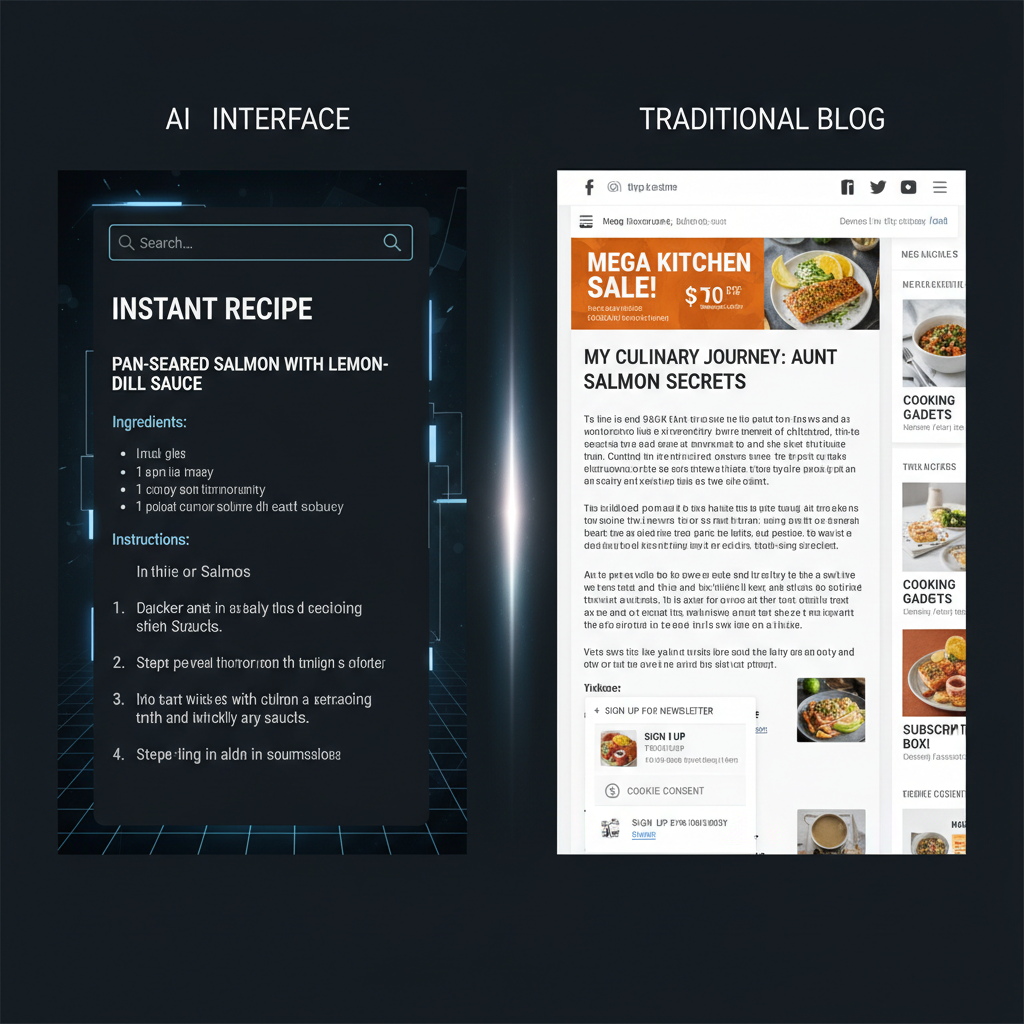
While traditional recipe websites have served us well, they come with a growing list of frustrations that AI aims to address. How many times have you clicked on a promising recipe link, only to be met with an incredibly long, rambling introduction? We're talking about paragraphs detailing the author's childhood memories, vacation stories, or philosophical musings – all before you even get to the ingredients list. This 'life story' phenomenon is often a byproduct of SEO strategies designed to boost search rankings, but it's a huge time-sink for busy cooks.
Beyond the lengthy intros, traditional sites suffer from a lack of personalization. If you're vegetarian, gluten-free, or cooking for one, you're often left to manually adapt serving sizes or substitute ingredients. The recipes are rigid, designed for a specific set of circumstances. Furthermore, the user experience can be hampered by excessive ads, pop-ups, and cluttered layouts that make it difficult to focus on the cooking instructions. While community reviews offer some guidance, finding specific dietary variations or precise portion adjustments typically falls on the user.
How AI Recipe Generators Address These Traditional Pain Points
Enter AI recipe generators, designed from the ground up to solve these common frustrations. Imagine typing in 'gluten-free, high-protein pasta dish for 2, using leftover chicken and spinach' and instantly receiving a perfectly tailored, unique recipe, without a single preamble. This is the power of AI cooking.
Here’s how AI tools, like the innovative RipePlate, are changing the game:
- Instant, Hyper-Personalized Results: Forget endless searching. AI understands your dietary restrictions, allergies, preferences (e.g., 'no spice,' 'quick meal'), and even the ingredients you have on hand. It crafts a recipe specifically for *you* in seconds.
- No Scrolling Through Life Stories: AI delivers just the recipe – ingredients, instructions, and perhaps some helpful notes. It's clean, concise, and respects your time.
- Exact Portion Scaling at Your Command: Need to cook for 7 people? Or just one? AI can instantly adjust ingredient quantities, eliminating tedious mental math and food waste.
- Smart Ingredient Substitution Suggestions: Ran out of an ingredient? AI can suggest viable alternatives based on flavor profiles and common pantry staples, often directly within the generated recipe.
- Works for Any Dish You Can Imagine: From exotic fusion cuisine to transforming obscure leftovers into a gourmet meal, AI can generate recipes for nearly any concept or ingredient combination you can dream up. Its creativity is boundless.
Platforms like RipePlate exemplify this new era. RipePlate goes beyond simple generators, using advanced AI to understand complex requests and produce highly practical, delicious, and user-friendly recipes that feel like they were written by a professional chef who intimately knows your pantry.
When Traditional Sites Still Hold Their Own
It's important to offer a balanced perspective. Traditional recipe sites aren't entirely obsolete, and they still possess several key advantages:
- Tested Recipes with User Reviews: Many established recipes have been made by thousands, sometimes millions, of people. The comment sections are treasure troves of tips, modifications, and confirmations of success (or failure). This collective wisdom provides a level of quality assurance.
- Community Ratings and Tips: Beyond just reviews, many sites foster active communities that share advice, answer questions, and build a sense of connection around food.
- Recipe Photography from Real Cooks: While AI can generate stunning images, there's something reassuring about seeing photos uploaded by real users, showing how a dish looks in a home kitchen.
- Established Trust and Credibility: Long-standing food blogs and culinary websites have built a reputation over years, often featuring recipes developed by professional chefs and food writers.
For classic dishes, holiday spreads, or recipes that demand a very specific, traditional outcome, the proven track record and community validation of traditional sites can be invaluable. Think of a classic apple pie or a Thanksgiving turkey – you might prefer a recipe that has stood the test of time and garnered thousands of positive reviews.
The Verdict: Use Both Strategically for the Best Culinary Experience
So, which is better in 2026? The answer isn't black and white; it's about strategic integration. The optimal approach for the modern home cook is to leverage the strengths of both worlds.
- Reach for AI (like RipePlate) for: Instant personalization, accommodating dietary needs or allergies, creating recipes from specific ingredients you have on hand, scaling portions precisely, getting creative with unique flavor combinations, or when you simply don't want to scroll through a lengthy backstory. AI is your innovative culinary assistant.
- Turn to Traditional Sites for: Tried-and-true classic recipes, dishes with a rich history or cultural significance, recipes where community feedback is paramount for success, or when you enjoy browsing through aesthetically pleasing food blogs and engaging with a culinary community.
For those looking to streamline their cooking, reduce food waste, and inject creativity into their meals without sacrificing quality, AI recipe generators are undeniably the future. They provide a level of customization and efficiency that traditional sites simply cannot match. If you're ready to experience the next generation of cooking, try RipePlate today and transform your kitchen experience!
Embrace the best of both worlds. Let AI handle the complexity and personalization, freeing you up to enjoy the timeless comfort of proven classics when the mood strikes. The future of cooking is intelligent, personalized, and incredibly exciting.
FAQs About AI Recipe Generators and Traditional Sites
Q1: Are AI-generated recipes reliable or do they make mistakes?
A1: Modern AI recipe generators, especially advanced platforms like RipePlate, are highly reliable. They leverage vast databases of culinary knowledge and sophisticated algorithms to create coherent, balanced, and delicious recipes. While no system is 100% infallible, the quality is remarkably high, often exceeding expectations. They are constantly learning and improving.
Q2: Can an AI recipe generator really help with obscure dietary restrictions?
A2: Absolutely! This is one of AI's strongest advantages. Whether you're dealing with multiple allergies, specific medical diets (e.g., low FODMAP, kidney-friendly), or complex ethical choices (e.g., vegan, paleo), AI can interpret these constraints and generate recipes that rigorously adhere to them, something conventional search on traditional sites struggles with.
Q3: How do AI recipes compare in terms of taste to traditional, well-reviewed recipes?
A3: The taste outcome is inherently subjective, but AI recipes, particularly from advanced platforms, are designed for deliciousness. They understand flavor pairings, cooking techniques, and ingredient ratios. While a traditional recipe might have a long history of positive reviews, an AI-generated recipe can be equally, if not more, delicious because it's precisely tailored to *your* preferences and available ingredients. Why not put it to the test? Find your next favorite meal with RipePlate!
Frequently Asked Questions
What are the main drawbacks of traditional recipe sites compared to AI recipes?
Traditional recipe sites often feature lengthy personal stories before the actual recipe, which can be frustrating for busy cooks. They also lack personalization, making it difficult to adapt recipes for dietary restrictions, specific serving sizes, or ingredient substitutions without manual effort.
How do AI recipe generators solve the "life story" problem found on many traditional sites?
AI recipe generators eliminate the need for rambling introductions by directly providing a tailored recipe based on your specific inputs. You get instant access to ingredients and instructions without scrolling through irrelevant personal anecdotes or SEO-driven content.
Can AI recipes effectively handle dietary restrictions like gluten-free or vegetarian?
Yes, AI recipe generators excel at handling dietary restrictions. You can specify precise needs like "gluten-free," "vegetarian," or "keto," and the AI will create a recipe that adheres to those parameters, unlike traditional sites where you might have to manually modify a standard recipe.
Will AI recipes make traditional recipe websites completely obsolete in 2026?
While AI recipes offer significant advantages in personalization and efficiency, traditional websites may still serve a purpose for those who enjoy the storytelling, community aspects, or curated content of established food blogs. The article suggests a shift, but not necessarily a complete elimination for all users.
How does personalization in AI recipes vs traditional sites impact meal planning?
Personalization in AI recipes revolutionize meal planning by allowing you to generate meals based on available ingredients, dietary needs, and desired cuisine. Traditional sites offer fixed recipes, requiring you to search extensively or manually adjust to fit your specific planning requirements.