
Chicken Texture Weird? Here Is Why and How to Fix It
Chicken Texture Weird? Here Is Why and How to Fix It
There are few things more disappointing in the kitchen than sitting down to a carefully prepared meal, taking a bite of chicken, and realizing the texture is completely wrong. Whether it feels rubbery, stringy, unpleasantly crunchy, or bizarrely mushy, when your chicken texture is weird, it ruins the entire dish.
Understanding why chicken develops strange textures is the first step to ensuring it never happens again. From the quality of the meat you purchase to the exact temperature of your pan, culinary science explains exactly what goes wrong when chicken turns out less than perfect.
The "Woody Breast" Phenomenon
If you have ever bitten into a chicken breast that felt strangely tough, crunchy, or woody—even though it was fully cooked—you have encountered the "woody breast" abnormality. This is a well-documented issue in modern poultry farming.
As chickens have been bred to grow larger and faster, the muscle fibers in some birds develop abnormally. The muscle tissue is replaced by connective tissue, resulting in a chicken breast that feels hard and fibrous when raw, and unpleasantly crunchy or rubbery when cooked.
Unfortunately, you cannot fix a woody chicken breast through cooking techniques. The only solution is prevention at the supermarket. When buying chicken breasts, look for smaller fillets. Avoid breasts with prominent white striping running parallel to the muscle fibers, and feel the meat through the packaging—it should yield slightly to pressure, not feel stiff or rigid.
Why Your Chicken Feels Rubbery
The most common cause of weird chicken texture is simply overcooking. Chicken breasts are incredibly lean, meaning they have very little intramuscular fat to keep them moist when exposed to high heat.
When chicken is cooked past 165°F (74°C), the protein fibers violently contract, squeezing out all their internal moisture. The result is a dry, rubbery piece of meat that requires excessive chewing.
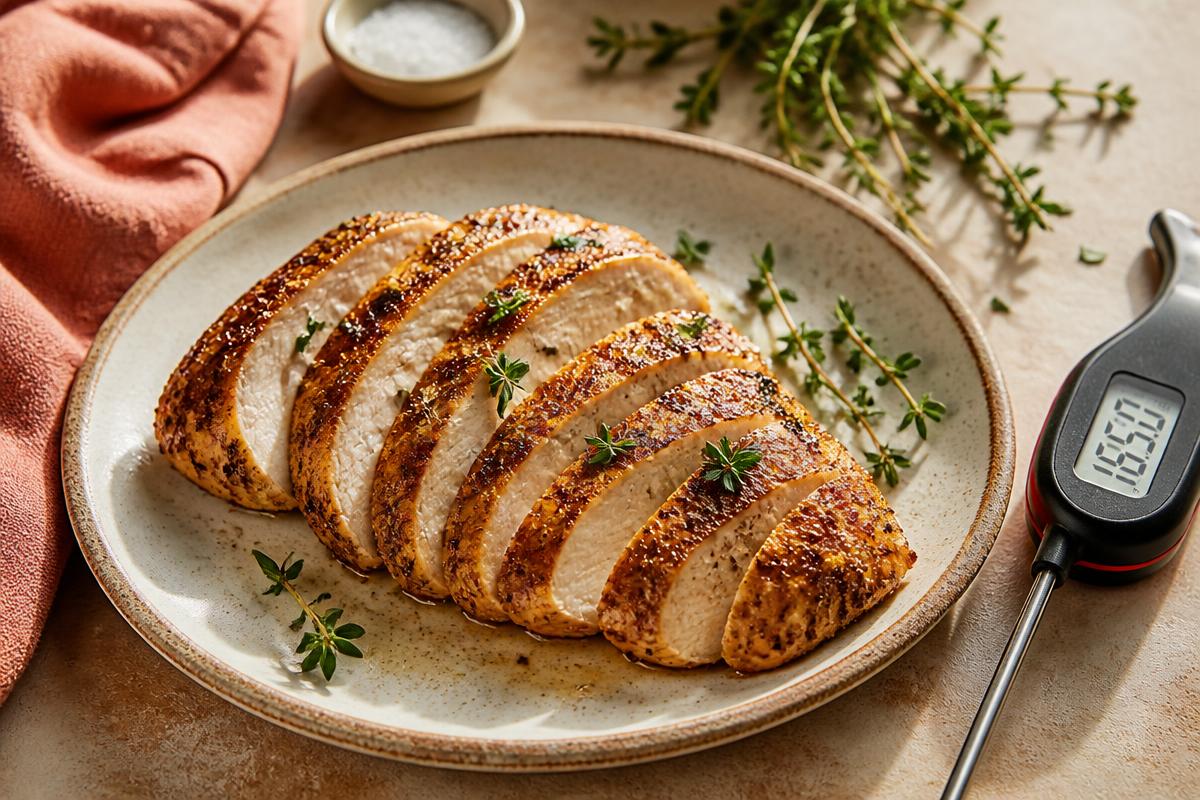
To fix this, you must invest in an instant-read meat thermometer. Pull the chicken from the heat when it reaches 160°F (71°C) and let it rest for five minutes. The residual heat will carry it to the safe temperature of 165°F without turning the protein fibers into rubber. Additionally, brining your chicken in a saltwater solution for just thirty minutes before cooking alters the protein structure, allowing it to retain significantly more moisture during the cooking process.
The Mushy Chicken Mistake
On the opposite end of the spectrum is chicken that feels unnervingly soft or mushy. If your chicken texture is weird in a powdery or paste-like way, the culprit is almost always an acidic marinade left on for too long.
Marinades containing lemon juice, vinegar, yogurt, or certain fruit enzymes (like pineapple or papaya) are excellent for tenderizing meat. However, if you leave chicken breasts in a highly acidic marinade for longer than two hours, the acid breaks down the proteins completely, turning the surface of the meat to mush.
To prevent this, limit highly acidic marinades to thirty minutes for chicken breasts, or switch to an oil-and-herb based marinade if you need to leave the meat soaking overnight.
How to Rescue Ruined Chicken
If you have already cooked your chicken and the texture is weird, do not throw it away. While you cannot reverse the protein contraction of overcooked meat, you can mask the texture.
For dry, rubbery chicken, shred it finely using two forks. Toss the shredded meat in a rich, fat-heavy sauce like mayonnaise for chicken salad, or simmer it briefly in enchilada sauce or BBQ sauce. The sauce provides the moisture the meat lacks, and shredding it physically breaks down the tough muscle fibers, making the weird texture far less noticeable.
For more chicken troubleshooting tips, check out our complete Chicken Troubleshooting Guide.