
7 Food Spoilage Signs: How to Tell if Food is Safe to Eat
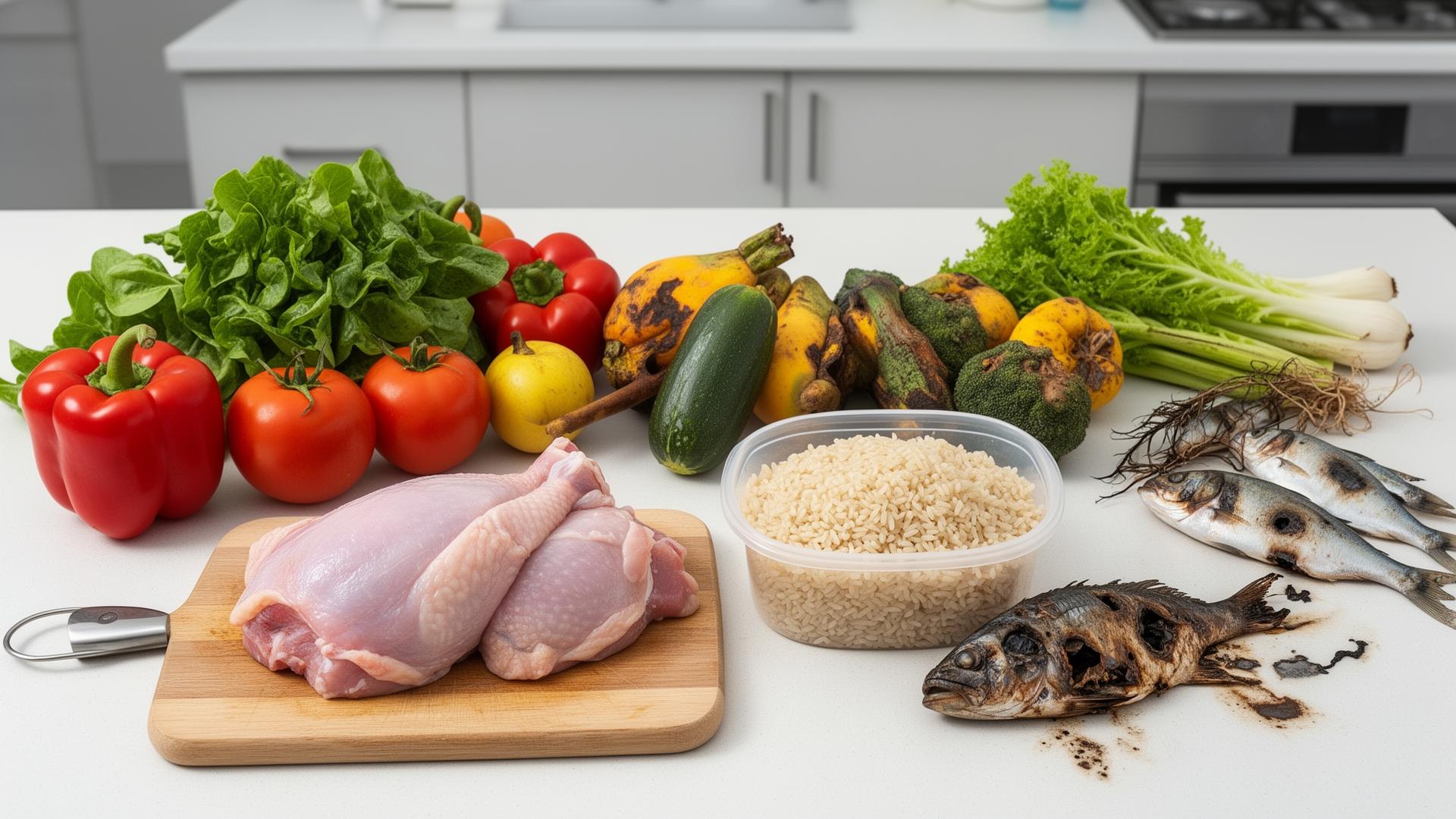
Ultimate Guide to Food Spoilage Signs (Science-Based)
Every year, around 2.4 million cases of foodborne illness occur in the UK alone, according to the Food Standards Agency. Many of these cases are entirely preventable — if you know what food spoilage signs to look for. Whether it's leftover rice that smells a bit off, chicken that looks slightly grey, or vegetables going slimy in the fridge, understanding the science behind food spoilage signs can protect you and your family from serious illness.
This guide breaks down exactly how bacteria grow on your food, what the temperature danger zone really means, and how to use your senses — smell, sight, and texture — to determine whether food is safe to eat. No PhD-level science here, just clear, practical advice backed by the NHS, FSA, and international food safety bodies.
How Bacteria Grow on Food — A Simple Explanation
Bacteria are everywhere — on your hands, your kitchen surfaces, and yes, on your food. Most are completely harmless. But certain species like Salmonella, E. coli, Listeria, and Bacillus cereus can cause serious foodborne illness when they multiply to dangerous levels.
Here's the thing: bacteria don't need much to thrive. They need three things — warmth, moisture, and time. Given the right conditions, a single bacterium can multiply to over 2 million in just 7 hours. That's why food left out at room temperature becomes risky so quickly.
The NHS recommends that perishable food should never be left at room temperature for more than two hours. In warmer environments (above 32°C), that window shrinks to just one hour.
What makes food spoilage signs particularly dangerous is that harmful bacteria often don't change how food looks, smells, or tastes. Spoilage bacteria — the ones that make food smell off or look slimy — are usually different from pathogenic bacteria that cause illness. This means food can look and smell perfectly fine but still make you ill. That's why following safe storage times and temperatures is critical, even when your senses give the all-clear.
The Temperature Danger Zone — Why It Matters
The temperature danger zone is the range between 8°C and 63°C (or 40°F to 140°F). Within this range, bacteria multiply rapidly — some species can double their population every 20 minutes.
The Food Standards Agency sets the safe fridge temperature at 5°C or below, giving a safety margin below the danger zone threshold. Here's a clear breakdown:
| Temperature | Bacterial Activity | Safety Level |
|---|---|---|
| Below 0°C | Bacteria dormant (frozen) | ✅ Safe for long-term storage |
| 0°C – 5°C | Very slow growth | ✅ Safe (fridge temperature) |
| 5°C – 8°C | Slow but increasing growth | ⚠️ Borderline — check fridge settings |
| 8°C – 63°C | Rapid multiplication (danger zone) | ❌ Danger zone — discard after 2 hours |
| 63°C – 75°C | Most bacteria killed | ✅ Safe when held at temperature |
| Above 75°C | Bacteria destroyed rapidly | ✅ Safe — thorough cooking |
Key takeaway: Your fridge should be at 5°C or below. Use a fridge thermometer — don't guess. Many fridges run warmer than you think, especially if the door is opened frequently.
Food Spoilage Signs: Smell vs Sight vs Texture
Your senses are your first line of defence when checking whether food has spoiled. While they can't detect all harmful bacteria, obvious food spoilage signs should never be ignored. Here's how to use each sense effectively:
Smell
Spoiled food often produces unmistakable odours caused by bacterial metabolic byproducts. Trust your nose — if something smells sour, ammonia-like, sulphurous, or simply "off," don't risk it. Raw chicken that smells like sulphur or eggs is a clear warning sign. Cooked rice with a sour or fermented odour may harbour Bacillus cereus toxins that reheating cannot destroy.
Sight
Visual food spoilage signs include mould growth, discolouration, and unusual film or cloudiness in liquids. Green, white, or black mould on bread, cheese, or fruit is obvious. But also watch for grey or green patches on raw meat, yellowing of fresh vegetables, and cloudy or separated sauces. If your curry looks separated or has an unusual sheen, this could indicate bacterial activity rather than just a cooking issue.
Texture
Sliminess is one of the most reliable food spoilage signs. Fresh chicken should feel moist but not sticky or slimy. Vegetables that have become mushy, limp, or excessively soft in the fridge are breaking down. Cooked rice that feels sticky, clumpy, or has hardened unevenly may indicate it has been stored improperly.
High-Risk Foods: What Spoils Fastest
Not all foods carry the same risk. The FSA classifies certain foods as "high-risk" because they provide the ideal conditions for bacterial growth — high moisture, high protein, and a neutral pH. Here are the most common culprits:
Rice
Cooked rice is one of the most commonly underestimated high-risk foods. Bacillus cereus spores survive cooking and can germinate if rice is left at room temperature. The NHS specifically warns that leftover rice should be cooled within one hour and eaten within 24 hours. If your rice looks or smells unusual, discard it immediately.
Chicken and Poultry
Raw chicken is a known carrier of Salmonella and Campylobacter. According to the FSA, you should never wash raw chicken as this spreads bacteria via water droplets. Cooked chicken should be eaten within 2 days when refrigerated. If chicken has a slimy coating, smells sour, or has grey patches, these are clear food spoilage signs. Our chicken troubleshooting guide covers what to look for in more detail.
Seafood
Fresh fish should smell like the sea — clean and briny. A strong, fishy, or ammonia-like odour is one of the clearest food spoilage signs. Check the eyes (should be clear, not cloudy), the flesh (should spring back when pressed), and the gills (should be bright red, not brown or grey). The FSA guidelines on fish and shellfish recommend consuming fresh fish within 2 days of purchase.
Dairy Products
Milk, yoghurt, soft cheeses, and cream are all high-risk. Sour smell, curdling, visible mould (on soft cheese), and unusual texture are all food spoilage signs. Hard cheeses like Cheddar can have mould cut away with a 2.5cm margin, but soft cheeses with mould should be discarded entirely.
Cooked Leftovers
Any cooked food — stews, curries, pasta dishes — should be refrigerated within 2 hours of cooking, stored in sealed containers, and eaten within 2-3 days. The NHS recommends reheating leftovers only once, and ensuring they reach a core temperature of 70°C for at least 2 minutes.
Complete Food Spoilage Signs Reference Table
Use this table as a quick reference for the most common food spoilage signs across different food groups:
| Food | Smell Signs | Visual Signs | Texture Signs | Max Safe Storage |
|---|---|---|---|---|
| Raw Chicken | Sour, sulphurous, egg-like | Grey or green patches | Slimy, sticky coating | 1–2 days (fridge) |
| Cooked Rice | Sour, fermented | Dried out, discoloured | Hard, clumpy, or overly sticky | 24 hours (fridge) |
| Fresh Fish | Strong fishy, ammonia | Cloudy eyes, brown gills | Doesn't spring back when pressed | 1–2 days (fridge) |
| Milk | Sour, rancid | Lumpy, separated | Thick, curdled | Use-by date |
| Vegetables | Earthy, rotting | Mould, wilting, browning | Mushy, slimy, limp | 3–7 days (varies) |
| Cooked Leftovers | Off, sour, unusual | Mould, discolouration | Slimy surface | 2–3 days (fridge) |
| Eggs | Sulphurous, rotten | Cracked shell, cloudy white | Watery, runny yolk | Best-before date (float test) |
When to Throw Food Away — NHS and FSA Guidelines
The golden rule from both the NHS and the FSA is simple: when in doubt, throw it out. Here are the specific guidelines:
Always discard food if:
- It has passed its use-by date — this is a safety deadline, not a suggestion
- It has been left in the temperature danger zone (8°C–63°C) for more than 2 hours
- It shows any of the food spoilage signs described above (smell, sight, texture)
- The packaging is damaged, bloated, or leaking
- You're unsure how long it has been stored
Important distinction: "Use-by" dates relate to food safety and must be followed strictly. "Best-before" dates relate to food quality — food is usually safe to eat after this date but may not taste its best. The FSA explains the difference clearly on their website.
How to Store Food Safely and Prevent Spoilage
Prevention is always better than detection. Following these evidence-based storage practices will significantly reduce the risk of food spoilage signs appearing in the first place:
Fridge management:
- Keep your fridge at 5°C or below — use a thermometer to check
- Store raw meat on the bottom shelf to prevent drips contaminating other foods
- Cover all foods or store in sealed containers
- Don't overpack your fridge — air needs to circulate for even cooling
Cooling hot food:
- Cool cooked food to room temperature within 1–2 hours, then refrigerate
- Divide large portions into smaller, shallow containers for faster cooling
- Never put hot food directly into the fridge — it raises the internal temperature and creates condensation
Freezing:
- Freeze food before its use-by date to extend its life
- Label everything with the date it was frozen
- Defrost food in the fridge, not at room temperature
- Once defrosted, use within 24 hours and do not refreeze
Frequently Asked Questions
Can you eat food that smells fine but has passed its use-by date?
No. The NHS advises that use-by dates are safety deadlines. Harmful bacteria like Listeria can grow on food without changing its smell, taste, or appearance. Always follow use-by dates regardless of how the food looks or smells.
Is it safe to cut mould off food and eat the rest?
It depends on the food. For hard cheeses and firm vegetables like carrots, you can cut at least 2.5cm around and below the mould spot. For soft foods — bread, soft cheese, cooked leftovers, yoghurt, soft fruit — mould roots penetrate deeply, so the entire item should be discarded.
Does reheating food kill all bacteria?
Reheating kills most active bacteria if food reaches 70°C for at least 2 minutes. However, some bacteria — particularly Bacillus cereus in rice and Staphylococcus aureus — produce heat-resistant toxins that survive reheating. This is why proper storage is more important than relying on reheating to make food safe. Check our guide to rice safety for more details.
How long can leftovers stay in the fridge?
The FSA recommends eating leftovers within 2–3 days. Store them in sealed containers, refrigerate within 2 hours of cooking, and reheat only once to a core temperature of 70°C. If you won't eat them in time, freeze them before the 2-day mark.
The Bottom Line
Recognising food spoilage signs is a critical kitchen skill that protects your health and reduces unnecessary food waste. Use your senses as a first check, but always back them up with proper storage times and temperatures. Remember: pathogenic bacteria often leave no visible, olfactory, or textural trace — so following NHS and FSA guidelines on use-by dates, fridge temperatures, and storage times is your strongest safeguard.
When in doubt, throw it out. No meal is worth risking food poisoning.