
Chicken Leaking Water in the Pan? The One Fix That Stops It
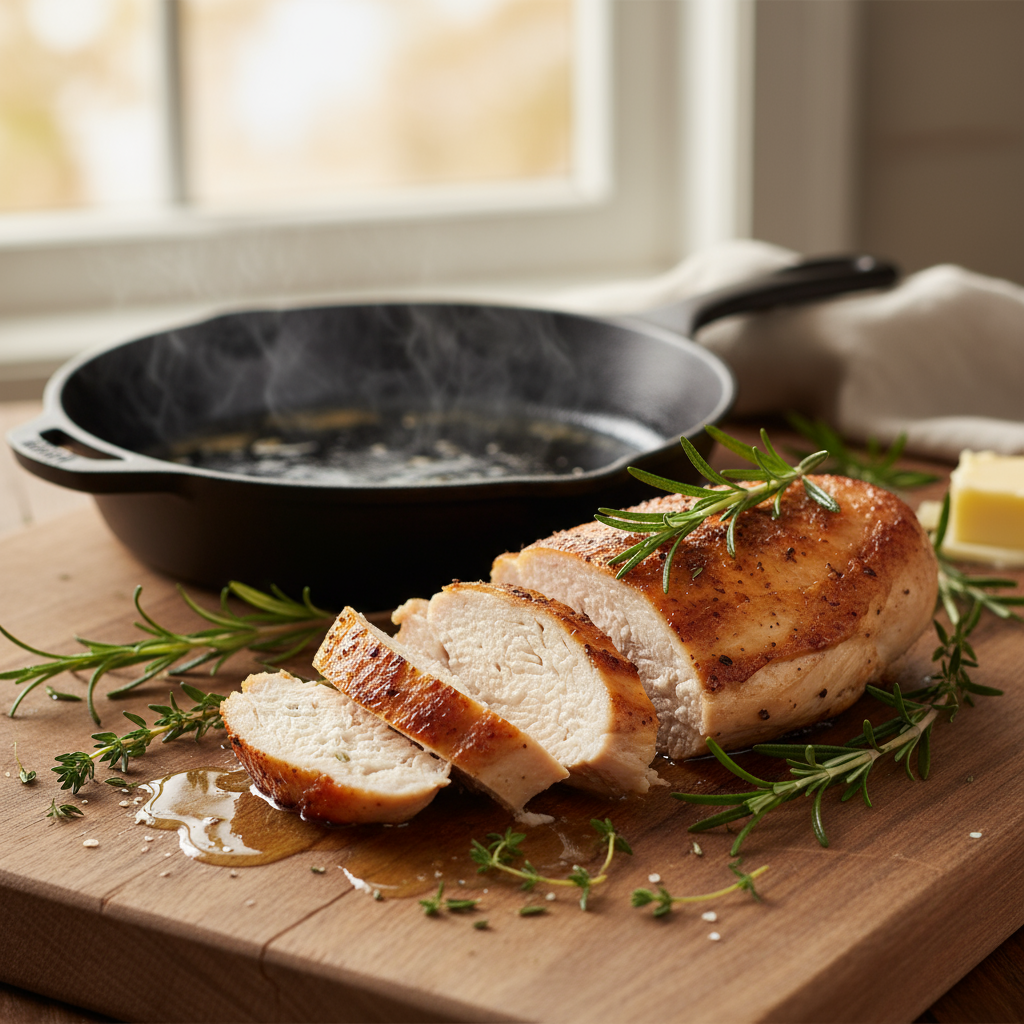
Why does chicken release water when cooking? Most supermarket chicken is water-chilled during processing, absorbing up to 8% extra water. Combined with a pan that isn't hot enough and overcrowding, this trapped moisture floods the pan instead of evaporating — turning your sear into a steam.
Stop Chicken Releasing Water — Step by Step
- Pat chicken completely dry with paper towels on all sides
- Preheat pan on high until oil shimmers or lightly smokes
- Don't crowd — leave 1 inch between pieces
- Season immediately before placing in pan
- Don't move chicken for 4–6 minutes to form crust
- Check temperature — remove at 165°F (74°C)
- Rest 5–10 minutes before slicing
If your chicken is watery, grey, or steaming instead of browning, the fix is simple: dry it properly, get the pan hotter, and give pieces space. Below are 7 proven methods to stop chicken leaking water and get a golden sear every time.
The Real Reason: Water-Chilled Processing
Most chicken in supermarkets is cooled in large water vats after processing. The meat absorbs up to 8% of its body weight in water. This is efficient for producers but leaves chicken waterlogged.
Some producers also "plump" or "enhance" chicken by injecting saltwater, broth, and flavourings. While marketed to improve flavour, it increases weight — and all that added liquid releases during cooking.
1. Pat It Bone Dry — The Most Critical Step
Surface moisture prevents browning. Use several paper towels to pat every surface of the chicken completely dry. A dry surface allows direct contact with the hot pan, creating a golden-brown crust through the Maillard reaction. This single step transforms your results.
2. Get Your Pan Screaming Hot
A lukewarm pan guarantees steaming instead of searing. Add cooking fat and wait until it shimmers or just begins to smoke. High initial heat sears the chicken's surface instantly, forming a crust that locks in juices.
3. Never Crowd the Pan
Give chicken space. Crowding drops the pan temperature, causing moisture to pool and steam the pieces instead of browning them. Cook in batches if necessary. Leave at least an inch between each piece.
Looking to create your own custom recipes? Try our AI-powered recipe generator for personalized cooking solutions.
4. Buy Air-Chilled Chicken When Possible
Air-chilled chicken is cooled by cold air instead of water baths. As Serious Eats explains, air-chilling results in more concentrated flavour and no added water. Check labels for phrases like "enhanced with up to 15% solution" — that means plumped.
5. Season Right Before Cooking
Salt draws out moisture via osmosis. If you salt chicken and let it sit for 15–20 minutes, moisture beads on the surface — the opposite of what you want before searing. Season dry chicken with salt and pepper immediately before placing it in the hot pan.
6. Don't Overcook It
Overcooking causes muscle fibres to contract more, squeezing out moisture. This results in dry, stringy, tough meat. Use an instant-read thermometer. According to the USDA, chicken is safe at 165°F (74°C). Remove it from heat as soon as it reaches this temperature.
7. Always Rest Before Slicing
After cooking, juices concentrate in the centre. Slicing immediately causes them to spill out onto the board. Rest the chicken for 5–10 minutes. This allows muscle fibres to relax and juices to redistribute evenly.
What Is the White Stuff Leaking From Chicken?
The white, gooey substance is albumin, a harmless protein. As chicken cooks, albumin denatures and moves to the surface. A large amount combined with excess water indicates steaming, not searing. Fix this by drying properly and using higher heat.
Recipe: The Juiciest Pan-Seared Chicken Breasts
The Juiciest Pan-Seared Chicken Breasts
A foolproof method for achieving a perfect golden-brown crust and a moist, tender interior every single time.
- Prep time: 5 minutes
- Cook time: 15–20 minutes
- Rest time: 10 minutes
- Total time: 30–35 minutes
- Servings: 4
- Difficulty: Easy
Ingredients
- 2 large boneless, skinless chicken breasts (about 1.5 lbs / 680g total), preferably air-chilled
- 1 tbsp olive oil or other high-smoke-point oil
- 1 tsp kosher salt (or to taste)
- 1/2 tsp black pepper, freshly ground
- 1 tbsp unsalted butter (optional, for finishing)
- 2 cloves garlic, smashed (optional, for finishing)
- 1 sprig fresh thyme or rosemary (optional, for finishing)
Instructions
- Prep the Chicken: If breasts are very thick, slice horizontally to create four thinner cutlets for even cooking.
- DRY THE CHICKEN: Pat chicken completely dry on all sides with paper towels. This is the most critical step.
- Heat the Pan: Place a large skillet (cast iron or stainless steel) over medium-high heat. Add olive oil and wait until it shimmers.
- Season and Sear: Season dry chicken generously with salt and pepper. Immediately place in the hot pan, ensuring no overcrowding.
- Cook Undisturbed: Cook for 4–6 minutes on the first side without moving to form a deep, golden-brown crust.
- Flip and Finish: Flip the chicken. Cook for another 4–6 minutes. For extra flavour, add butter, smashed garlic, and herb sprig in the last minute.
- Check for Doneness: Use an instant-read thermometer. Chicken is done at 165°F (74°C).
- REST: Transfer chicken to a cutting board. Rest for 5–10 minutes before slicing.
Frequently Asked Questions
Why does chicken release water when cooking?
Most supermarket chicken is water-chilled during processing, absorbing up to 8% extra water. This trapped moisture releases when heated. Combine that with a pan that isn't hot enough, and you get steaming instead of searing.
Why is my chicken so watery when I cook it?
Your chicken is likely water-chilled or "plumped" with added solution. Pat it completely dry before cooking, preheat your pan until oil shimmers, and don't crowd pieces. These three steps eliminate most excess moisture.
How to stop chicken from releasing water?
Pat chicken bone-dry with paper towels, get your pan screaming hot before adding chicken, and leave space between pieces. Buy air-chilled chicken when possible — it contains no added processing water.
Why does so much water come out of my chicken?
Water-chilling and "plumping" during processing adds up to 15% extra liquid. Check labels for "enhanced with solution" or added broth. Air-chilled chicken avoids this entirely.
Is the white liquid from chicken safe to eat?
Yes. The white substance is albumin, a harmless protein that coagulates when heated. It's not a sign of anything wrong — just protein moving to the surface during cooking.
Should I wash chicken to remove excess water?
No. Washing chicken spreads bacteria around your kitchen, as advised by the Food Standards Agency. Instead, pat it thoroughly dry with paper towels and discard them. This removes surface moisture safely without cross-contamination.
Does brining make chicken more watery?
Wet brining can add moisture, but dry brining (salting and refrigerating uncovered for 1–24 hours) actually draws moisture out, then reabsorbs it with salt. This improves flavour and texture without creating a watery pan.
What's the best pan for searing chicken without water pooling?
Cast iron or heavy stainless steel. Both retain heat well, so the temperature doesn't drop when you add chicken. Avoid non-stick for high-heat searing — they can't handle the temperatures needed for proper browning.