
Chicken Cooks Unevenly? 7 Easy Fixes for Perfect Results
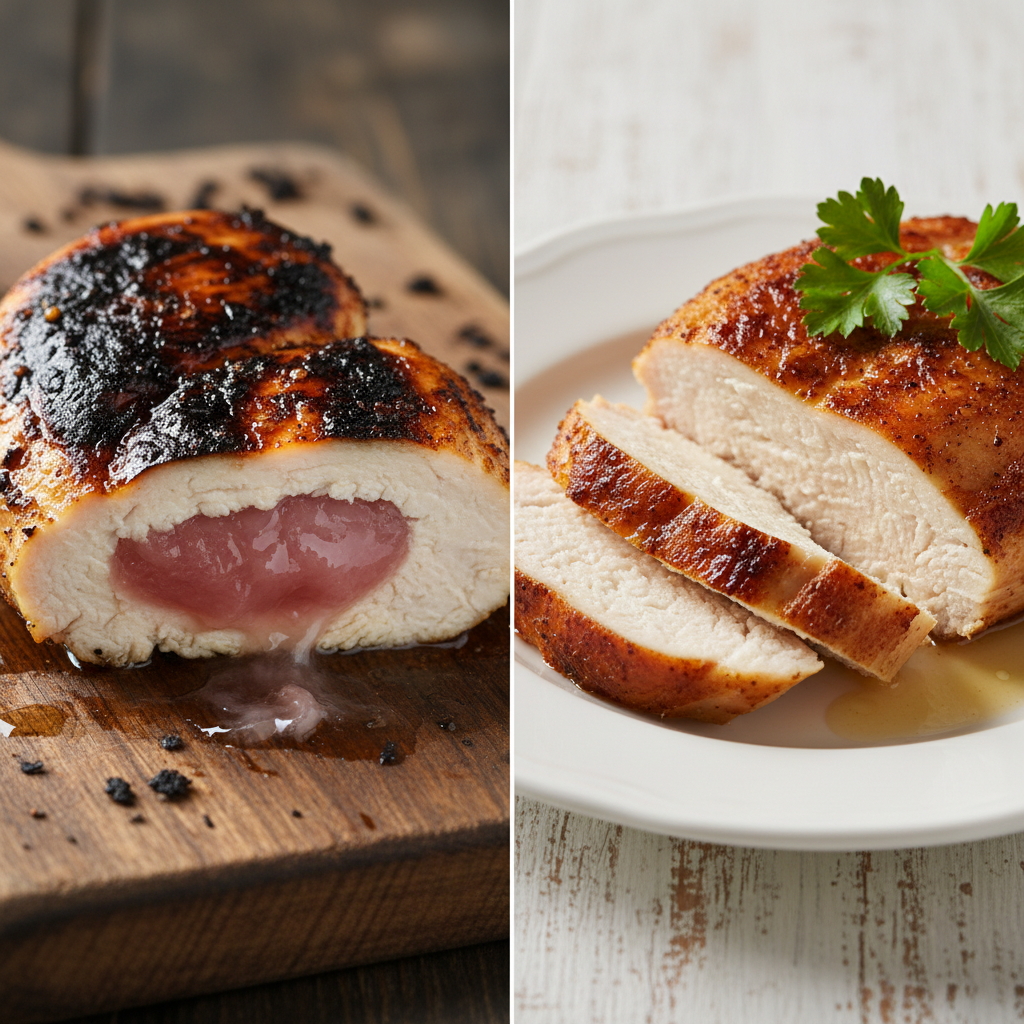
chicken cooks unevenly. There's nothing more disappointing than cutting into a beautiful, golden-brown chicken breast, only to find it's dry and stringy on the outside but still stubbornly pink in the middle. It's a common kitchen headache that can make you want to give up on weeknight chicken dinners entirely! If you've ever wondered why your chicken cooks unevenly, you're not alone.
chicken cooks unevenly. The good news is that this problem is totally fixable. It usually boils down to a few key factors: inconsistent meat thickness, incorrect pan temperature, and overcrowding. Let's dive into the science, the quick fixes, and the prevention tips to ensure you get perfectly cooked, juicy chicken every single time.
chicken cooks unevenly. Want to create your own custom recipes? Try our AI-powered recipe generator for personalized cooking solutions tailored to your ingredients and preferences.
The Science Behind Unevenly Cooked Chicken
Chicken cooks unevenly primarily due to its inconsistent shape, with thicker and thinner parts heating at different rates, leading to overcooked thin sections and undercooked thick sections.
chicken cooks unevenly. Cooking is all about heat transfer. When you place chicken in a hot pan or oven, heat moves from the outside to the inside. Chicken, especially boneless, skinless breasts, isn't a uniform shape; it has a thick, bulbous end and a thin, tapered end.
chicken cooks unevenly. Because heat transfer takes time, the thin end cooks faster than the thick end. By the time the center of the thickest part reaches a safe temperature, the thin end has been overcooked. High heat exacerbates this, burning the exterior before the interior cooks, preventing a perfect golden-brown Maillard reaction.
| Chicken Doneness | Target Temperature (Fahrenheit) | Target Temperature (Celsius) |
|---|---|---|
| Chicken Breast | Pull from heat at 160°F | Pull from heat at 71°C |
| Chicken Thigh/Leg | Pull from heat at 170-175°F | Pull from heat at 77-79°C |
| Final Safe Temp (after rest) | 165°F | 74°C |
5 Quick Fixes for When Your Chicken Cooks Unevenly
Fix 1: Pound It Out for Even Thickness
The Problem: Chicken breasts are naturally thicker on one end, causing uneven cooking.
The Fix: Place chicken breast between parchment paper or in a zip-top bag. Pound the thickest part until it's uniform, about ½ to ¾ inch thick.
Pro Tip: Pound outwards from the center of the thickest part to prevent tearing.
Fix 2: Get the Pan Temperature Right
The Problem: A pan that's too hot burns the outside; too cool steams the chicken.
The Fix: Preheat your skillet over medium to medium-high heat. Add oil and wait until it shimmers. You should hear a confident sizzle when chicken is added.
Pro Tip: Adjust heat during cooking. If the crust darkens too fast, lower the heat to medium-low.
Fix 3: Don't Crowd the Pan
The Problem: Too much chicken in a pan lowers its temperature, steaming the meat instead of searing it.
The Fix: Cook in batches, ensuring at least an inch of space between pieces. This allows moisture to evaporate and promotes even searing.
Pro Tip: A crowded pan leads to a steamy, unappealing texture often mistaken for dry, overcooked chicken.
Fix 4: Butterfly or Spatchcock It
The Problem: Extra-thick chicken breasts or whole chickens have varied shapes and bone structures, making even cooking difficult.
The Fix: For thick breasts, butterfly them by slicing horizontally and opening like a book. For a whole chicken, spatchcock it (remove backbone and flatten). Both methods create uniform thickness for even cooking.
Pro Tip: Spatchcocking a chicken reduces roasting time by almost half and ensures crispy skin and juicy meat. Use sturdy kitchen shears.
Fix 5: Always Use a Meat Thermometer
The Problem: Guessing doneness is unreliable; cutting into chicken releases juices.
The Fix: Use an instant-read digital thermometer. Insert into the thickest part, avoiding bone. For breasts, aim for 165°F (74°C), as recommended by the Food Standards Agency.
Common Mistakes to Avoid
Even with the best techniques, there are several pitfalls that can derail your progress. Here are the most common mistakes people make and how to avoid them.
Rushing the Process
One of the biggest mistakes is trying to rush through the steps. Take your time and focus on getting each step right. Quality matters more than speed when you're learning a new technique.
Skipping Key Steps
Every step in this process is there for a reason. Skipping even one can significantly impact your results. Make sure you complete each step thoroughly before moving on to the next.
Not Adjusting for Your Specific Situation
While these techniques work in most cases, you may need to make small adjustments based on your specific circumstances. Pay attention to what works best for you and don't be afraid to make modifications.
Final Thoughts
Now you have all the tools you need to solve this problem. Remember, the key is to be patient and follow these steps carefully. With practice, you'll master this technique and never face this issue again. If you found this guide helpful, share it with others who might benefit from these tips.
Frequently Asked Questions
Why does my chicken cook unevenly, with some parts raw and others dry?
Your chicken cooks unevenly primarily due to its inconsistent shape; thicker parts take longer to heat through than thinner sections. This leads to the thin parts drying out and becoming overcooked while the thick parts are still undercooked. High heat can also exacerbate this issue, burning the exterior before the interior is done.
What's the easiest way to prevent chicken from cooking unevenly when pan-frying?
Pounding your chicken breasts to an even thickness is the easiest way to prevent them from cooking unevenly. This ensures that all parts cook at roughly the same rate, leading to a more consistent and juicy result. Always use a meat thermometer to confirm doneness.
Will bone-in chicken cook more evenly than boneless if my chicken cooks unevenly now?
Bone-in chicken can sometimes cook more evenly in certain preparations because the bone conducts heat. However, the primary reason your chicken cooks unevenly is usually inconsistent meat thickness, regardless of whether it's boneless or bone-in. Pounding or spatchcocking are generally more effective solutions for even cooking.
How can I tell if my chicken is fully cooked, especially if it tends to cook unevenly?
The best way to tell if your chicken is fully cooked, particularly if it cooks unevenly, is to use an instant-read thermometer. For chicken breasts, aim for 160°F (71°C) when pulling it from the heat, and for thighs/legs, 170-175°F (77-79°C). The temperature will rise to the safe 165°F (74°C) as it rests.
My chicken always cooks unevenly, can different cooking methods help?
Yes, different cooking methods can help if your chicken cooks unevenly. While pan-frying is common, braising or slow-cooking methods can provide a more gentle and even heat distribution over a longer period. Spatchcocking a whole chicken also allows for more uniform cooking by evening out the thickness.