
Why Is My Chicken Tough? The Real Reason (Fix It Tonight)
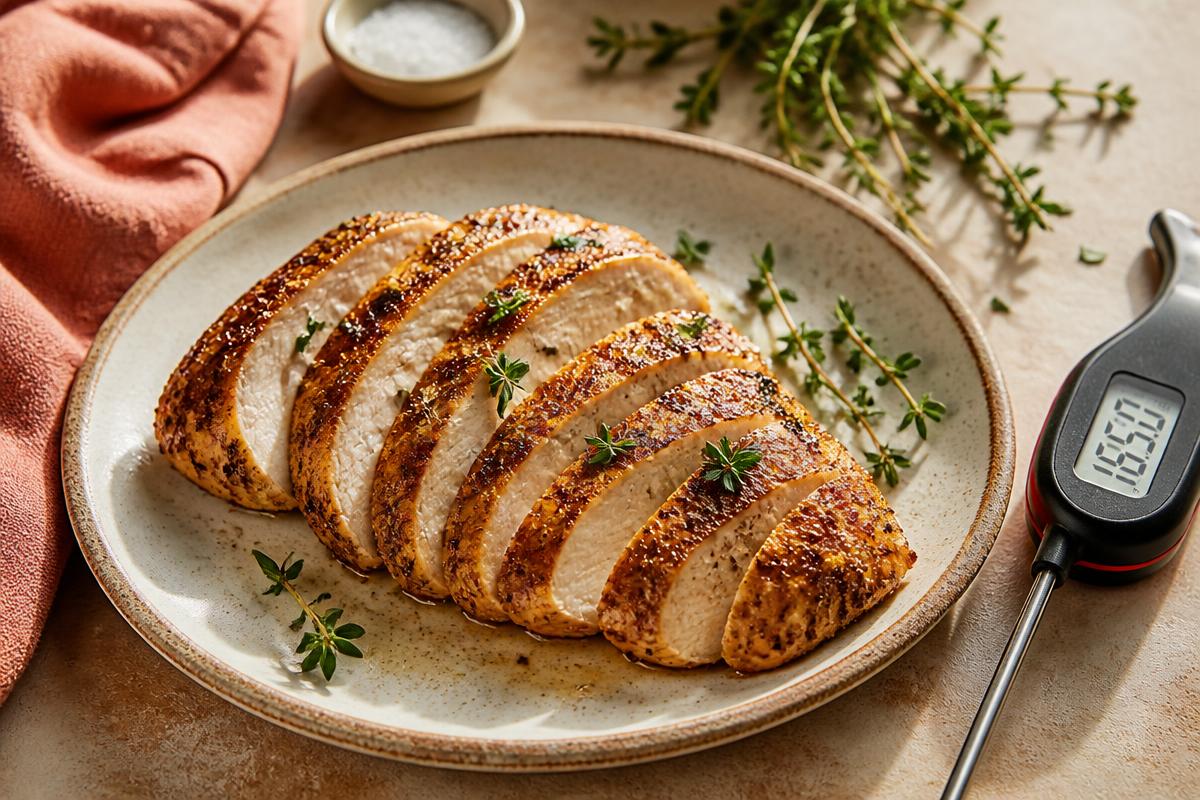
Why Is My Chicken Tough, Stringy or Chewy? 7 Fixes That Work
Why is my chicken tough and stringy? Chicken becomes tough when overcooked — even 2–3 minutes too long makes it rubbery. High heat, no brining, and slicing too soon also cause chewy, stringy texture. The fix: cook to exactly 74°C (165°F), rest for 5 minutes, and brine beforehand for guaranteed tenderness.
Fix Tough Chicken — Step by Step
- Use a meat thermometer — remove at 74°C (165°F)
- Rest for 5–10 minutes before slicing
- Brine for 30 minutes (1 tbsp salt per cup of water)
- Cook on medium heat, never high
- Pound breasts to even thickness
- Let chicken reach room temperature before cooking
- Choose thighs for slow cooking, breasts for fast
If your chicken is tough, chewy, stringy, or rubbery, it's almost always overcooked or cooked at too high a temperature. Below are 7 proven causes and exactly how to fix each one.
Already Cooked Tough Chicken? Rescue It First
Slice thin and add warm sauce or broth to restore moisture. Shred it into wraps, stir-fries, or tacos. Simmer in broth for 5–10 minutes to rehydrate. Add to a curry, stew, or soup — moist cooking methods break down protein further.
1. You Overcooked It (The #1 Cause)
This is the most common reason chicken turns tough, stringy, and chewy. Overcooking, especially chicken breast, makes it dry and rubbery — even a few minutes too long.
Fix it: Use a thermometer and remove chicken at 73–74°C (165°F). Let it rest for 5 minutes before cutting. Reduce cooking time for thin breasts. Pound breast to even thickness to prevent uneven cooking.
2. Your Heat Was Too High
Cooking chicken on high heat dries the outside before the inside is done, creating rubbery, stringy meat.
Fix it: Use medium or medium-low heat. Cook breasts 6–8 minutes per side. For thighs, cook low and slow to break down connective tissue.
3. Is Chewy Chicken Undercooked or Overcooked?
Undercooked chicken can feel rubbery or jelly-like, often mistaken for toughness. The proteins haven't fully set. Overcooked chicken is dry and stringy. The difference: undercooked feels wet and springy, overcooked feels dry and fibrous.
Fix it: Cook until internal temp reaches 73–74°C (165°F). According to the Food Standards Agency, use an instant-read thermometer in the thickest part, avoiding bone.
Looking to create your own custom recipes? Try our AI-powered recipe generator for personalized cooking solutions.
4. You Didn't Brine or Marinate
Chicken has little natural fat, so it dries out easily without preparation. Salt in brine changes protein structure, helping muscle fibres retain more water during cooking. As Serious Eats explains, even a 30-minute brine makes a noticeable difference.
Fix it: Brine: 1 tbsp salt per 1 cup water, soak 20–30 minutes. Marinate: use yogurt, lemon juice, or buttermilk. Dry rub: salt + herbs for at least 15 minutes.
5. Wrong Cut for the Recipe
Not all chicken cuts cook the same. Chicken breast dries out quickly. Thighs handle long cooking better. Legs need longer cooking for tenderness. Frozen chicken releases water, steaming instead of searing.
Fix it: Use breasts for fast sautéing or grilling. Use thighs for slow cooking, curries, or stews. For curries, check our guide on fixing watery curry.
6. You Cooked It Straight From the Fridge
Cold chicken in a hot pan cooks unevenly. The outside burns while the inside stays raw or rubbery.
Fix it: Let chicken rest at room temperature for 15 minutes before cooking.
7. You Sliced Too Soon
Cutting chicken immediately after cooking lets juices escape, leaving dry, chewy meat.
Fix it: Rest chicken for 5–10 minutes before slicing. This keeps the inside juicy and fibres relaxed.
Stop Stringy Chicken Forever — Prevention Checklist
- Even thickness: Pound breasts flatter for even cooking
- Brine or marinate: Easiest way to prevent toughness
- Medium heat: Prevents overcooking and rubbery fibres
- Use a thermometer: Game-changer for beginners and pros
- Rest before slicing: Keeps juices inside
- Choose the right cut: Thighs for slow cooking, breasts for fast
Why Chicken Becomes Chewy in Curry
Chicken becomes tough in curry when cooked too hot, added too early, stirred aggressively, not marinated, or not cooked long enough (thighs need time).
Fix: Use thighs, cook on medium-low, and simmer gently. Learn more in our guide: Why Is My Curry Watery?. For meat cuts, read our guide on best meat cuts for slow cooking.
Frequently Asked Questions
Why is my chicken stringy?
Stringy chicken is overcooked. When muscle fibres tighten from too much heat, they squeeze out moisture and separate into strands. Cook to exactly 74°C (165°F) and rest before slicing to prevent stringy texture.
Why is my chicken tough even though I used a thermometer?
You may have left it on heat too long before checking, or cooked from frozen without thawing. Carryover cooking adds degrees after removal, so remove at 72–74°C and rest immediately. The USDA provides comprehensive guidance on safe temperatures.
Is chewy chicken undercooked or overcooked?
It depends on texture. Undercooked chicken feels wet, springy, and jelly-like. Overcooked chicken feels dry, fibrous, and stringy. Both feel "chewy" but the fix is opposite — cook longer for undercooked, less time for overcooked.
Can I fix rubbery chicken after it's already cooked?
Yes. Shred and simmer in broth, stock, or sauce for 5–10 minutes. The liquid rehydrates the meat. Alternatively, slice very thin and serve with generous sauce or gravy.
Does brining actually make chicken more tender?
Yes. Salt changes protein structure, helping muscle fibres retain water during cooking. Even a 30-minute brine makes a noticeable difference in juiciness and reduces tough, dry results.
Are chicken thighs more forgiving than breasts?
Much more forgiving. Thighs have higher fat and connective tissue that breaks down during cooking, keeping them moist even if slightly overcooked. Use thighs for curries, stews, and slow cooking.
Why does restaurant chicken taste better than mine?
Restaurants brine chicken, use fattier cuts like thighs, cook in butter at precise temperatures, and rest meat before serving. Home cooks often skip brining and rush resting — both are critical for results.
What is bland chicken missing?
Salt and browning. Season generously before cooking and ensure your pan is hot enough to create a golden-brown Maillard crust. Brining adds seasoning throughout the meat, not just the surface.