
How to Stop Curry Burning at the Bottom: 6 Quick Fixes
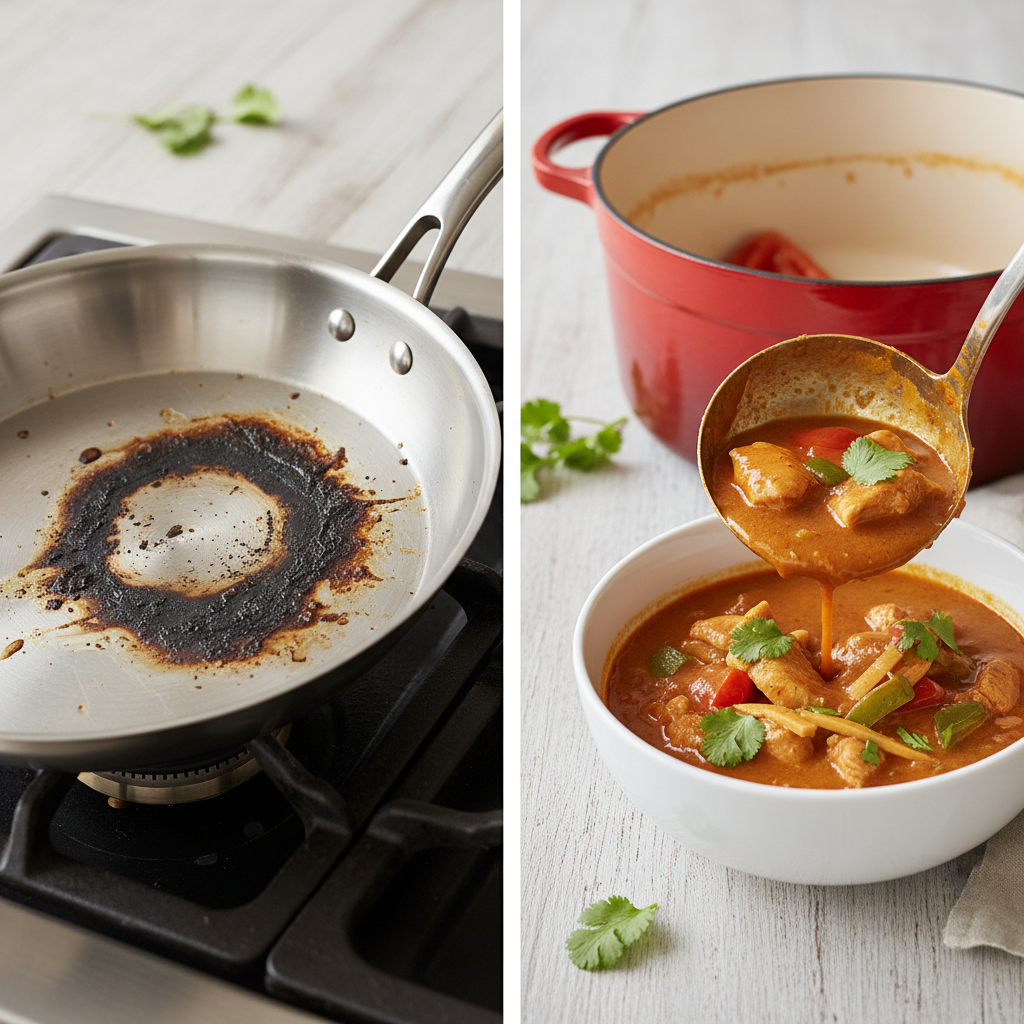
curry burning at the bottom. There’s nothing more heartbreaking. You’ve just checked your perfectly fluffy rice, the naan is warming, and you go to give your simmering curry one last stir... only to feel that dreaded, gritty scrape. The bottom is burnt. That acrid smell starts to creep into the kitchen, and panic sets in. Don't worry, we've all been there! The good news is that a curry burning at the bottom of the pan is a super common issue. It usually boils down to a few key culprits: heat that's too high, the wrong type of pan, adding thickeners too early, or simply not stirring enough. Let's dive into how to fix it and make sure it never happens again.
curry burning at the bottom. Want to create your own custom recipes? Try our AI-powered recipe generator for personalized cooking solutions tailored to your ingredients and preferences.
The Science Behind a Burnt Curry
curry burning at the bottom. Curry burns due to high heat, concentrated sugars, and starches sticking to the pan, often exacerbated by insufficient stirring or an unsuitable pan.
curry burning at the bottom. When cooking, the Maillard reaction creates flavor, but excessive, direct heat leads to burning. Curry ingredients like onions, tomato paste, and coconut milk are high in natural sugars, which scorch quickly without enough liquid or movement. Starches from potatoes, lentils, or thickeners also sink and burn if unstirred. Pan type significantly impacts this, as poor heat distribution creates "hot spots" causing burning.
| Ingredient | Why It Burns | Solution |
|---|---|---|
| Onions / Tomato Paste | High sugar content | Sauté on medium heat; don't leave unattended. |
| Spices | Dry, fine particles | 'Bloom' in oil on low heat for ~30 seconds. |
| Coconut Milk / Yogurt | Sugars and proteins | Add at the end of cooking on low heat. |
| Potatoes / Lentils | High starch content | Ensure enough liquid is in the pan; stir regularly. |
6 Quick Fixes for a Curry Burning at the Bottom
1. The Pan is Too Hot
The Problem: High heat is the primary cause of burnt curry, scorching ingredients at the bottom before the dish cooks evenly.
The Fix: Immediately turn the heat to the lowest setting. Do not scrape burnt bits into the curry. Carefully transfer the top 80% of the curry to a new, clean pan, leaving the burnt layer behind.
Pro Tip: Use a heat diffuser between the burner and pot for even heat distribution, preventing hot spots.
2. You're Using the Wrong Pan
The Problem: Thin-bottomed pans conduct heat too quickly and unevenly, creating intense hot spots that burn long-simmering dishes like curry.
The Fix: Transfer the unburnt curry to a heavy-bottomed pot, such as a cast-iron Dutch oven or a high-quality clad-stainless steel pot. These materials distribute heat evenly, crucial for gentle simmering.
Pro Tip: A quality Dutch oven is ideal for curries and other dishes requiring even heat. For more on this, check out this great guide on the best Dutch ovens from the experts at Serious Eats.
3. Thickeners Were Added Too Early
The Problem: Ingredients like coconut milk, yogurt, ground nuts, or flour thicken the sauce, reducing liquid movement and allowing starches and sugars to settle and scorch.
The Fix: If burning is suspected, add warm broth or water around the pan edges to create steam and release the bottom. If the burn is established, transfer the good portion to a new pan.
Pro Tip: Add main thickeners and dairy during the last 10-15 minutes of cooking on low heat, stirring continuously.
4. You're Not Stirring Enough
The Problem: Heavier particles like spices, puréed aromatics, and starches sink and form a layer on the hot pan surface, leading to burning if not agitated.
The Fix: Stir frequently with a flat-edged wooden spoon or silicone spatula, scraping the entire bottom surface and corners. If a burnt spot exists, stir gently around it to avoid disturbing the carbonized layer.
Pro Tip: Set a timer for every 5-7 minutes during simmering to remind yourself to stir thoroughly from the bottom.
5. High Sugar Content from Paste or Onions
The Problem: Onions and tomato paste, rich in sugar, can quickly turn from caramelized to bitter and burnt if left unattended on medium-high heat.
The Fix: If caught early, deglaze with liquid (water, broth, vinegar) and scrape to lift dark brown (not black) bits. If black, transfer the unburnt portion to a new pan.
Pro Tip: Stir tomato paste for 1-2 minutes until deep brick red to cook out raw flavor before adding main liquids, preventing burning.
6. The Liquid Evaporated Too Quickly
The Problem: Reducing curry too long, especially uncovered, causes liquid levels to drop, exposing solids to direct heat and leading to burning.
The Fix: Immediately add about a half-cup of warm broth or water and stir gently. This replenishes the liquid buffer, potentially stopping the burning process.
curry burning at the bottom is important to understand.
curry burning at the bottom is important to understand.
Final Thoughts
Now you have all the tools you need to solve this problem. Remember, the key is to be patient and follow these steps carefully. With practice, you'll master this technique and never face this issue again. If you found this guide helpful, share it with others who might benefit from these tips.
Frequently Asked Questions
What causes curry burning at the bottom of the pan?
Curry usually burns at the bottom due to high heat, insufficient stirring, or using the wrong type of pan. Ingredients high in natural sugars (like onions, tomato paste, coconut milk) and starches (like potatoes or lentils) are particularly prone to scorching if left unattended.
Can you save a curry if it's burning at the bottom?
Yes, you can often save a curry that's burning at the bottom. The key is to immediately turn down the heat and carefully transfer the unburnt top portion to a fresh pan. Avoid scraping the burnt bits from the bottom, as this will spread the acrid flavor.
How can I prevent my curry from burning at the bottom in the future?
To prevent curry burning at the bottom, maintain a medium-low heat, stir frequently, and use a heavy-bottomed pan for better heat distribution. Also, consider adding thickeners or starchy ingredients later in the cooking process.
Are certain ingredients more likely to cause curry burning at the bottom?
Absolutely. Ingredients with high sugar content such as onions, tomato paste, and coconut milk can caramelize and burn quickly. Starchy ingredients like potatoes and lentils also tend to stick and burn if not submerged in enough liquid and stirred regularly.
Does the type of pan affect whether a curry burns at the bottom?
Yes, the pan type significantly impacts burning. Thin, light pans often have poor heat distribution, leading to "hot spots" where the curry is more likely to scorch. A heavy-bottomed pan or a Dutch oven provides more even heat, reducing the risk of a curry burning at the bottom.