
Chicken Leaks White Stuff? Is It Safe? 5 Ways to Fix It
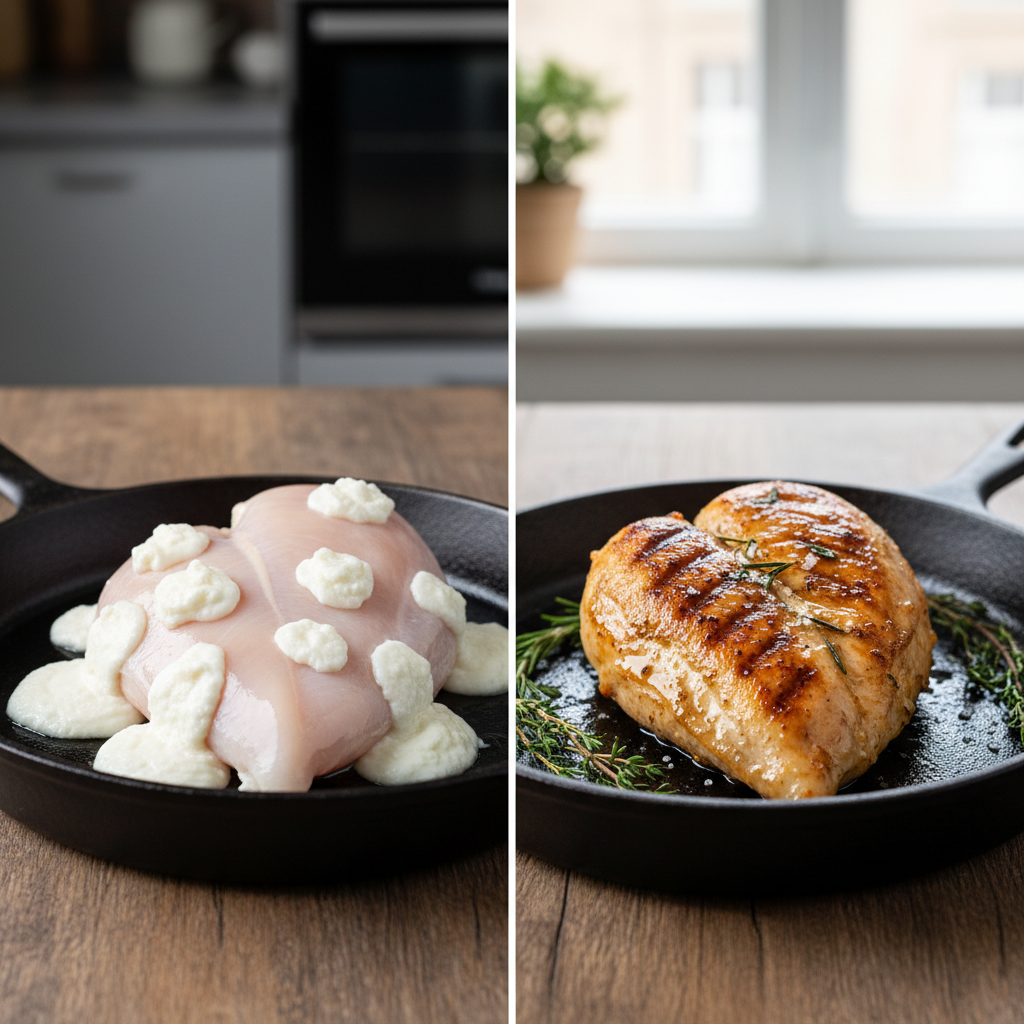
There you are, searing a beautiful chicken breast, dreaming of that perfect golden-brown crust. Everything is sizzling along nicely, and then you see it: a weird, white, slightly rubbery substance oozing out from the sides. Ugh! What is that, and did you just ruin dinner? Take a deep breath—you're not alone, and it's an easy fix! When your chicken leaks white stuff, it's almost always a harmless protein called albumin that's been squeezed out by the heat. While it’s totally safe to eat, we can definitely prevent it for a prettier and even juicier result. Let's dive into why this happens and how to stop it for good.
Want to create your own custom recipes? Try our AI-powered recipe generator for personalized cooking solutions tailored to your ingredients and preferences.
The Science Behind Why Chicken Leaks White Stuff
So, what exactly is that white gunk? It’s a protein called albumin. Think of it as the chicken's version of an egg white. Albumin is dissolved in the moisture within the chicken's muscle fibers. When you cook the chicken, especially with high, direct heat, the muscle fibers contract and tighten up. This contraction squeezes out the internal moisture.
As this protein-rich liquid seeps out and hits the hot pan or oven air, the albumin coagulates—it cooks and turns from a clear liquid into a white, semi-solid substance. It's the exact same process that turns a clear egg white opaque when you fry it! This is completely natural and happens more often in younger chickens, which have more tender muscle fibers, and in chicken that has been "plumped" with a salt solution, as it contains more free-flowing liquid.
While harmless, a lot of albumin leakage can be a sign that your chicken is losing moisture, which can lead to a less juicy final product. The goal is to cook the chicken in a way that keeps the moisture (and the albumin) locked inside.
5 Quick Fixes When Your Chicken Leaks White Stuff
1. The Problem: The Surface Is Too Wet
The Fix: Pat your chicken completely dry with paper towels before it ever touches the pan. Moisture on the surface instantly turns to steam, which cooks the exterior too aggressively and forces the muscle fibers to contract violently. A dry surface encourages browning (the Maillard reaction) rather than steaming.
Pro Tip: For an impeccably dry surface, place the patted-dry chicken on a wire rack set over a plate and let it air-dry in the refrigerator for 30-60 minutes before cooking. This is a pro-chef secret for super crispy skin and a perfect sear!
2. The Problem: The Chicken Is Ice-Cold
The Fix: Let your chicken rest on the counter for 15-30 minutes before cooking. This is called tempering. Throwing ice-cold chicken into a hot pan creates a temperature shock, causing an immediate and intense contraction of the muscles, which squeezes out the albumin. Allowing it to come closer to room temperature makes the cooking process much gentler.
Pro Tip: Don't leave chicken out for more than an hour (or 30 minutes if your kitchen is very warm) to stay within safe food handling guidelines. Even 15 minutes makes a huge difference!
3. The Problem: The Heat Is Too High
The Fix: Moderate your cooking temperature. While a good sear is great, blasting the chicken with scorching-hot heat from start to finish is a one-way ticket to albumin city. Start with medium-high heat to get that initial golden crust (about 2-3 minutes per side), then reduce the heat to medium to finish cooking. This allows the heat to penetrate more gently without shocking the proteins.
Pro Tip: A fantastic method is to sear the chicken on the stovetop and then transfer the entire (oven-safe) pan to a preheated 375°F (190°C) oven to finish cooking. This provides even, all-around heat and is a great way to avoid dry chicken.
4. The Problem: The Proteins Are Too Tense
The Fix: Try a quick brine. This might seem counterintuitive since we just talked about excess moisture, but a proper brine actually helps the chicken retain its *own* moisture. A short soak in a saltwater solution (about 1 tablespoon of kosher salt per cup of water) for just 15-30 minutes can make a world of difference. The salt helps to denature the proteins, essentially relaxing them so they don't contract as forcefully when cooked. Just be sure to rinse the chicken and pat it completely dry afterward.
Pro Tip: According to the experts at Serious Eats, even a very short brine is one of the best ways to guarantee juicy chicken and prevent that dreaded rubbery chicken texture.
5. The Problem: The Pan Is Overcrowded
The Fix: Give your chicken some personal space! Piling too many pieces into the pan at once dramatically lowers the pan's temperature. Instead of searing, the chicken begins to steam in its own juices. This prolonged, gentle-but-wet cooking environment is perfect for slowly drawing out albumin. Cook in batches if you have to, ensuring there's at least an inch of space between each piece.
Pro Tip: Use a heavy-bottomed pan like cast iron or stainless steel. These pans retain heat exceptionally well, minimizing the temperature drop when you add the chicken and helping you maintain a consistent, albumin-busting sear.
How to Prevent White Stuff from Leaking Out of Chicken
Tired of troubleshooting? Here’s your checklist for perfect, albumin-free chicken every time:
- Pat It Dry, Always: Make this a non-negotiable step. A dry surface is your best friend.
- Temper Before Cooking: Let chicken rest at room temp for 15-30 minutes.
- Use Moderate, Even Heat: Sear hot, then cook gently. Avoid blasting it with high heat the entire time.
- Try a Quick Brine: A 30-minute soak in salt water works wonders for moisture retention.
- Don't Crowd the Pan: Cook in batches to ensure every piece gets a proper sear.
- Buy Quality Chicken: Sometimes, air-chilled chicken has less added water and may be less prone to excessive leaking.
Frequently Asked Questions
Is the white stuff that comes out of chicken safe to eat?
Absolutely! The white stuff is just a cooked protein called albumin. It's completely harmless and edible, though its texture can sometimes be a little rubbery. It's the same type of protein found in egg whites.
Why does my baked chicken have white stuff on it?
This happens for the same reason as pan-seared chicken. As the chicken bakes, its muscles contract from the heat, squeezing out moisture that contains albumin. This albumin then cooks and solidifies on the surface. This is more common if you bake at a very high temperature from the start or if the chicken wasn't patted dry first.
How do I stop albumin from leaking out of my salmon?
Great question! The same white stuff appears on salmon and other fish, and it's also albumin. The exact same principles apply: pat the fish very dry, temper it before cooking, use moderate heat, and consider a quick brine. All the fixes in this article work for fish, too!
Complete Chicken Troubleshooting Guide
This is just one of many common chicken cooking issues. For a comprehensive guide covering all chicken problems and solutions, check out our complete Complete Chicken Troubleshooting Guide.