
Chicken Skin Won't Go Crispy? 5 Easy Fixes for Perfect Skin
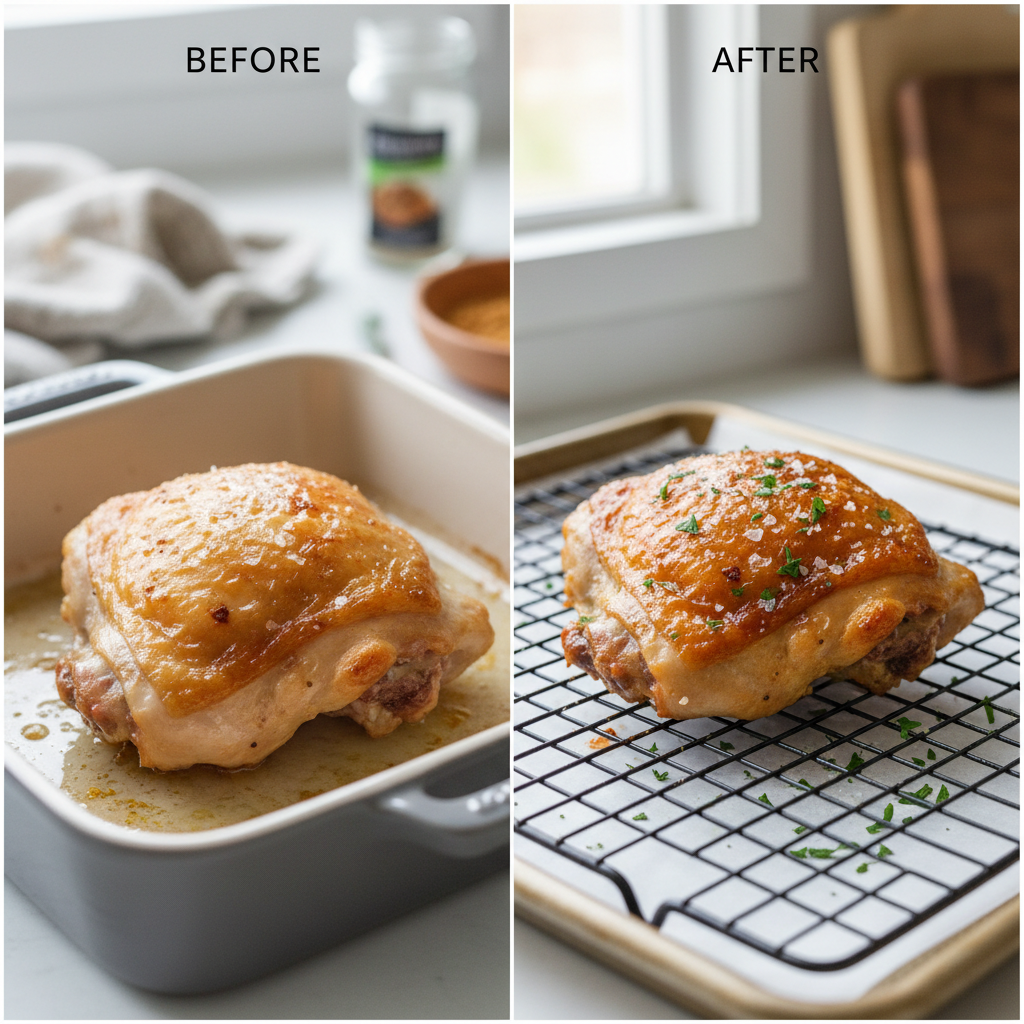
There’s nothing more disappointing than pulling a beautiful roasted chicken from the oven, only to find the skin is pale, soft, and a little bit flabby. You followed the recipe, you watched the clock, but that shatteringly crisp, golden-brown skin you dreamed of just didn't happen. It’s a common kitchen frustration, but don't worry, it's totally fixable! The reason your chicken skin won't go crispy almost always boils down to two main culprits: too much moisture and not enough (or the right kind of) heat.
But before we dive into the fixes, let's talk about the simple science behind that perfect crunch. Understanding the 'why' makes the 'how' so much easier. Let's get that skin crackling!
Want to create your own custom recipes? Try our AI-powered recipe generator for personalized cooking solutions tailored to your ingredients and preferences.
The Science Behind Soggy Chicken Skin
Getting that perfect, crispy chicken skin is a two-part process: rendering fat and browning. Chicken skin is composed of collagen, water, and fat. For it to get crispy, we need to achieve two things: evaporate the water and render (melt) the fat out from the skin.
When you heat the chicken, the fat underneath the skin begins to melt. This liquid fat then essentially 'fries' the skin from the inside out. As this happens, the water in the skin turns to steam and evaporates. Once the moisture is gone, the skin can finally begin to brown and crisp up. This browning is thanks to the famous Maillard reaction, a complex chemical reaction between amino acids and reducing sugars that gives browned food its distinctive flavor and color.
The enemy of the Maillard reaction is water. If the skin is wet or if the cooking environment is too steamy, the surface temperature can't get high enough (above 300°F / 150°C) for browning to occur. Instead, the chicken just steams, leaving the skin tough and soggy. The key is to create a dry surface and a hot environment to facilitate rendering and browning.
5 Quick Fixes for When Your Chicken Skin Won't Go Crispy
Ready to banish flabby skin forever? Here are five foolproof fixes that work whether you're using an oven or an air fryer.
1. The Problem: The Skin is Too Wet
The Problem: You pulled the chicken straight from the packaging and seasoned it. Excess moisture on the skin's surface is the number one enemy of crispiness. It creates steam, preventing the skin from drying out and browning properly.
The Fix: Get out the paper towels and pat that chicken until it's bone dry. Seriously, be thorough! Get into every nook and cranny. A dry surface is the essential first step for a crispy result.
Pro Tip: For the ultimate crispy skin, plan ahead. After patting the chicken dry, place it uncovered on a wire rack set inside a baking sheet. Let it air-dry in the refrigerator for at least 4 hours, or even overnight. This process, known as dry-brining (if you salt it first), is a guaranteed path to incredible skin.
2. The Problem: You Used the Wrong Seasoning (or Fat)
The Problem: You slathered the chicken in butter or an oily marinade. While it sounds delicious, butter has a high water content and a low smoke point, which can create steam and then burn before the skin is truly crisp. Some oils can also hinder the process.
The Fix: Use a neutral, high-smoke-point oil like canola, grapeseed, or avocado oil if you want to use fat. Better yet, let the chicken's own fat do the work. A simple seasoning of salt and pepper is often all you need. Salt is hydrophilic, meaning it draws moisture out of the skin, aiding in the drying process.
Pro Tip: Mix a little baking powder (not baking soda!) with your salt. As explained by the experts at Serious Eats, baking powder raises the skin's pH levels, which allows for more efficient browning and also helps to break down proteins, resulting in an even crispier, crunchier texture.
3. The Problem: The Pan is Overcrowded
The Problem: You've packed your chicken pieces snugly together on the baking sheet or in the air fryer basket to save time. When chicken pieces are too close, they trap moisture and steam each other instead of roasting in dry heat.
The Fix: Give them space! Ensure there's at least an inch of space between each piece of chicken. This allows hot air to circulate freely all around each piece, wicking away moisture and crisping up the skin. If you need to, use two pans or cook in batches. It's an extra step that's well worth the reward.
Pro Tip: Always place your chicken on a wire rack set inside a rimmed baking sheet for oven roasting. This elevates the chicken, allowing air to circulate underneath and preventing the bottom from becoming soggy. This simple tool can also prevent other issues, like finding out later why your chicken is rubbery.
4. The Problem: The Temperature is Too Low
The Problem: You're cooking at a moderate temperature like 350°F (175°C) for the entire time. While this might cook the chicken through, it's often not hot enough to aggressively evaporate moisture and render the fat for that perfect crisp.
The Fix: Don't be afraid of high heat. A temperature between 400°F and 425°F (205-220°C) is the sweet spot for getting crispy skin in both the oven and air fryer. This high heat quickly evaporates surface moisture and renders the fat beautifully. Just be sure to monitor it to prevent burning.
Pro Tip: For whole roasted chickens, try a two-stage approach. Start at a lower temp (350°F / 175°C) to gently cook the meat and render the fat, then crank the heat up to 425°F (220°C) for the last 15-20 minutes to crisp the skin. This helps you avoid the dreaded scenario where your chicken becomes dry inside before the skin is done.
5. The Problem: You Covered the Chicken
The Problem: You tented the chicken with foil for the entire cooking time, thinking you were locking in moisture. In reality, you were trapping steam and creating a miniature sauna for your chicken skin.
The Fix: Cook the chicken uncovered for at least the majority of the cooking time. If you notice parts like wing tips or drumstick ends browning too quickly, you can cover just those specific parts with small pieces of foil. Let the rest of the skin bask in that glorious, dry heat.
Pro Tip: This applies after cooking, too! Never cover freshly cooked, crispy chicken tightly with foil or a lid. The trapped steam will turn that perfect skin soggy in minutes. Let it rest on a cutting board for 5-10 minutes, uncovered, before serving.
How to Prevent Soggy Chicken Skin From the Start
- Buy Air-Chilled Chicken: If available, choose air-chilled chicken. It's cooled with cold air instead of chlorinated water, meaning it has a lower water content from the start.
- Dry Brine Overnight: The single most effective technique. Season the chicken with salt (and baking powder!) and let it rest uncovered in the fridge on a rack overnight.
- Use a Wire Rack: We can't say it enough. Elevating the chicken allows for 360-degree air circulation, which is crucial for even crisping.
- Preheat Properly: Ensure your oven or air fryer is fully preheated before the chicken goes in. A blast of initial high heat is key to starting the crisping process.
- Don't Sauce Too Soon: If you're making a saucy chicken dish like BBQ chicken, wait until the last 5-10 minutes of cooking to brush on the sauce. This gives the skin plenty of time to crisp up first.
Frequently Asked Questions
Why is my air fryer chicken skin not crispy?
The most common reasons for soggy skin in an air fryer are overcrowding the basket, not drying the chicken skin thoroughly before cooking, or setting the temperature too low. Ensure you're cooking in a single layer, pat the skin bone-dry, and cook at a high temperature (around 400°F / 205°C).
Can I get crispy skin on chicken breast?
Absolutely! The principles are the same. Make sure you buy skin-on chicken breasts. Pat the skin very dry, season well, and cook at a high heat. A cast-iron skillet on the stovetop is fantastic for this. Start skin-side down in a hot, oiled pan to get a great sear, then finish in the oven.
Does putting butter under the skin make it crispy?
This is a common myth. While putting an herb butter compound under the skin adds incredible flavor to the meat, the butter itself doesn't make the skin crispy. Its water content actually creates steam. For crispiness, it's better to rub the exterior of the dry skin with oil or just salt and pepper.
Complete Chicken Troubleshooting Guide
This is just one of many common chicken cooking issues. For a comprehensive guide covering all chicken problems and solutions, check out our complete Complete Chicken Troubleshooting Guide.