
How to Reheat Rice Without Drying It Out: 4 Reliable Methods
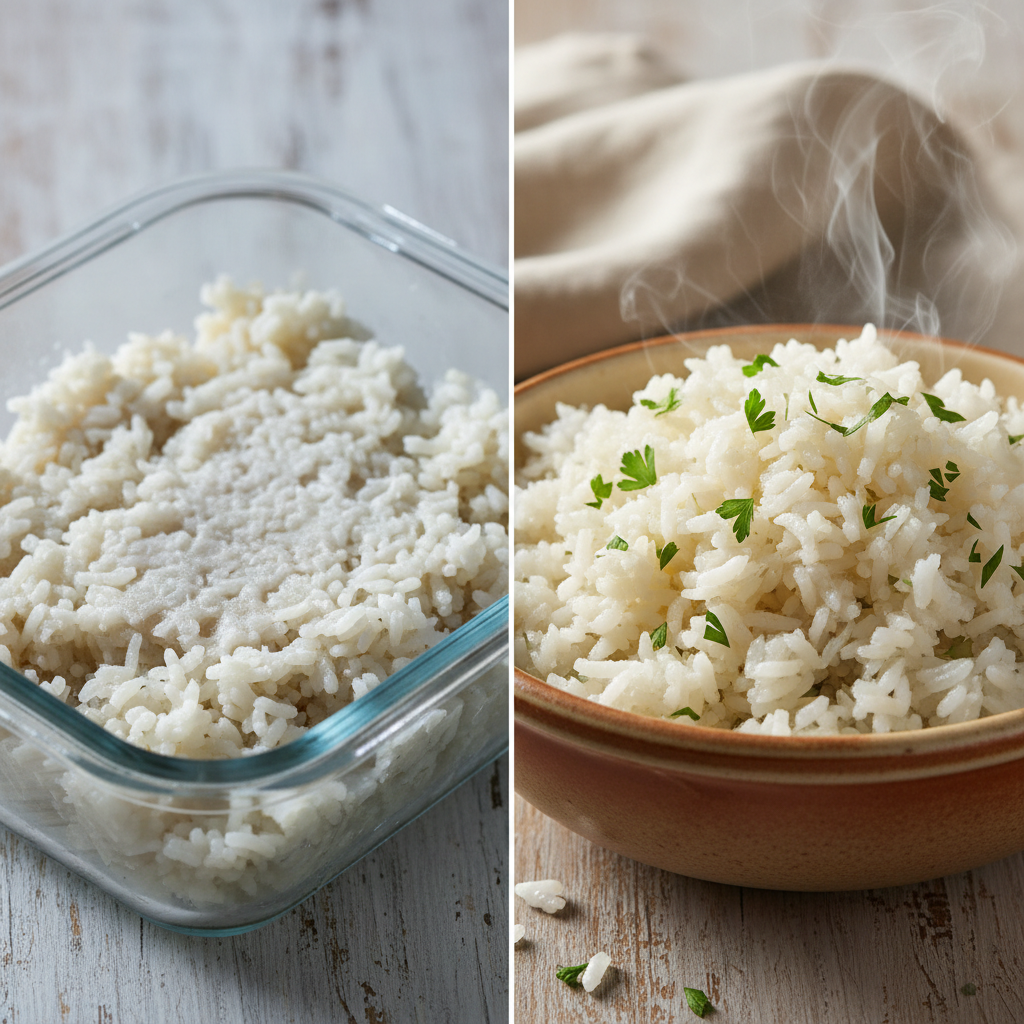
Cold rice often looks beyond saving: the grains are firm, clumped together and noticeably drier than when they were first cooked. The solution is not simply more heat. To reheat rice without drying it out, you need to add a small amount of water, trap the resulting steam and stop cooking as soon as the rice is piping hot.
This guide covers four reliable methods for different quantities and textures. The quickest is the microwave, while the hob gives you more control and the oven works best for a large batch.
The short answer
For each mug or cup of cold rice, add roughly one tablespoon of water. Cover the rice, heat it until steaming hot throughout, then fluff it with a fork. The cover matters: it keeps the new moisture beside the grains instead of letting it escape.
Why refrigerated rice becomes hard
Cooked rice firms up as it cools because its starch molecules reorganise into a tighter structure. This normal process is called starch retrogradation. Refrigeration is important for food safety, but the cold temperature makes the texture change especially noticeable.
Heat loosens that structure again. Added water turns to steam and helps the grains regain moisture, which is why covered reheating works better than placing an uncovered bowl of rice in a microwave.
Method 1: Microwave rice with a damp cover
This is the best method for one or two portions.
- Put the cold rice in a microwave-safe bowl and break up large clumps with a fork.
- Add one tablespoon of water per cup of rice.
- Cover the bowl with a microwave-safe plate, vented lid or damp kitchen paper.
- Heat for 60 seconds, stir, then continue in 20-second bursts until steaming hot throughout.
- Leave it covered for one minute before fluffing.
What usually goes wrong: heating an uncovered bowl for several minutes. The outside dries before the centre becomes hot. Short bursts and a cover produce a more even result.
Method 2: Reheat rice on the hob
The hob is useful when the rice is very firm or you want to revive several portions without heating the whole oven.
- Put the rice in a saucepan and add one to two tablespoons of water per cup.
- Break apart the largest clumps, but do not mash the grains.
- Cover with a tight-fitting lid and place over low heat.
- Heat for three to five minutes, stirring once, until the rice is piping hot.
- Remove the pan from the heat and let it stand, covered, for one minute.
If the base begins to catch, the heat is too high or the pan needs another splash of water. You are steaming the rice rather than frying it.
Method 3: Reheat a large batch in the oven
Use the oven when you need to serve several people and want the rice to heat evenly.
- Spread the rice in a shallow ovenproof dish.
- Sprinkle over two tablespoons of water for every two cups of rice.
- Cover the dish tightly with foil or a fitted lid.
- Heat at 180°C / 350°F for about 15 to 20 minutes, until steaming hot throughout.
- Fluff before serving.
A shallow layer reheats more evenly than a deep mound. Keep the dish covered until the rice reaches the table so the steam cannot escape.
Method 4: Turn it into fried rice
If the grains are separate rather than compressed into a solid block, cold rice is ideal for fried rice. The dry surface helps it fry instead of turning mushy.
- Break up the rice completely before heating the pan.
- Cook your vegetables, egg or protein first and move them aside.
- Add the rice to a hot pan with a small amount of oil.
- Toss continuously until every grain is piping hot.
- Add sauce sparingly at the end so the rice does not become wet and heavy.
If the rice is extremely hard, sprinkle a teaspoon or two of water around the edge of the pan and cover it for 30 seconds before continuing to fry.
How much water should you add?
| Amount of cold rice | Starting amount of water | Best method |
|---|---|---|
| 1 cup | 1 tablespoon | Microwave |
| 2–3 cups | 2–3 tablespoons | Hob |
| 4 cups or more | About 1/4 cup | Covered oven dish |
These are starting points. Rice that was stored uncovered may need slightly more, while moist short-grain rice may need less.
Can you reheat rice safely?
Food safety depends mainly on how the rice was cooled and stored, not simply on reheating it. Cool leftover rice promptly, refrigerate it, and follow the storage guidance in your country. The UK Food Standards Agency advises keeping refrigerated rice for no more than one day before reheating, reheating it only once and making sure it is steaming hot all the way through. If you do not know how long the rice has been at room temperature, discard it rather than trying to rescue it.
Do not rely on smell alone to judge whether improperly stored rice is safe.
How to stop rice drying out in the fridge
- Use an airtight container: exposed rice loses moisture quickly.
- Refrigerate promptly: divide a large quantity into shallow containers so it cools faster.
- Store portions separately: you can reheat only what you need.
- Freeze extra portions: if you will not use them within the recommended refrigeration window, freeze them promptly.
Common reheating mistakes
Adding too much water
A large splash can make the bottom soggy while the top stays dry. Start with a tablespoon per cup and add a teaspoon more only if needed.
Using high heat for too long
High heat does not restore moisture. It can harden the outer grains while the middle remains cold.
Skipping the resting minute
A brief covered rest allows steam to spread through the bowl or pan. It is particularly useful after microwave reheating.
Reheating the same rice repeatedly
Warm only the portion you intend to eat. Repeated cooling and reheating worsens both texture and food-safety risk.
Make rice reliable from the start
Reheating solves dry leftovers, but the best result begins with correctly cooked and stored rice. Fix rice that stays hard after cooking, or see why rice cooks unevenly.