Fix Strange Texture in Chicken: 5 Easy Tips for Juicy Meat
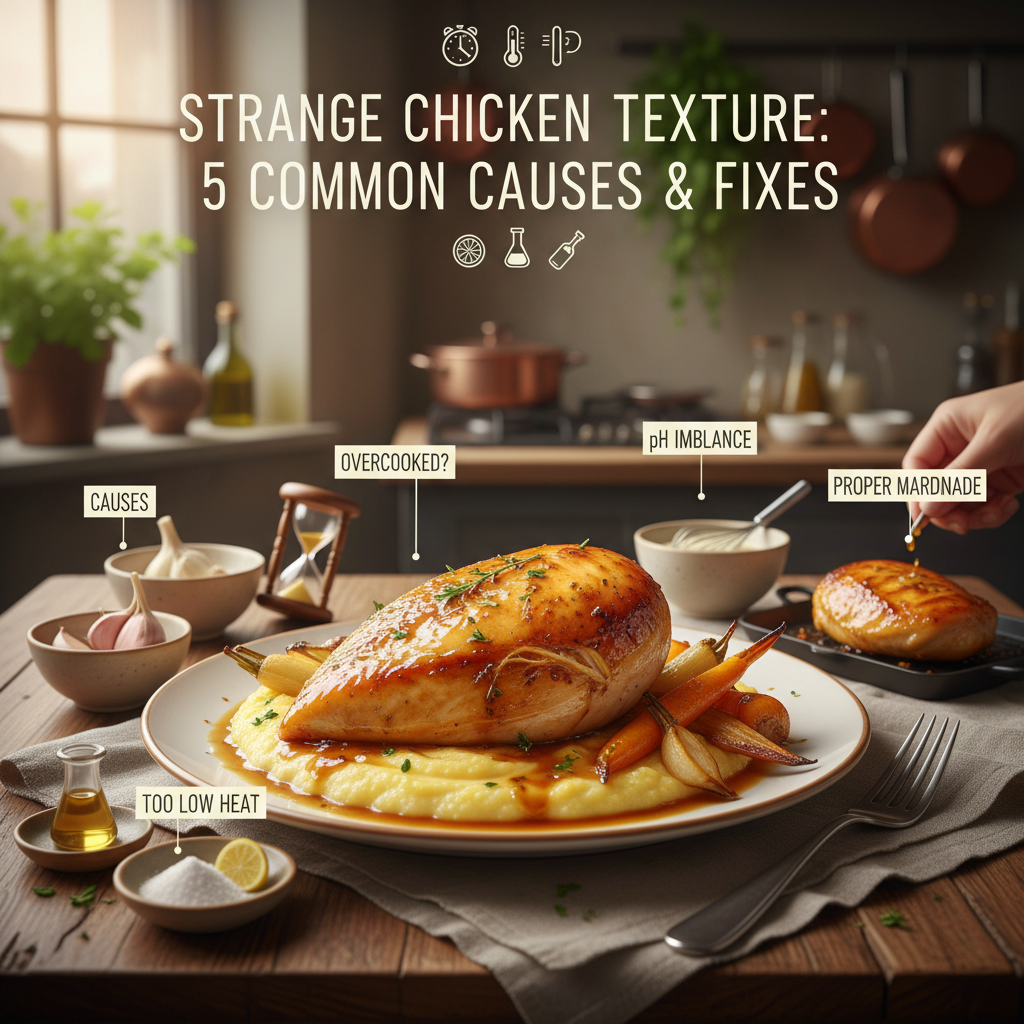
There’s nothing more disappointing than pulling a beautifully golden-brown chicken breast from the oven, only to slice into it and find… something’s off. It’s not juicy and tender; instead, it’s rubbery, stringy, or even spongy. If you’ve ever wondered, "Why does my chicken have a strange texture?", you're not alone! This common kitchen conundrum can ruin an otherwise perfect meal. The issue often boils down to a few key culprits: the quality of the chicken itself (hello, woody breast syndrome!), your cooking method, or improper temperature control.
Don't worry, we're going to break it all down. Let's turn that textural tragedy into a triumph and ensure you get perfectly cooked chicken, every single time.
Want to create your own custom recipes? Try our AI-powered recipe generator for personalized cooking solutions tailored to your ingredients and preferences.
The Science Behind Strange Texture in Chicken
To understand why chicken texture goes wrong, we need to look at what chicken meat is made of. At its core, it's a bundle of muscle fibers held together by connective tissue called collagen. When you apply heat, two main things happen: the muscle fibers contract and expel moisture, and the collagen begins to break down into rich, melty gelatin.
The perfect texture is a delicate balance. Gentle, correct heating allows the fibers to become firm but not dry, while giving the collagen enough time to tenderize the meat. However, when things go awry, you get a strange texture in chicken. Rapid, high heat can cause the muscle fibers to seize up and squeeze out all their moisture, resulting in a dry, stringy mess. This process is known as protein denaturation, and controlling its speed is the key to great texture.
Conversely, undercooking leaves the collagen tough and the fibers slick and rubbery. Modern poultry farming has also introduced issues like "woody breast," a muscle abnormality where fibers become tough and hard, creating a crunchy or fibrous texture no matter how well you cook it.
| Chicken Cut | Minimum Internal Temperature |
|---|---|
| Breasts, Thighs, Wings (Whole Pieces) | 165°F (74°C) |
| Ground Chicken | 165°F (74°C) |
| Whole Bird | 165°F (74°C) in thickest part of breast and thigh |
5 Common Causes (and Fixes) for a Strange Texture in Chicken
Let's pinpoint that textural problem and get it sorted. Here are the most common reasons your chicken isn't quite right.
Fix #1: The Dreaded "Woody Breast"
The Problem: You bite into your chicken and it's... crunchy? Woody breast syndrome is a muscular condition in fast-growing chickens that results in hard, fibrous, and unpleasantly tough meat. It feels stiff and rigid even when raw.
The Fix: Unfortunately, you can't entirely "fix" woody breast once it's there. However, you can make it more palatable. Your best bet is to change the texture mechanically. Slice the chicken thinly against the grain and pound it out for cutlets, or use it in recipes where it can be shredded or ground, like chicken tacos, creamy chicken noodle soup, or buffalo chicken dip.
Pro Tip: When buying chicken breasts, gently press on them through the packaging. If they feel exceptionally firm or rigid, you might have a woody breast on your hands. For more on this, The Kitchn has a great explainer.
Fix #2: The Overcooked, Stringy Breast
The Problem: Your chicken is dry, tough, and shreds into sad, stringy pieces. This is the most common cause of bad texture and happens when the chicken is cooked for too long or at too high a temperature, squeezing all the moisture from the muscle fibers.
The Fix: Rehydrate! The best way to salvage dry chicken is to shred it and toss it in a flavorful liquid. Think BBQ sauce for pulled chicken sandwiches, a creamy dressing for a chicken salad, or simmering it in chicken broth before adding to a casserole. The liquid will help mask the dryness.
Pro Tip: Invest in a good instant-read digital thermometer. It is the single best tool to avoid this problem. Pull your chicken from the heat as soon as it hits 165°F (74°C). For more tips on this, check out our guide on how to fix dry chicken.
Fix #3: The Undercooked, Rubbery Feel
The Problem: The chicken has a slick, slightly translucent, and unpleasantly chewy or rubbery texture. This is a clear sign the chicken is not cooked through. It's not only unappetizing but also a food safety risk.
The Fix: This one is easy—cook it more! Return the chicken to the pan, oven, or grill for a few more minutes until it reaches a safe internal temperature of 165°F (74°C). If you've already sliced it, a quick sauté in a hot pan will finish the job quickly.
Pro Tip: If you're struggling with rubbery chicken even when it's cooked through, you might be cooking it too quickly on high heat. Learn more about the causes in our deep dive on why chicken gets rubbery.
Fix #4: The Spongy Texture of Freezer Burn
The Problem: After thawing, parts of your chicken are grayish-brown, and when cooked, the texture is spongy, dry, and has a weird, stale flavor. This is freezer burn, caused by air exposure that dehydrates the meat's surface.
The Fix: You can't reverse freezer burn, but you can minimize its impact. Carefully trim away any discolored, dry-looking spots. Use the remaining chicken in a dish with a strong, flavorful sauce or marinade, like a curry or a hearty stew, which will help mask the off-flavors and textures.
Pro Tip: The best fix is prevention. Wrap chicken tightly in plastic wrap, then place it in a zip-top freezer bag, squeezing out as much air as possible before freezing. This double barrier is your best defense.
Fix #5: The "White Striping" Phenomenon
The Problem: You notice thin white stripes running parallel to the muscle fibers on your raw chicken breast. This is another quality issue related to fast-growing birds, where fat is deposited within the muscle. It can lead to a tougher, slightly greasy texture.
The Fix: Like woody breast, you can't remove white striping. The best use for chicken with significant striping is in recipes where the extra fat is a benefit. It's great for making homemade ground chicken or for slow-cooking methods where the fat can render out and add flavor and moisture.
Pro Tip: When shopping, visually inspect the chicken breasts. Opt for smooth, uniformly pink breasts with little to no visible white striping for the most reliable texture.
How to Prevent a Strange Texture in Chicken
The best fix is avoiding the problem in the first place! Here are the golden rules for perfect chicken texture every time:
- Buy Better Chicken: When possible, opt for chicken that is certified organic, free-range, or from a local farm. These birds often grow more slowly, leading to better muscle development and texture.
- Don't Cook Cold Chicken: Let your chicken sit at room temperature for 20-30 minutes before cooking. This helps it cook more evenly, preventing a dry exterior and undercooked interior.
- Master the Meat Thermometer: This is non-negotiable for chicken lovers. An instant-read thermometer takes the guesswork out of cooking. Always cook to temperature, not to time.
- Consider a Brine: Brining is a surefire way to ensure juicy, flavorful chicken. A simple saltwater solution can make a world of difference. Serious Eats has an amazing guide to brining that works wonders.
- Let It Rest: Always let your chicken rest for 5-10 minutes after cooking. This allows the juices to redistribute throughout the meat instead of spilling onto your cutting board.
Frequently Asked Questions
Why does my baked chicken feel spongy?
A spongy texture in baked chicken is often a sign of either being undercooked or having absorbed too much moisture. If it was in a very wet marinade or cooked in a crowded pan where it steamed instead of roasted, it can become spongy. Ensure it's cooked to 165°F and that it has room to breathe in the oven for a better sear.
Can you fix woody chicken breast after cooking?
You can't reverse the fibrousness of woody chicken, but you can make it more enjoyable. The best approach is to shred the cooked meat and incorporate it into a saucy dish like enchiladas, a creamy pasta sauce, or a flavorful soup. The sauce and other ingredients will help mask the unpleasant texture.
What does it mean if my chicken is chewy but cooked?
If your chicken is fully cooked but still very chewy, it's likely a sign of one of two things: it was either cooked too quickly over very high heat, causing the muscle fibers to tense up, or it's a lower-quality piece of meat with issues like white striping. For next time, try cooking it more gently over medium heat.
Complete Chicken Troubleshooting Guide
This is just one of many common chicken cooking issues. For a comprehensive guide covering all chicken problems and solutions, check out our complete Complete Chicken Troubleshooting Guide.