
Chicken Cooks Unevenly? 5 Pro Fixes for Perfect Results
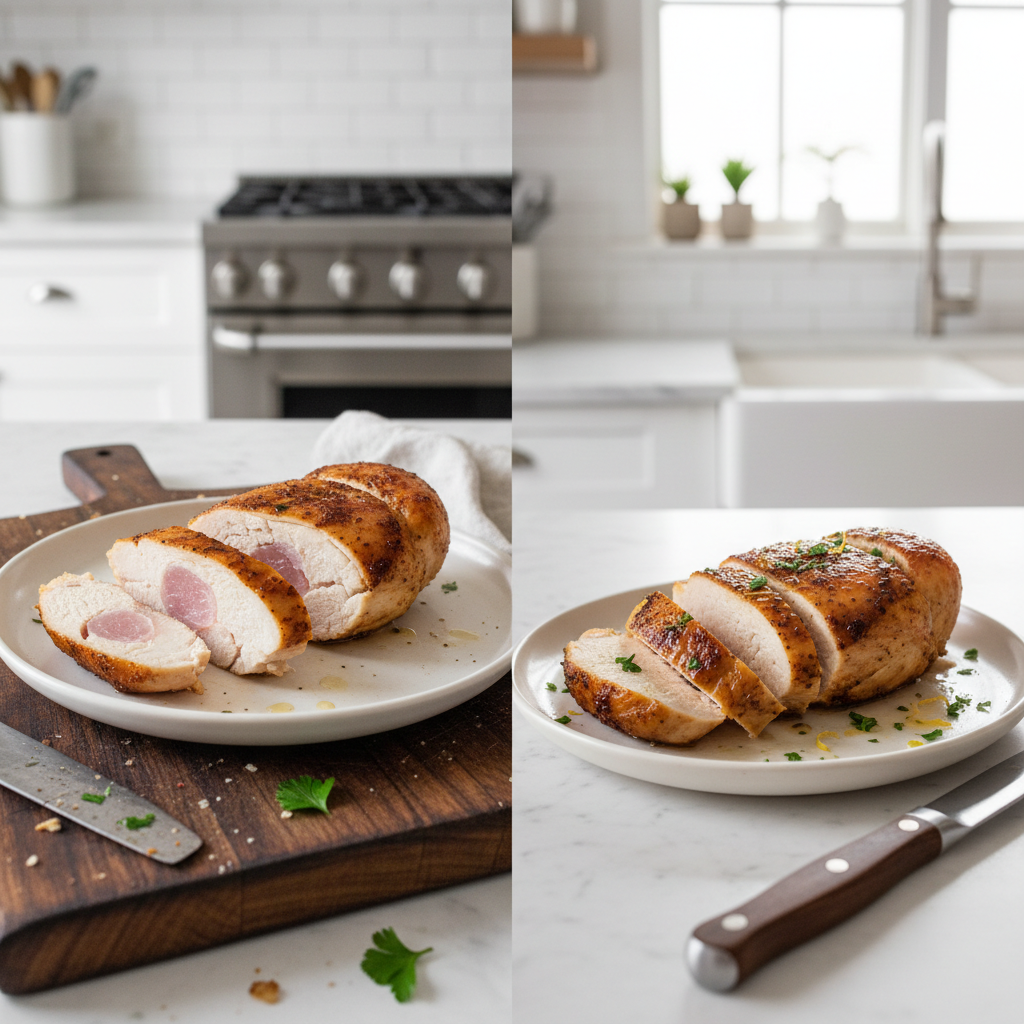
chicken cooks unevenly. There’s nothing more deflating than pulling a beautifully golden-brown chicken breast from the pan, letting it rest, and slicing in only to find a disappointing sight. The thin end is dry and stringy, while the thick middle is still stubbornly pink. It’s a common kitchen frustration! If you’re wondering why your chicken cooks unevenly, you’re not alone. The issue usually boils down to a few key factors: uneven thickness, incorrect pan temperature or size, and cooking the chicken straight from the fridge. But don't worry, every single one of these is an easy fix.
chicken cooks unevenly. Uneven chicken cooking primarily results from varying meat thickness, improper heat management, and starting with cold chicken.
chicken cooks unevenly. Want to create your own custom recipes? Try our AI-powered recipe generator for personalized cooking solutions tailored to your ingredients and preferences.
The Science Behind Unevenly Cooked Chicken
chicken cooks unevenly. Cooking is the process of transferring heat to food, primarily via conduction when pan-searing. A typical chicken breast is teardrop-shaped: thick on one end, thin on the other. When placed in a hot pan, the thin part cooks quickly, while the thickest part takes longer for heat to penetrate. By the time the thick part reaches a safe temperature, the thin end is often overcooked, leading to dry, tough chicken and undercooked meat in the same piece.
chicken cooks unevenly. This temperature difference necessitates achieving an even final temperature for safety and texture. A meat thermometer is crucial for consistent results.
| Chicken Part | Target Temperature |
|---|---|
| Breasts (White Meat) | 165°F (74°C) |
| Thighs & Legs (Dark Meat) | 170-175°F (77-79°C) |
6 Quick Fixes for When Your Chicken Cooks Unevenly
These simple adjustments to your technique will make all the difference.
1. The Fix: Create an Even Thickness
The Problem: A chicken breast's natural teardrop shape causes uneven cooking.
The Fix: Pound the thickest part of the breast until it's a uniform ½ to ¾ inch thick. This is the most effective way to ensure even cooking.
Pro Tip: Use a meat mallet, rolling pin, or heavy pan. The goal is to flatten, not pulverize. For more details, Serious Eats has a great guide.
2. The Fix: Give It Some Space
The Problem: Overcrowding the pan lowers its temperature, steaming the chicken instead of searing it, leading to uneven cooking.
The Fix: Cook in batches. Ensure at least an inch of space between each piece. This allows moisture to evaporate and the pan to stay hot, promoting even heat distribution and a golden-brown crust.
Pro Tip: Between batches, carefully wipe out any burnt bits to prevent bitter flavors.
3. The Fix: Choose the Right Pan
The Problem: Thin pans create hot spots, distributing heat unevenly and causing chicken to cook unevenly.
The Fix: Use a heavy-bottomed skillet, such as cast iron or heavy-gauge stainless steel. These retain and distribute heat evenly, eliminating hot spots.
Pro Tip: Always preheat your pan over medium-high heat until properly hot before adding oil and chicken.
4. The Fix: Temper Your Meat
The Problem: Cooking cold chicken leads to a rapidly cooked exterior and a frigid, undercooked center.
The Fix: Let chicken sit at room temperature for 20-30 minutes before cooking. This "tempering" reduces the temperature differential, resulting in a more even cooking process.
Pro Tip: Pat chicken dry and season generously with salt and pepper while it tempers.
5. The Fix: Use a Meat Thermometer
The Problem: Guessing doneness is unreliable and can lead to dry or undercooked chicken. Color is not always a perfect indicator, which can sometimes lead to confusion about why your chicken might still be pink even when cooked.
The Fix: Use an instant-read digital thermometer. Insert it horizontally into the thickest part of the meat. Target 165°F (74°C) for chicken breasts, as recommended by the USDA Food Safety and Inspection Service.
Pro Tip: Pull chicken from heat at 160°F. Carryover cooking will bring it to 165°F as it rests.
6. The Fix: Let It Rest
The Problem: Slicing hot chicken immediately causes juices to escape, resulting in dry meat.
The Fix: Rest cooked chicken for 5-10 minutes on a clean cutting board before slicing. This allows muscle fibers to relax and reabsorb juices, ensuring moist and tender chicken.
Pro Tip: Tent chicken loosely with foil while resting to keep it warm without making the crust soggy.
How to Prevent Chicken from Cooking Unevenly
Here’s your game plan for perfect chicken from the start. Follow these rules, and you'll never have to worry about why your chicken cooks unevenly again.
- Pound it Out: Always start by pounding your chicken breasts to an even thickness. This is the most critical step.
- Temper the Meat: Never cook chicken straight from the fridge. Let it rest on the counter for 20-30 minutes first.
- Preheat Properly: Give your heavy-bottomed pan or oven plenty of time to come to a stable, even temperature.
- Don't Crowd the Pan: Always cook in batches, leaving ample space between pieces for a proper sear.
- Use a Thermometer: Trust the data, not your eyes. An instant-read thermometer is the only way to know for sure when it's done, ensuring it reaches the safe internal temperature for poultry as advised by the Food Standards Agency.
- Rest is Best: Let the cooked chicken rest for 5-10 minutes before slicing to lock in the juices.
Frequently Asked Questions
Why is my chicken breast dry on the outside but raw on the inside?
This problem is caused by cooking overly thick chicken with excessively high heat. The exterior cooks rapidly while the cold, thick center remains undercooked. Pound the chicken to an even thickness and cook over medium-high heat.
Does brining or marinating help
Conclusion
Now you have all the tools you need to solve this problem. Remember, the key is to be patient and follow these steps carefully. With practice, you'll master this technique and never face this issue again. If you found this guide helpful, share it with others who might benefit from these tips.
```