Why Does Frozen Chicken Cook Badly? 5 Pro Fixes for Success
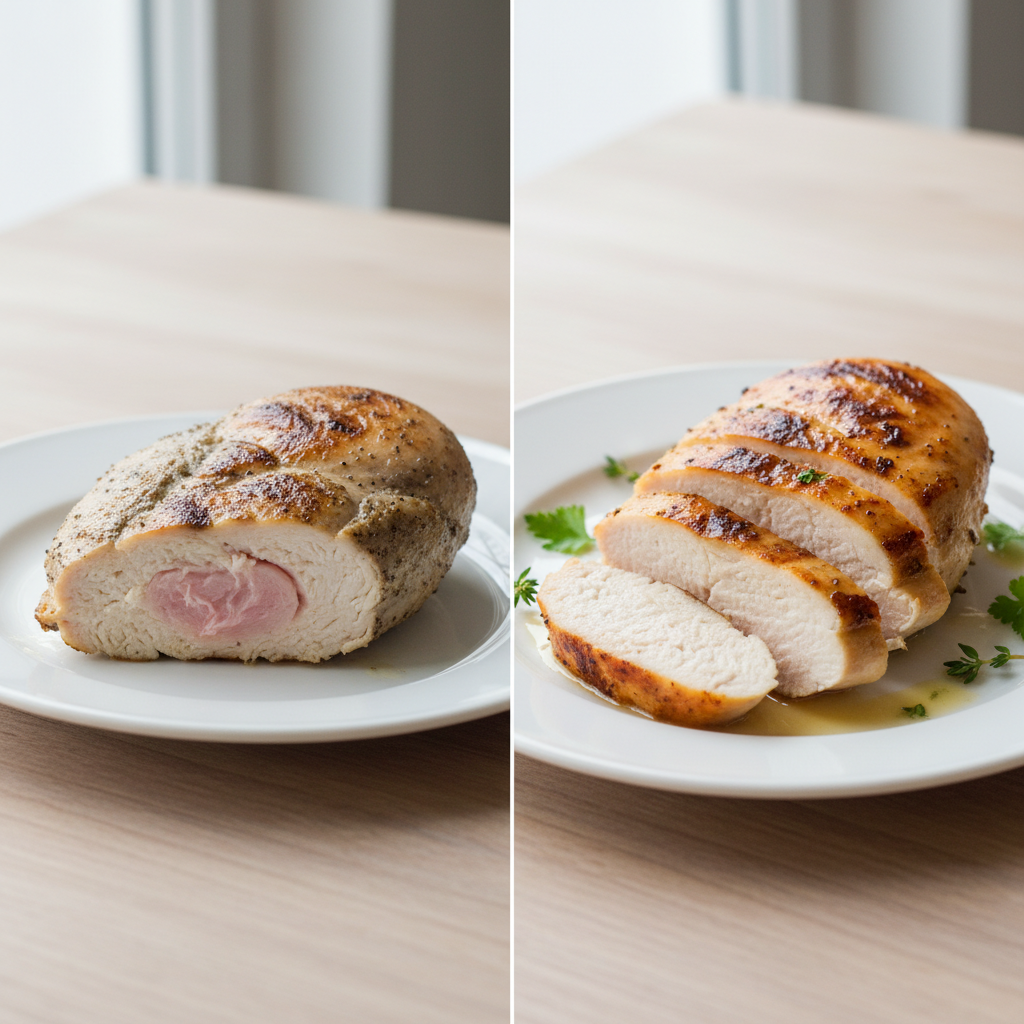
Why Does Frozen Chicken Cook Badly. You've just pulled your beautiful golden-brown chicken breast from the oven. It looks perfect. But when you slice into it, disaster strikes: the outside is dry and a little tough, while the center is still dense, rubbery, and suspiciously undercooked. Sound familiar? This common kitchen frustration is a classic sign of improper handling of frozen chicken.
Why Does Frozen Chicken Cook Badly? A Guide
Why Does Frozen Chicken Cook Badly. Frozen chicken cooks badly primarily due to large ice crystals damaging muscle cells during freezing and uneven thawing, leading to moisture loss and inconsistent cooking.
Why Does Frozen Chicken Cook Badly. Want to create your own custom recipes? Try our AI-powered recipe generator for personalized cooking solutions tailored to your ingredients and preferences.
The Science Behind Why Frozen Chicken Cooks Badly
Why Does Frozen Chicken Cook Badly. The core problem isn't freezing, but thawing. When chicken freezes slowly, water inside muscle cells forms large, jagged ice crystals. These crystals puncture and shred delicate cell walls.
Why Does Frozen Chicken Cook Badly. Upon thawing, damaged cell walls release moisture, known as "purge," resulting in a drier product. This moisture loss is a primary reason for dry chicken.
Why Does Frozen Chicken Cook Badly. Cooking chicken directly from frozen exacerbates this. The outside overcooks and dries before the inside thaws or cooks. This extreme temperature difference causes a dry exterior and a raw, rubbery interior.
Why Does Frozen Chicken Cook Badly. Safely thawing chicken means avoiding the "Temperature Danger Zone" (40°F to 140°F / 4°C to 60°C), where bacteria multiply rapidly, according to the USDA.
4 Foolproof Methods for Defrosting Chicken
Here are the best methods to thaw frozen chicken, ensuring a delicious meal.
Method 1: Refrigerator Thawing (The Gold Standard)
The Problem: You need perfectly thawed chicken with optimal texture and juiciness.
The Fix: This is the safest and most reliable method. Place frozen chicken in a leak-proof container or on a rimmed plate on the bottom shelf of your refrigerator. The slow, cold environment thaws chicken gently, minimizing moisture loss and maintaining a safe temperature.
- Timing: Allow about 24 hours for every 4-5 pounds of chicken. A single breast may thaw overnight.
Pro Tip: Once thawed, chicken keeps safely in the fridge for 1-2 days. This method best prevents rubbery chicken.
Method 2: Cold Water Thawing (The Faster Fix)
The Problem: You need chicken thawed in a few hours.
The Fix: Ensure chicken is in a sealed, leak-proof bag. Submerge the bag in a bowl or sink of cold tap water. Change the water every 30 minutes to keep it cold and ensure safe thawing.
- Timing: A pound of chicken thaws in an hour or less; 3-4 pounds may take 2-3 hours.
Pro Tip: Never use hot water. It raises surface temperature into the danger zone, promoting bacterial growth and uneven cooking.
Method 3: Microwave Defrosting (The Emergency Option)
The Problem: Dinner needs to be ready quickly, and defrosting was forgotten.
The Fix: Use with caution. Place unwrapped chicken on a microwave-safe plate. Use your microwave's "defrost" setting, which uses lower power. Flip or rotate chicken every few minutes for even thawing. You must cook the chicken immediately after thawing, as some parts may have started cooking and entered the temperature danger zone.
Pro Tip: Best for smaller, boneless, uniform pieces. Avoid for whole chickens or bone-in parts due to uneven thawing.
Method 4: Cooking from Frozen (The Last Resort)
The Problem: No time to thaw, but dinner must be cooked.
The Fix: You can cook chicken from frozen, but adjust cooking time by about 50%. For example, a breast taking 20 minutes thawed will need 30 minutes from frozen. This method works best for gentle, indirect heat, according to Serious Eats.
- Best Methods: Baking, simmering in sauce, poaching, or pressure cooking.
- Worst Methods: Searing, pan-frying, or grilling, as high heat burns the outside before the inside cooks.
Pro Tip: Always use a meat thermometer to confirm chicken reaches 165°F (74°C) in the thickest part. This is crucial for safety when cooking from frozen.
How to Prevent Future Frozen Chicken Fails
Prevention is key. How you freeze chicken significantly impacts its cooking quality.
- Freeze Flat and Fast: For individual pieces, lay them in a single layer on a parchment-lined baking sheet. Freeze until solid (1-2 hours), then transfer to a freezer bag. This 'flash freezing' creates smaller ice crystals, minimizing muscle fiber damage.
- Remove All Air: Air causes freezer burn. Squeeze as much air as possible from freezer bags before sealing. For best results, use a vacuum sealer.
- Portion Control: Freeze chicken in usable portion sizes. It's faster to thaw two breasts than a large family pack.
- Label Everything: Label freezer bags with contents and date. This helps use older chicken first and ensures it's consumed within 9 months for best quality.
Frequently Asked Questions
Is it truly safe to cook chicken directly from a frozen state?
Yes, if you extend cooking time by approximately 50% and verify with an instant-read thermometer that the thickest part reaches 165°F (74°C). This method is best for baking or simmering, not pan-searing.
Why does my defrosted chicken sometimes have a strange smell?
A slight "funky" odor upon opening thawed chicken can be normal ("packaging odor"). If the smell dissipates after a few minutes in open air, it's fine. However, if it's distinctly sour, rotten, or ammonia-like and persists, or if the chicken feels slimy, it's spoiled and should be discarded.
Can I refreeze chicken that has been thawed?
According to the USDA, if thawed in the refrigerator, it's safe to refreeze without cooking, though quality may decrease. If thawed using cold water or microwave, you must cook it to a safe temperature before refreezing. Never refreeze raw chicken left at room temperature.
Complete Chicken Troubleshooting Guide
This is just one of many common chicken cooking issues. For a comprehensive guide covering all chicken problems and solutions, check out our complete Complete Chicken Troubleshooting Guide.