Why Is My Chicken Chewy? 5 Simple Fixes for Tender Meat
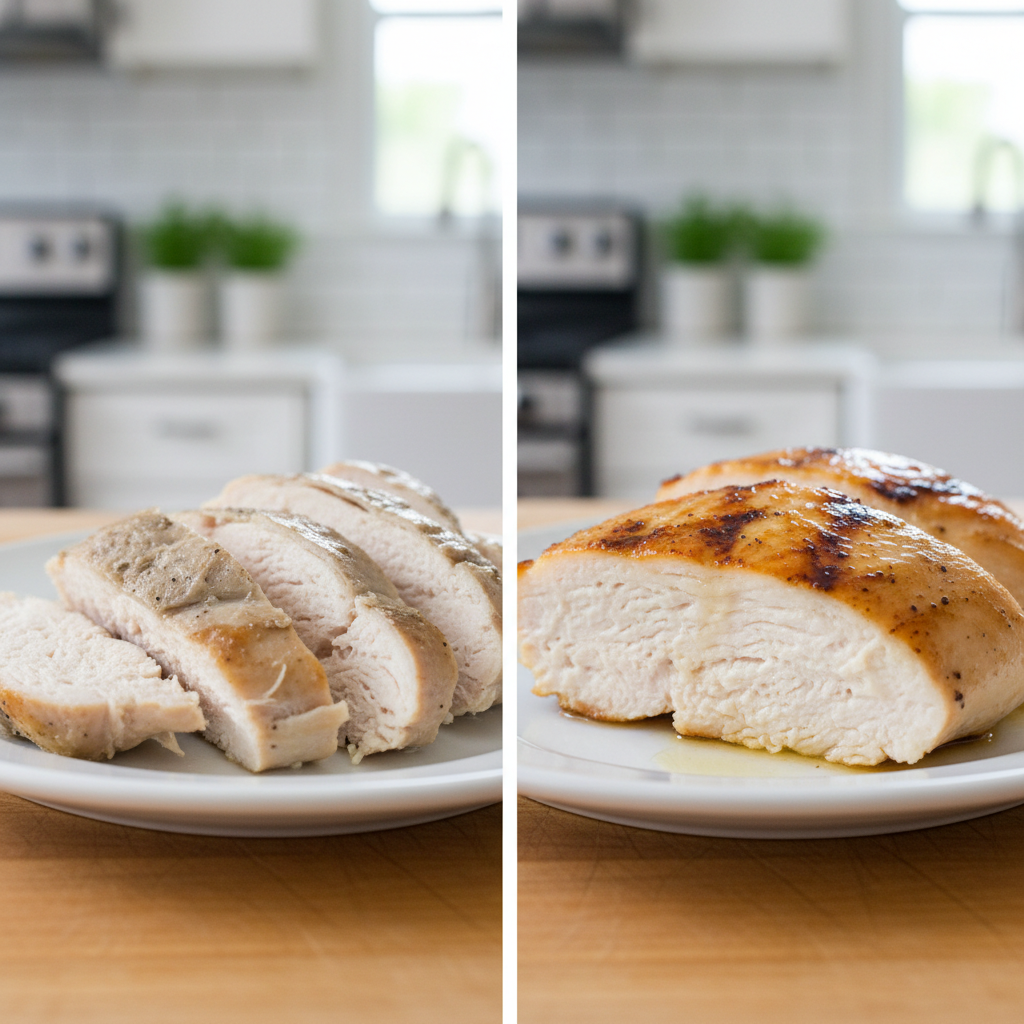
There's nothing more frustrating in the kitchen than following a recipe to the letter, only to have it fall flat. You've just pulled that gorgeous, golden-brown chicken from the oven. The temperature probe beeps—it's perfectly cooked! But when you take a bite, it's... chewy. And a little rubbery. It's a common problem that can leave even seasoned cooks scratching their heads. So, why is my chicken chewy even when it's not undercooked? The culprit is almost always overcooking, but the type of cut and even how you slice it can play a major role in that undesirable texture.
Want to create your own custom recipes? Try our AI-powered recipe generator for personalized cooking solutions tailored to your ingredients and preferences.
The Science Behind Chewy Chicken
To understand why chicken gets chewy, we need to look at its structure. Chicken meat is made of muscle fibers, water, fat, and connective tissue. That connective tissue is primarily made of a protein called collagen.
When you cook chicken, two things happen. First, the muscle fibers begin to contract and firm up. As the temperature increases, these fibers squeeze out moisture. If you go too far past the ideal temperature, the fibers become incredibly tight and dry, resulting in tough, chewy meat. This is the classic sign of overcooking.
Second, the collagen in the connective tissue needs heat and time to break down into rich, unctuous gelatin. This process makes meat tender and moist. However, different cuts have different amounts of collagen. A chicken breast is low in collagen and needs to be cooked quickly. A chicken thigh, which is a harder-working muscle, is high in collagen and benefits from slower cooking methods that give the collagen time to melt. If you cook a high-collagen cut too quickly, the muscle fibers will tense up before the collagen has a chance to break down, leading to a chewy, unpleasant bite.
| Chicken Cut | Pull Temperature | Final Temp After Rest |
|---|---|---|
| Chicken Breast (Lean) | 150-155°F (65-68°C) | 165°F (74°C) |
| Chicken Thighs/Legs (Fatty) | 165-170°F (74-77°C) | 175°F+ (79°C+) |
5 Quick Fixes for Why Is My Chicken Chewy
1. The Problem: You're Overcooking It
This is the number one reason for chewy chicken. It's so easy to do! You want to be sure it's safe to eat, so you leave it in the pan or oven for 'just another minute.' That extra minute is when the muscle fibers seize up and squeeze out all their glorious juice, leaving you with something resembling shoe leather.
The Fix: Use an instant-read digital thermometer. It is your single best friend for cooking any protein. For chicken breasts, pull them from the heat when the thickest part reads 150-155°F. For thighs and legs, aim for 165-170°F. Tent the chicken with foil and let it rest for 5-10 minutes. During this rest, carryover cooking will raise the internal temperature to the USDA-safe 165°F, and the juices will redistribute throughout the meat, ensuring a tender, not chewy, result. This is one of the biggest secrets to juicy chicken.
Pro Tip: Calibrate your thermometer every few months by placing it in a glass of ice water. It should read 32°F (0°C). If not, adjust it according to the manufacturer's instructions.
2. The Problem: You're Using the Wrong Cooking Method
Ever tried to quickly pan-sear chicken thighs and found them tough? You've just experienced a method mismatch. Fast, high-heat cooking is perfect for tender, low-collagen cuts like breasts. But tougher, high-collagen cuts like thighs and legs will turn out chewy if not given enough time for that connective tissue to melt.
The Fix: Match your method to your cut. For chicken breasts, use high-heat methods like grilling, pan-searing, or stir-frying. For chicken thighs, legs, or whole birds, embrace low-and-slow methods like braising, stewing, or roasting at a moderate temperature. This gives the collagen ample time to transform into delicious, mouth-coating gelatin.
Pro Tip: If you're short on time but only have thighs, consider cutting them into smaller, bite-sized pieces. This increases the surface area and helps them cook through more quickly in a stir-fry without becoming overly chewy.
3. The Problem: You've Got 'Woody Breast'
Sometimes, the problem isn't your fault at all. 'Woody Breast' is a muscle abnormality in modern, fast-growing broiler chickens. It results in breast meat that is unusually hard, rigid, and has a fibrous, almost crunchy texture. It doesn't absorb marinades well and can be very chewy when cooked.
The Fix: While you can't completely reverse woody breast, you can mitigate it. Pounding the chicken breast to an even thickness with a meat mallet can help break down some of the tough fibers. Alternatively, your best bet is to chop or grind the meat for use in dishes where texture is less of a focus, like chicken meatballs, tacos, or a rich ragu. For more on this phenomenon, Serious Eats has a great explainer.
Pro Tip: When shopping, gently press the chicken breast through the plastic wrap. If it feels exceptionally firm and unyielding, you might have a woody breast on your hands. Try to pick a package that feels more pliable.
4. The Problem: You're Slicing With the Grain
You cooked it perfectly, let it rest, and it still has a stringy, chewy mouthfeel. What gives? You probably sliced it with the grain. Like a steak, chicken has a grain—the direction the muscle fibers run. Slicing parallel to these fibers leaves you with long, tough strands that your teeth have to work hard to chew through.
The Fix: Slice against the grain! Look closely at the cooked meat to identify the direction of the fibers. They'll look like long parallel lines. Position your knife perpendicular (at a 90-degree angle) to those lines and slice. This shortens the muscle fibers, making the meat infinitely more tender and easier to chew.
Pro Tip: This technique is most critical for whole chicken breasts. It's less of a concern for thighs or wings, where the muscle structure is more complex.
5. The Problem: You Cooked It Straight From the Fridge
Tossing ice-cold chicken into a screaming hot pan is a recipe for uneven cooking. The outside of the chicken will cook very quickly and start to overcook and turn chewy while the inside slowly comes up to temperature. This often leads to a dry, chewy exterior and a barely-cooked (or sometimes even undercooked) center.
The Fix: Let your chicken temper on the counter for 20-30 minutes before cooking. This takes the chill off and allows for a much more even cooking process from edge to center. The result is a uniformly cooked piece of chicken that is tender throughout, rather than having a tough, chewy exterior. This simple step can also help prevent that dreaded rubbery texture.
Pro Tip: While the chicken tempers, use the time to pat it thoroughly dry with paper towels. A dry surface is key to getting a beautiful, golden-brown sear.
How to Prevent Chewy Chicken in the Future
Tired of troubleshooting? Here are the key habits to build for consistently tender, juicy chicken every single time.
- Use a Thermometer, Always: We can't say it enough. An instant-read thermometer removes all guesswork and is the #1 tool for preventing overcooking.
- Brine Your Lean Cuts: For chicken breasts, a simple 30-minute brine in saltwater (1 tablespoon of salt per cup of water) can make a huge difference in moisture retention.
- Pound Breasts Evenly: Before cooking, place chicken breasts between two pieces of plastic wrap and pound them to an even thickness. This ensures they cook uniformly.
- Don't Crowd the Pan: Give your chicken pieces plenty of space when searing. If they're too close together, they will steam instead of sear, leading to a pale, chewy exterior.
- Respect the Rest: Always let your chicken rest for 5-10 minutes after cooking. This allows the juices to settle back into the meat, which is critical for a tender texture.
Frequently Asked Questions
Can you fix chewy chicken after it's cooked?
It's difficult to truly 'fix' overcooked, chewy chicken, but you can salvage it! The best method is to shred the meat and add it to a liquid-based dish. Simmering the shredded chicken in a sauce, soup, or broth can help reintroduce some moisture and make the chewy texture far less noticeable. It's perfect for chicken tacos, enchiladas, or a creamy chicken noodle soup.
Why is my grilled chicken chewy but my baked chicken is not?
This comes down to the intensity of the heat. Grilling uses very high, direct heat, which can easily overcook the outside of the chicken before the inside is done, resulting in a chewy texture. Baking uses more gentle, indirect heat, which is more forgiving. To improve your grilled chicken, use a two-zone fire: one hot side for searing and a cooler side to let the chicken finish cooking gently.
Does the quality of the chicken affect how chewy it is?
Absolutely. As mentioned with 'woody breast' syndrome, the way a chicken is raised can impact its final texture. Slower-growing, heritage, or pasture-raised birds often have a more tender and flavorful meat than conventionally raised, fast-growing chickens. Additionally, air-chilled chicken tends to have a better texture than water-chilled chicken, which can absorb excess water and become spongy or rubbery.
Complete Chicken Troubleshooting Guide
This is just one of many common chicken cooking issues. For a comprehensive guide covering all chicken problems and solutions, check out our complete Complete Chicken Troubleshooting Guide.