
Grey Chicken: Safe or Spoiled? How to Tell in 10 Seconds
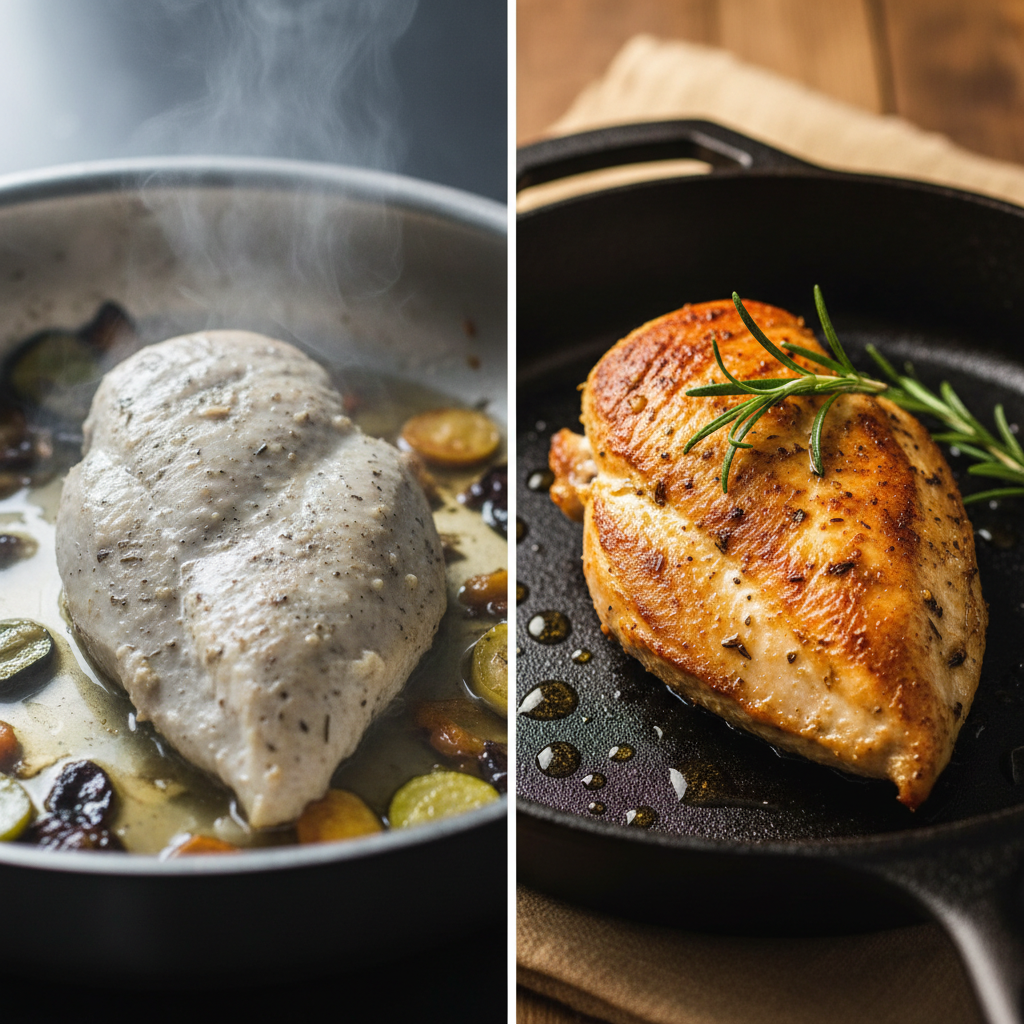
When chicken turns grey during cooking, it's typically due to too much moisture, insufficient heat, and an overcrowded pan, causing it to steam rather than sear.
The Science Behind Why Chicken Turns Grey When Cooking
The golden-brown crust on chicken comes from the Maillard reaction, a chemical process between amino acids and sugars occurring above 300°F (150°C). This reaction creates flavor compounds and color.
Grey chicken means the Maillard reaction didn't happen; instead, the chicken steamed or boiled. The grey color is cooked muscle protein (myoglobin) without browning. Water boils at 212°F (100°C), too low for Maillard. Excess moisture in the pan, from the chicken or overcrowding, drops the temperature, diverting heat to steam instead of browning.
This creates a steaming environment, cooking proteins to an opaque grey, but preventing delicious browning.
| Process | Temperature | Result |
|---|---|---|
| Steaming/Boiling | 212°F (100°C) | Cooked protein, grey/pale color, soft texture |
| Maillard Reaction (Searing) | 300°F - 500°F (150°C - 260°C) | Golden-brown crust, complex flavor, crisp texture |
6 Quick Fixes for Grey Chicken
1. The Problem: The Chicken is Too Wet
The Problem: Chicken releases moisture, especially if frozen or packaged in a solution. A wet surface prevents browning, cooling the pan and creating steam.
The Fix: Pat chicken thoroughly dry with paper towels on all sides before seasoning. The surface should feel tacky. Air-drying on a rack in the fridge for 30 minutes improves results.
Pro Tip: A super-dry surface is crucial for crisp skin and a perfect crust.
2. The Problem: Your Pan Isn't Hot Enough
The Problem: A lukewarm pan causes chicken to release juices and steam before searing.
The Fix: Preheat your pan over medium-high heat for 3-5 minutes. Oil should shimmer instantly. A flicked water drop should sizzle and evaporate.
Pro Tip: Heavy-bottomed pans like cast iron or stainless steel retain heat well, preventing temperature drops.
3. The Problem: Your Pan is Overcrowded
The Problem: Packing chicken tightly traps steam, dropping pan temperature and preventing browning.
The Fix: Cook in batches. Give each piece at least an inch of space. Cook, remove, then cook the next batch. You can combine at the end to warm.
Pro Tip: Overcrowding also causes rubbery chicken due to steaming.
4. The Problem: You're Moving the Chicken Too Soon
The Problem: Frequent movement breaks contact with the hot pan, disrupting searing.
The Fix: Leave chicken undisturbed for 3-5 minutes after placing it in the hot, oiled pan. It will release easily when ready to flip. If it sticks, it's not ready.
Pro Tip: For searing science, consult Serious Eats.
5. The Problem: You're Using a Non-Stick Pan
The Problem: Most non-stick pans aren't designed for high searing heat and risk damage. They don't retain heat well.
The Fix: Use cast iron or heavy-gauge stainless steel for searing. These materials get and stay hot, crucial for a deep, even crust.
Pro Tip: A well-seasoned cast-iron skillet is ideal for searing.
6. The Problem: You're Cooking Thin-Cut or Water-Injected Chicken
The Problem: 'Enhanced' chicken contains excess water, creating steam. Thin cutlets cook through before browning.
The Fix: Buy air-chilled chicken if possible. For enhanced chicken, diligent drying is essential. For thin cutlets, use an extra hot pan for a fast sear before overcooking.
Pro Tip: Check packaging for 'contains up to 15% solution' to identify water-injected chicken.
How to Prevent Your Chicken From Turning Grey
Follow this checklist for a golden-brown finish every time:
- Dry is Your Ally: Always pat chicken completely dry with paper towels.
- Choose the Right Pan: Use a heavy-bottomed skillet like cast iron or stainless steel.
- Preheat Properly: Heat your pan over medium-high for several minutes.
- Don't Crowd the Pan: Cook in batches, allowing space for steam to escape.
- Be Patient: Leave chicken undisturbed to form a crust before flipping.
- Use the Right Fat: Use a high-smoke-point oil (canola, grapeseed, avocado) and ensure it's shimmering.
Complete Chicken Troubleshooting Guide
For a comprehensive guide covering all chicken problems and solutions, check out our complete Complete Chicken Troubleshooting Guide.
Frequently Asked Questions
Is it safe to eat chicken that turned grey during cooking?
Yes, if cooked to an internal temperature of 165°F (74°C), it's safe, according to the USDA. Grey color indicates cooking method, not spoilage, though flavor and texture may be less desirable.
Why does my boiled or poached chicken look grey?
This is normal. Boiled or poached chicken cooks gently in water, preventing the Maillard reaction. Proteins turn opaque grey or white, which is the expected outcome for these methods.
What's the best way to get a golden-brown crust on chicken?
Use very dry chicken, a very hot cast-iron or stainless steel pan, a high-smoke-point oil, and avoid overcrowding. This creates ideal conditions for the Maillard reaction.
Does brining chicken help prevent
Conclusion
Now you have all the tools you need to solve this problem. Remember, the key is to be patient and follow these steps carefully. With practice, you'll master this technique and never face this issue again. If you found this guide helpful, share it with others who might benefit from these tips.
```