
Stop Curry Burning at the Bottom: 5 Fast & Easy Fixes
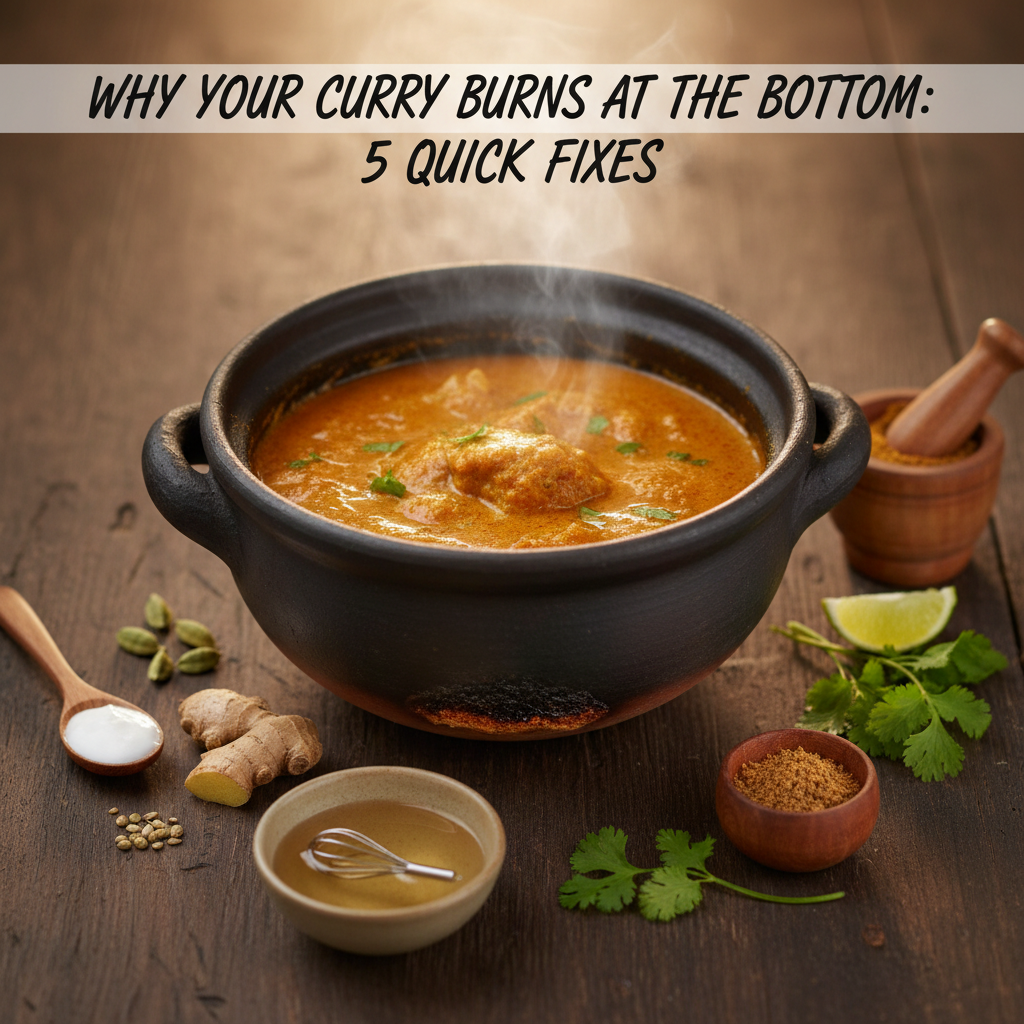
There’s nothing quite like the aromatic promise of a simmering curry. The spices are blooming, the flavors are melding... and then you catch it. That sharp, acrid smell of something burning. You give the pot a tentative stir, and your spoon scrapes against a stubborn, blackened layer. Ugh. If you’ve ever wondered, “Why does my curry burn at the bottom of the pan?” you’re not alone. It’s a super common frustration! The main culprits are usually a combination of too much direct heat, not enough stirring, using the wrong pan, or adding sugary ingredients too early in the process. But don't worry, every burnt pot has a lesson, and we’re here to decode it for you.
Want to create your own custom recipes? Try our AI-powered recipe generator for personalized cooking solutions tailored to your ingredients and preferences.
The Science Behind a Burnt Curry Bottom
So, what’s actually happening down there at the base of your pan? It’s a science lesson in deliciousness gone wrong. Two main chemical reactions are at play when you cook: the Maillard reaction and caramelization.
The Maillard reaction is the magic that happens between amino acids and reducing sugars, giving browned food its distinctive flavor (think seared steak or toasted bread). Caramelization is what happens when sugars themselves break down with heat, creating nutty, sweet, and slightly bitter notes. Both are fantastic for building flavor in a curry! You want to brown your onions and toast your spices.
However, when the heat is too high and concentrated at the bottom of the pan, these reactions go into overdrive. The food stops browning and starts carbonizing—in other words, burning. Ingredients with higher sugar or starch content are especially susceptible. This includes things like tomato paste, onions, coconut milk, and yogurt. They settle at the bottom, and without enough liquid or movement, they scorch long before the rest of the curry is cooked through. This is why a curry that curry burns at the bottom can still be undercooked on top.
| Process | Approx. Temperature Range (°F / °C) | Outcome |
|---|---|---|
| Maillard Reaction | 280-330°F / 140-165°C | Flavorful browning |
| Caramelization | 320-356°F / 160-180°C | Sweet, nutty notes |
| Carbonization (Burning) | 390°F+ / 200°C+ | Acrid, bitter taste |
5 Quick Fixes for When Your Curry Burns at the Bottom
Caught that dreaded scrape? Don't panic! Here’s how to troubleshoot the problem right now and save your dinner.
1. The Heat is Way Too High
The Problem: This is the number one cause. You’re blasting the pan with intense, direct heat, especially on an electric stovetop. The bottom of the curry cooks much faster than the top, leading to a scorched layer.
The Fix: Immediately turn the heat down to the lowest possible setting. Do not scrape the bottom! You don't want to mix the burnt bits into the rest of your curry. If it's badly burnt, your best bet is to carefully transfer the un-burnt portion of the curry to a new, clean pan and continue cooking on very low heat.
Pro Tip: Invest in a heat diffuser. This simple metal plate sits between your burner and your pot, distributing the heat much more evenly and preventing hot spots. It's a game-changer for simmering sauces.
2. You Forgot to Stir
The Problem: Heavier ingredients (like tomato puree, ground nuts, or yogurt) naturally sink. Without agitation, they sit on the hot surface of the pan and inevitably burn while the rest of the liquid simmers away happily.
The Fix: Get in the habit of stirring your curry every few minutes, especially after you've added thickening agents or dairy. Make sure you scrape the entire bottom surface of the pan, including the corners where things love to hide and stick.
Pro Tip: Use a flat-edged wooden spoon or a high-heat silicone spatula. Unlike a rounded spoon, the flat edge makes much better contact with the bottom of the pan, ensuring nothing gets left behind to burn.
3. Your Pan Has a Thin Bottom
The Problem: Cheap, thin-bottomed pans are notorious for creating hot spots. They don’t distribute heat evenly, so one area of the pan can become scorching hot while another is just warming up. This is a recipe for a burnt curry bottom.
The Fix: Switch to a heavy-bottomed pot. Enameled cast iron (like a Dutch oven), heavy stainless steel, or a traditional karahi are all excellent choices. Their thick bases retain and distribute heat evenly, creating a much more gentle and controllable cooking environment.
Pro Tip: Always preheat your heavy-bottomed pan gently over low-medium heat for a few minutes before adding your oil or ghee. This allows the heat to spread evenly across the entire base.
4. Sugary Ingredients Went in Too Early
The Problem: You added your tomato paste, coconut milk, or a pinch of sugar right at the beginning with your onions. These ingredients have a high sugar content and will caramelize and burn very quickly over direct heat.
The Fix: Add these ingredients after you've already created a layer of liquid in the pan. Sauté your aromatics (onion, garlic, ginger) and toast your spices first. Then, deglaze with a bit of stock or water before adding ingredients like tomato paste, coconut milk, or yogurt. This liquid buffer is crucial. Sometimes, adding these ingredients can make your curry too thin. If that happens, don't panic; we have a guide on what to do if your curry is watery.
Pro Tip: When adding tomato paste for depth, fry it off for a minute or two after the aromatics are soft but before you add any major liquids. This cooks out the raw taste and deepens the flavor, but be sure to stir constantly during this step.
5. There Isn't Enough Liquid
The Problem: As your curry simmers, water evaporates and it naturally thickens. If it gets too thick, there’s not enough liquid to help circulate the heat. The dense mixture becomes stagnant at the bottom and scorches easily.
The Fix: If you notice your curry is becoming very thick and paste-like, stir in a splash of warm water, stock, or broth. This will loosen the sauce, help it move more freely, and prevent the bottom from burning. Adding a flavorful stock is a great way to fix the consistency without diluting the taste, a key tip for avoiding a situation where your curry tastes bland.
Pro Tip: If you've already got some browning (but not burning!) on the bottom of the pan, adding a splash of liquid and scraping the bottom is a technique called 'deglazing'. This lifts all those flavorful browned bits (called 'fond') into your sauce, making it even more delicious.
How to Prevent Your Curry from Burning in the First Place
- Use the Right Tool: Always opt for a heavy-bottomed pan, like a Dutch oven or a quality stainless steel pot.
- Master Mise en Place: Have all your ingredients chopped and ready before you start. This prevents you from leaving things on the heat for too long while you search for the next ingredient.
- Control Your Heat: Start low and go slow. It's much easier to increase the heat than to recover from burning. Aim for a gentle simmer, not a rolling boil.
- Stir Strategically: Stirring isn't just for mixing; it's for managing heat. Be extra vigilant after adding ingredients that can thicken or burn easily.
- Sequence Your Ingredients: Cook your aromatics first. Add spices to bloom. Then add liquids to create a buffer before introducing high-sugar ingredients like tomato paste, coconut cream, or yogurt.
- Maintain Liquid Levels: Keep an eye on your curry as it simmers. If it gets too thick, add a splash of warm stock or water to keep things moving.
Frequently Asked Questions
Can I save a curry that has started to burn on the bottom?
Yes, if you act quickly! The key is to NOT stir. Stop what you're doing, take the pot off the heat, and carefully ladle the un-burnt curry from the top into a new, clean pot. Leave the burnt layer behind. You might lose a little curry, but you'll save the whole dish from having a bitter, burnt flavor.
Why does my curry burn even on low heat?
This usually points to two culprits: your pan or your ingredients. A thin-bottomed pan can develop intense hot spots even on a low setting. Alternatively, you may have ingredients like tomato paste or ground cashews that have settled at the bottom. Even on low heat, they need to be stirred frequently to prevent scorching.
Does adding sugar to my curry make it more likely to burn?
Absolutely. Sugar caramelizes starting around 320°F (160°C), and it burns quickly after that. If your recipe calls for sugar, jaggery, or other sweeteners, add them towards the end of the cooking time when the sauce is fully liquid and simmering gently. This gives the sugar less time to sit on the hot bottom of the pan.
What's the best type of pan to cook curry in to avoid burning?
The best choice is a wide, heavy-bottomed pot. An enameled cast-iron Dutch oven is the gold standard because it provides excellent, even heat distribution. A thick-bottomed stainless steel pot or a traditional Indian karahi are also fantastic options that significantly reduce the risk that your curry burns at the bottom.
Complete Curry Troubleshooting Guide
This is just one of many common curry cooking issues. For a comprehensive guide covering all curry problems and solutions, check out our complete Complete Curry Troubleshooting Guide.