
Stop Scraping Burnt Curry Off Your Pan — Do This Instead
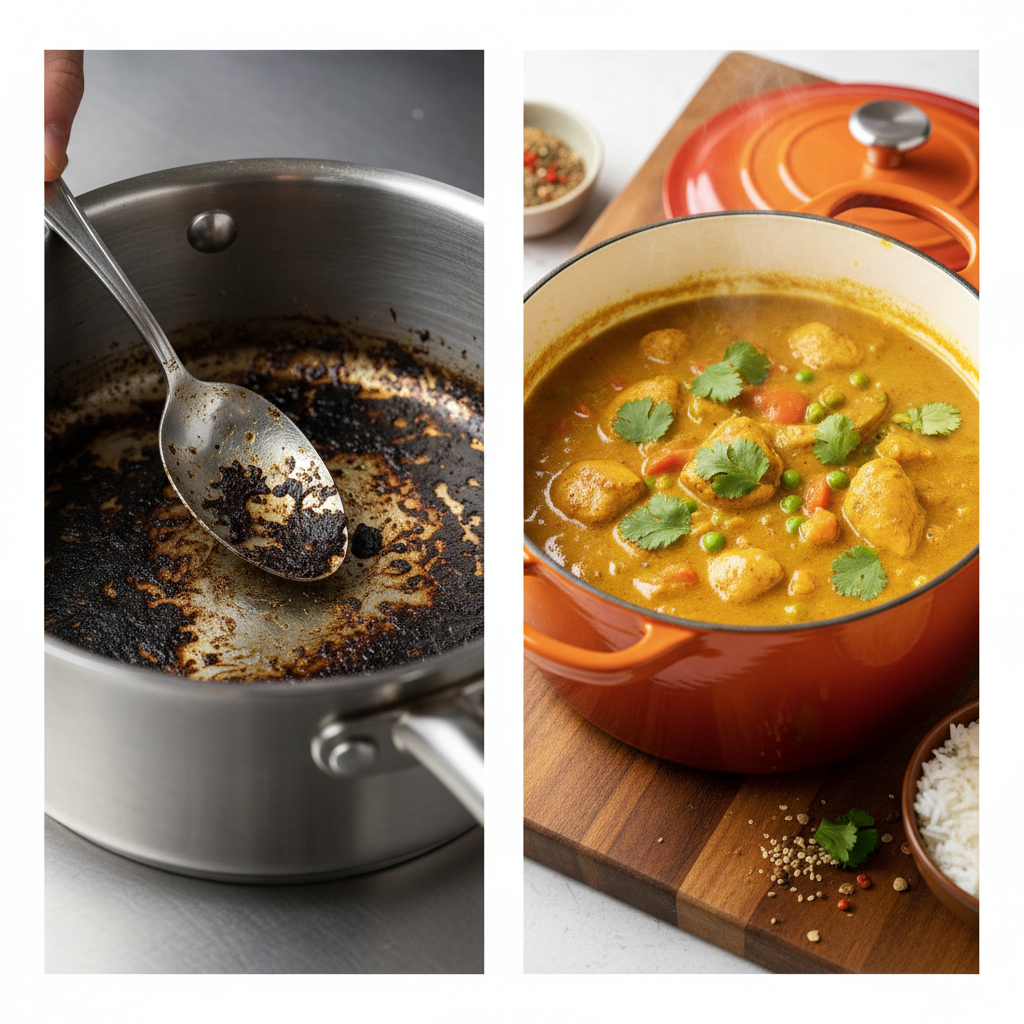
curry burns at bottom of pan. Want to create your own custom recipes? Try our AI-powered recipe generator for personalized cooking solutions tailored to your ingredients and preferences.
Uh Oh, Is That a Scrape? Why Your Curry Burns at the Bottom of the Pan
Your curry burns due to excessive heat, thin pans, or high-sugar ingredients sticking and scorching on the pan's surface.curry burns at bottom of pan. You’ve been simmering your beautiful, fragrant curry, the whole house smells amazing, and you're just about ready to serve. You go to give it one last stir, and your spoon hits a dreaded, rough patch. That unmistakable scrape tells you the worst has happened: your curry has burned. It's a gut-wrenching moment for any cook! But don't despair, because you're not alone. This common kitchen nightmare usually boils down to a few key culprits: too much heat, the wrong pan, or sugary ingredients catching too quickly. Let's dive into why your curry burns at the bottom of the pan and how to fix it for good.
The Science Behind a Burnt Curry
curry burns at bottom of pan. When your curry burns, you're experiencing two powerful chemical reactions: the Maillard reaction and caramelization. Both develop deep, complex flavors, but can lead to burning.
curry burns at bottom of pan. Caramelization occurs when sugars (from onions, tomatoes, coconut milk) are heated. They break down, forming new aromatic compounds. Too much heat or prolonged heating pushes them past caramelization into carbonization, creating bitter, acrid flavors.
curry burns at bottom of pan. The Maillard reaction occurs between amino acids (proteins) and sugars, browning meat and toasting spices. It also requires careful temperature control. A thin-bottomed pan creates intense hot spots, scorching one area before the rest cooks. Understanding these processes helps prevent burning.
| Ingredient | Approximate Scorching Temperature | Why it Burns |
|---|---|---|
| Onions | ~350°F (175°C) | High sugar content caramelizes quickly. |
| Garlic/Ginger | ~300°F (150°C) | Small pieces with high surface area burn fast. |
| Ground Spices | ~250°F (120°C) | Very low water content, scorches instantly in dry heat. |
| Tomato Paste | ~220°F (105°C) | Concentrated sugars caramelize and stick. |
| Coconut Milk | ~180°F (82°C) | Sugars and proteins can catch if boiled too vigorously. |
5 Quick Fixes When Your Curry Burns at the Bottom of the Pan
curry burns at bottom of pan. Caught it in the act? Don't panic and definitely don't scrape! Here’s how to salvage your dinner.
1. The Emergency Transfer
The Problem: You've felt the scrape. The bottom is scorched, and you're worried the burnt taste will permeate the whole pot.
The Fix: Stop stirring immediately! Take the pan off the heat. Carefully ladle or pour the top, unburnt portion of the curry into a new, clean pot. Leave the burnt layer and a small amount of curry just above it behind. You'll lose a little, but save the majority.
Pro Tip: If a slight smoky flavor has transferred, add an acid (lemon/lime juice) or a little sweetness (pinch of sugar) to balance the off-taste.
2. Master Your Heat Control
The Problem: Your stove is aggressive. "Medium-low" feels like a blast furnace, scorching ingredients. This is the #1 reason a curry burns at the bottom of the pan.
The Fix: Always start lower than you think. Sauté onions, ginger, and garlic over true medium-low heat. When adding ground spices, turn the heat down further and add them with a splash of water or into oil. For simmering, use the lowest heat setting that maintains a gentle bubble.
Pro Tip: If your stove is difficult, get a heat diffuser. This metal plate sits under your pot, distributing heat evenly for delicate simmers.
3. Upgrade Your Pan
The Problem: You're using a thin, lightweight saucepan that heats up quickly, creating intense hot spots that burn everything.
The Fix: Your choice of cookware matters. A heavy-bottomed pan is your best defense. A cast-iron Dutch oven, thick stainless steel pot, or traditional Indian karahi are excellent. Their heavy base absorbs and distributes heat evenly, eliminating scorching hot spots.
Pro Tip: A wider pan helps with evaporation if your sauce is a watery curry, but requires extra vigilance with stirring.
4. Deglaze for Flavor and Safety
The Problem: After frying onions and spices, a dark, sticky layer (fond) has formed on the bottom. It's flavorful but close to burning.
The Fix: Deglaze the pan! Before adding bulk liquid, pour in a small amount of stock, water, or canned tomato liquid. Use a wooden spoon to scrape up all the browned bits, dissolving them. This prevents burning and infuses incredible depth of flavor.
Pro Tip: This step is crucial for fixing a bland curry. Fond is concentrated flavor gold!
5. Sequence Your Sugars and Thickeners
The Problem: You added coconut milk, yogurt, or cashew paste early, and now it's sticking and burning during simmering.
The Fix: Timing is everything. High-sugar (coconut milk, tomato paste) or natural thickeners (yogurt, cream, nuts, flour) are prone to catching. Cook aromatics, spices, and main protein/vegetables first in your base liquid. Add richer, thicker ingredients in the last 15-20 minutes of cooking, keeping heat very low and stirring frequently.
Pro Tip: When adding dairy like yogurt or cream, temper it first. Whisk a ladleful of hot curry into the yogurt in a separate bowl before stirring the mixture back into the pot. This prevents a split, grainy sauce.
How to Prevent Your Curry From Burning in the First Place
curry burns at bottom of pan. Prevention is key for a scorch-free result every time.
- Invest in a Heavy-Bottomed Pot: A Dutch oven or similar heavy pot ensures even heat distribution.
- Embrace "Low and Slow": Patience is crucial. Most cooking should be a gentle simmer, not a rolling boil.
- Stir Frequently and Effectively: Get your spoon to the bottom and corners every 10-15 minutes, especially after adding thickeners.
- Hydrate Your Spices: Never add dry ground spices to a hot, dry pan. Add them to oil over lower heat or mix with a splash of water first.
- Mind Your Ingredient Order: Add high-sugar or thickening ingredients like coconut milk, yogurt, and tomato paste towards the end.
- Get to Know Your Stove: Learn the true "low" and "medium" settings on your specific appliance.
Frequently
curry burns at bottom of pan is important to understand.
```Frequently Asked Questions
Why does my curry burn at the bottom of the pan even when I stir it?
Even with stirring, your curry can burn if the heat is too high, especially with thin-bottomed pans that create hot spots. Sugary ingredients like onions or coconut milk also stick and scorch quickly, even with regular agitation, if the temperate isn't moderated. This leads to caramelization turning into carbonization.
What types of pans are best to prevent curry burns at the bottom of the pan?
Using a heavy-bottomed pan, like a Dutch oven or a cast-iron pot, is crucial to prevent curry burns at the bottom of the pan. These pans distribute heat more evenly and retain heat better, reducing hot spots where ingredients often scorch. Avoid thin, lightweight aluminum pans, which are prone to uneven heating.
How does too much heat cause my curry to burn at the bottom of the pan?
Excessive heat accelerates the Maillard reaction and caramelization, pushing them past flavor development into burning. High temperatures cause sugars and proteins in your curry to bond rapidly and stick to the pan's surface, charring before the rest of the dish is cooked through. This often leads to the unpleasant bitter taste of scorched ingredients.
Can specific ingredients make my curry burn at the bottom of the pan more easily?
Yes, ingredients high in sugar, like onions, tomatoes, and coconut milk, are particularly prone to making your curry burn at the bottom of the pan. Ground spices or small pieces like garlic and ginger also burn quickly due to their low water content and high surface area. Always monitor these ingredients closely when cooking.
Besides pan type and heat, what else contributes to curry burns at the bottom of the pan?
Beyond pan type and heat, insufficient stirring, especially when simmering for long periods, can cause curry burns at the bottom of the pan. Not deglazing properly can also leave fond that burns and sticks. Additionally, using a recipe that doesn't account for the sugar content of certain ingredients can unexpectedly lead to scorching.
```