Chicken Chewy Even When Cooked? 5 Fixes for Tender Meat
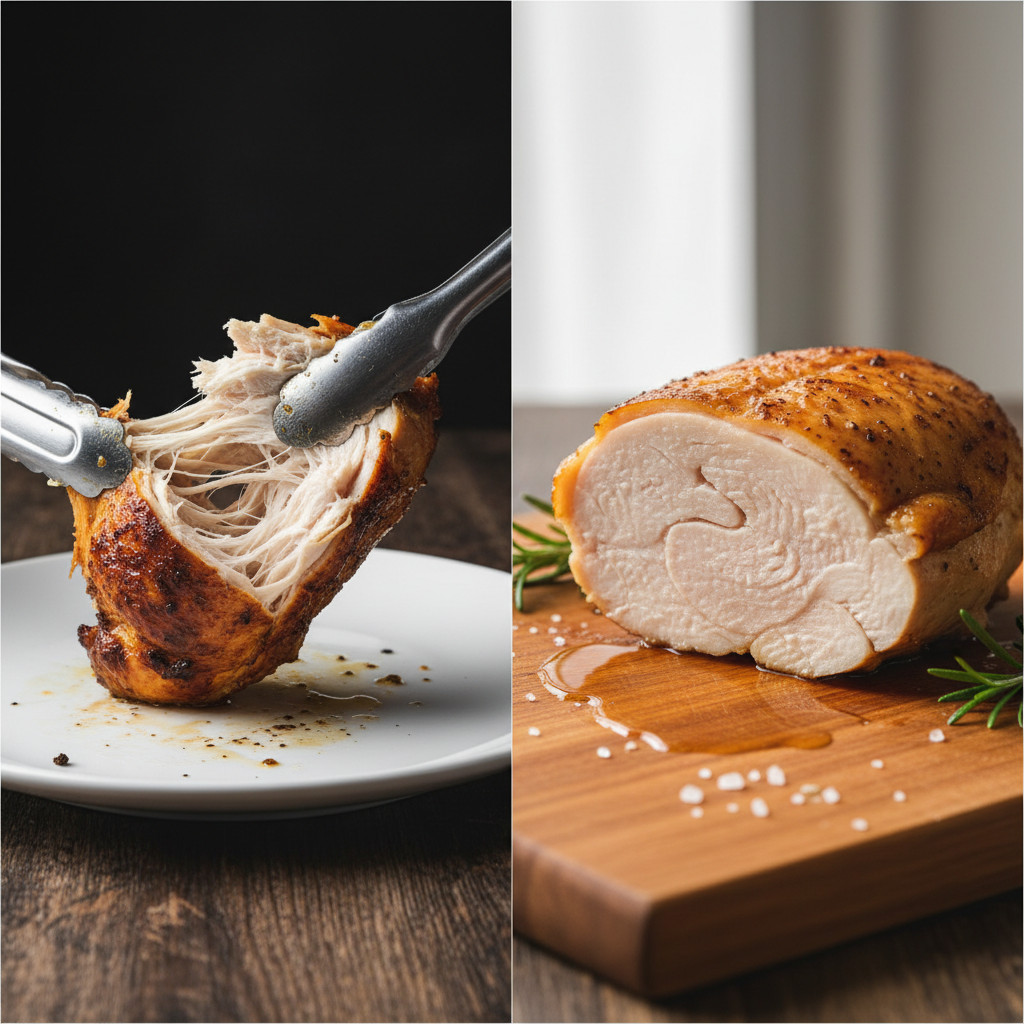
There’s nothing more disappointing than sitting down to a meal you’ve worked hard on, only to find the star of the show is a letdown. You slice into a beautiful, golden-brown chicken breast, but your first bite is… chewy. It’s cooked through, so what gives? It’s a common kitchen frustration that can leave even seasoned cooks scratching their heads. The good news is that the cause of chicken chewy even when cooked usually boils down to one of a few simple issues: overcooking, undercooking, or how the meat was prepared.
Don't worry, we're going to break it all down and get you back to cooking unbelievably tender, juicy chicken every single time. Let's dive in!
Want to create your own custom recipes? Try our AI-powered recipe generator for personalized cooking solutions tailored to your ingredients and preferences.
The Science Behind Chewy Chicken
To understand why chicken gets chewy, we need to talk about its structure. Chicken meat is made up of bundles of muscle fibers held together by connective tissue called collagen. The texture of your cooked chicken is a delicate dance between these two components.
When you cook chicken, two things happen. First, the muscle fibers contract and squeeze out moisture. The longer you cook it and the hotter the temperature, the more they contract and the drier and tougher the meat becomes. This is the primary reason for overcooked, chewy chicken.
On the flip side, if the chicken is undercooked, the collagen hasn't had enough time to break down and melt into luscious gelatin. This leaves the meat with a dense, unpleasantly rubbery, and chewy texture. This is especially true for cuts with more connective tissue, like thighs and drumsticks. Finding that perfect temperature sweet spot is key to avoiding chicken chewy even when cooked.
| Chicken Cut | Target Internal Temperature | Why This Temp? |
|---|---|---|
| Breasts, Tenderloins (White Meat) | 165°F (74°C) | Lean meat; cooks quickly and dries out easily. |
| Thighs, Drumsticks (Dark Meat) | 175°F - 185°F (79-85°C) | Higher fat & collagen content requires more heat to become tender. |
5 Quick Fixes for Chicken That's Chewy Even When Cooked
If you're staring at a plate of chewy chicken right now, don't despair! Here are five tried-and-true methods to fix the problem and prevent it next time.
1. Stop Overcooking! Use a Thermometer.
The Problem: You're guessing when the chicken is done. Cooking chicken just a few degrees past its ideal temperature can turn it from juicy to chewy in an instant.
The Fix: The single most important tool for perfect chicken is a reliable instant-read digital thermometer. Stop relying on cooking times, which can vary wildly. Start checking the temperature a few minutes before you think it’s done. For chicken breasts, pull them from the heat at 160-162°F (71-72°C). The temperature will continue to rise as it rests (this is called carryover cooking), hitting the safe and perfect 165°F.
Pro Tip: Always insert the thermometer into the thickest part of the meat, avoiding bone. For more on this, check out our guide on how to avoid dry chicken, as overcooking is the main culprit.
2. Give It a Rest
The Problem: You're slicing into the chicken the second it comes off the heat. When chicken cooks, the juices are forced toward the center. Slicing immediately causes all that delicious moisture to spill out onto your cutting board, leaving the meat dry and chewy.
The Fix: Let your chicken rest! Transfer the cooked chicken to a clean cutting board and let it sit for 5-10 minutes (for breasts) or 10-15 minutes (for a whole chicken). This allows the muscle fibers to relax and reabsorb all those flavorful juices.
Pro Tip: Tent the chicken loosely with a piece of aluminum foil while it rests. This will keep it warm without steaming the skin and making it soggy.
3. Harness the Power of a Brine
The Problem: Lean chicken breasts have very little fat, which acts as a natural tenderizer and moisture-keeper. They have almost no margin for error during cooking.
The Fix: Brine your chicken! A brine is a saltwater solution that not only seasons the meat from the inside out but also helps it retain moisture. For a quick brine, dissolve ¼ cup of salt and ¼ cup of sugar in 4 cups of water. Submerge your chicken breasts for just 30-60 minutes before cooking. You'll be amazed at the difference.
Pro Tip: For an even more tender result, use a dairy-based marinade like yogurt or buttermilk. The enzymes and acidity gently break down muscle fibers. For an in-depth guide on brining, Serious Eats has a fantastic article that covers the science.
4. Slice Against the Grain
The Problem: You cooked the chicken perfectly, but it still feels tough to chew. You're likely slicing it the wrong way.
The Fix: Look closely at the cooked chicken breast. You'll see fine lines running in one direction – these are the muscle fibers. Slicing parallel to these fibers (with the grain) leaves you with long, chewy strands. To get a tender bite, you must slice perpendicular to them (against the grain). This shortens the fibers, making the meat much easier to chew.
Pro Tip: It's easier to see the grain after the chicken has rested. Tilt the breast under a light to see which way the lines are running before you make your first cut.
5. Pound It Out for Even Cooking
The Problem: Chicken breasts are naturally teardrop-shaped—thick on one end and thin on the other. The thin end overcooks and gets chewy long before the thick end is cooked through.
The Fix: Before cooking, place your chicken breast between two sheets of plastic wrap or in a zip-top bag. Use a meat mallet, rolling pin, or even the bottom of a heavy pan to gently pound the thick end until the entire breast is a uniform thickness (about ½ to ¾ inch).
Pro Tip: Pounding not only ensures even cooking but also mechanically tenderizes the meat by breaking down tough fibers. This is a great trick if you often find your chicken is rubbery as well as chewy.
How to Prevent Chewy Chicken in the Future
Want to guarantee tender chicken every time? Make these steps part of your regular cooking routine. Prevention is always the best fix!
- Buy Quality Chicken: Not all chicken is created equal. Look for air-chilled, free-range chicken when possible. As Food Standards Agency guidance suggests, ensuring proper handling and quality can contribute to a better cooking experience.
- Always Use a Thermometer: We can't say it enough. This is the #1 way to prevent overcooking.
- Don't Crowd the Pan: Give your chicken pieces plenty of space in the pan. Overcrowding steams the chicken instead of searing it, which can lead to a pale, rubbery, and chewy texture.
- Brine or Marinate Lean Cuts: Give chicken breasts a helping hand with a quick 30-minute brine or an acidic marinade.
- Pound to an Even Thickness: This simple step is a game-changer for pan-seared or grilled chicken breasts.
- Always Rest Your Meat: Let those juices redistribute for a tender, flavorful result.
Frequently Asked Questions
Why is my cooked chicken breast so chewy?
A chewy chicken breast is most often a sign of overcooking. When chicken breast is cooked past 165°F, the muscle fibers tighten up and squeeze out all their moisture, resulting in a dry, tough, and chewy texture. Using a meat thermometer is the best way to avoid this, as recommended by the USDA Food Safety and Inspection Service.
Does chewy chicken mean it's undercooked?
It can, but the texture is slightly different. Undercooked chicken often feels more rubbery and dense than stringy-chewy. This is because the connective tissues haven't had a chance to melt. If your chicken is chewy and you're sure it reached 165°F, the problem is likely overcooking, not undercooking. If you suspect undercooking, check out our guide on what to do if your chicken is still pink.
How can I fix chewy chicken that's already cooked?
If you've already cooked and sliced your chicken and found it chewy, all is not lost! Your best bet is to repurpose it. Shred the chicken and gently simmer it in a flavorful liquid like broth, BBQ sauce, or enchilada sauce for about 10-15 minutes. The liquid will add much-needed moisture back into the meat, making it perfect for tacos, sandwiches, or casseroles.
Complete Chicken Troubleshooting Guide
This is just one of many common chicken cooking issues. For a comprehensive guide covering all chicken problems and solutions, check out our complete Complete Chicken Troubleshooting Guide.