
How to Fix Hard Rice: 5 Easy Ways to Keep Leftovers Fluffy
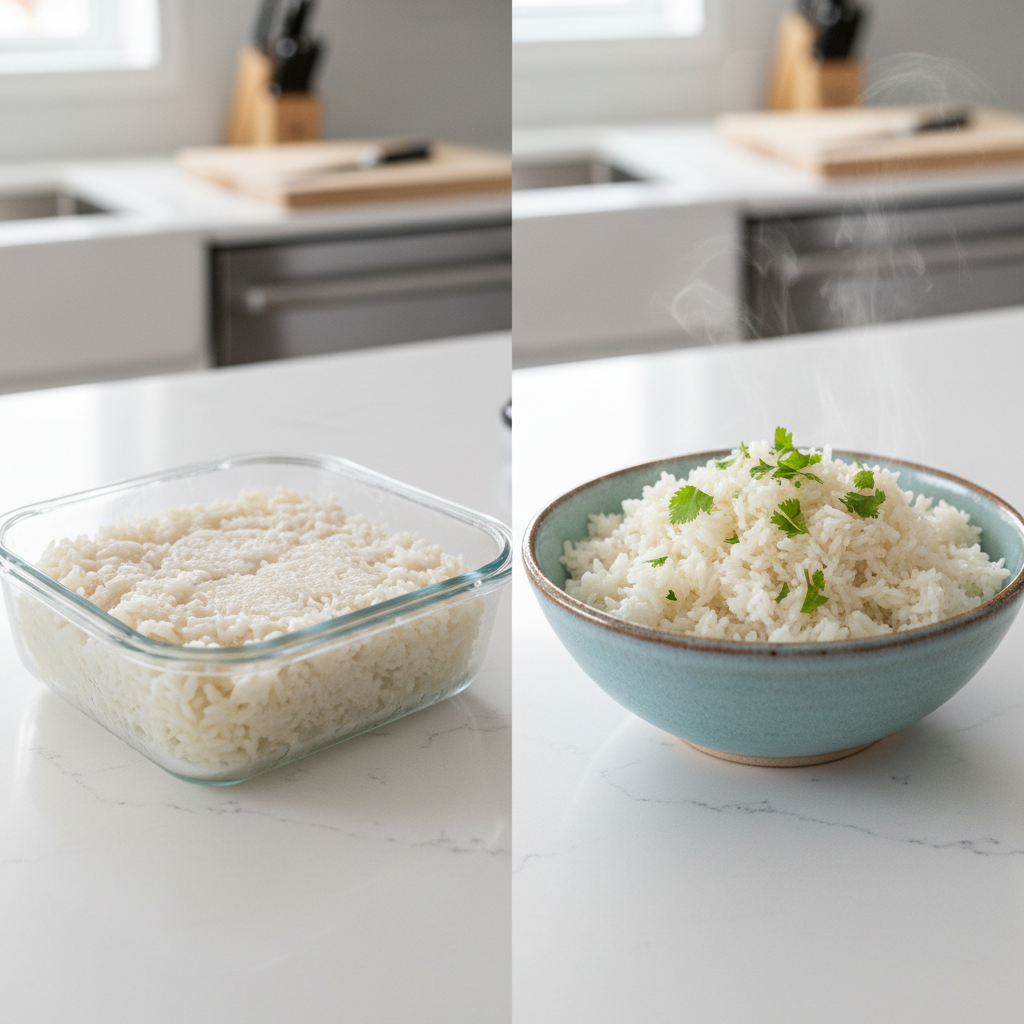
There's nothing better than knowing you have leftover rice ready for a quick meal. But then you open the fridge, and instead of fluffy grains, you find a solid, dry, and unappetizing brick. Sound familiar? It's a common kitchen mystery, but don't throw it out! The reason your cooked rice turns hard in the fridge is all down to science, specifically a process called starch retrogradation. Essentially, the starches in the rice recrystallize as they cool, squeezing out moisture and leaving you with hard, clumpy grains. But the good news is, it's completely reversible. Let's dive into how to bring that rice back to life!
Want to create your own custom recipes? Try our AI-powered recipe generator for personalized cooking solutions tailored to your ingredients and preferences.
The Science Behind Hard, Cold Rice
So, why exactly does this happen? When you cook rice, the starch granules absorb water and swell up in a process called gelatinization. This is what makes the rice soft and digestible. However, as the cooked rice cools down in the refrigerator, the magic starts to reverse.
This reversal is called starch retrogradation. The amylose and amylopectin molecules (the two types of starch in rice) start to realign themselves into a more orderly, crystalline structure. As they do this, they push out the water they absorbed during cooking. This water loss is what causes the rice to become firm, dry, and hard. It's the same reason day-old bread gets stale and cooked potatoes become firm in the fridge.
The key takeaway? The moisture is still there, it's just been separated from the starch. Our goal in reheating is to reintroduce that moisture and break up those crystals, making the rice soft and fluffy once more. According to food science experts at Serious Eats, applying gentle heat and a little extra moisture is the perfect way to reverse this process.
5 Quick Fixes for When Cooked Rice Turns Hard in the Fridge
Fix 1: The Microwave Steam Method
The Problem: You need soft rice, fast, for a single serving.
The Fix: This is the quickest and easiest method. Place the hard rice in a microwave-safe bowl. For every cup of rice, sprinkle about a tablespoon of water over the top. You can also just drop an ice cube on top! Cover the bowl with a damp paper towel or a microwave-safe lid. Microwave on high for 60-90 seconds, or until the rice is hot and soft. The water creates steam, which gently rehydrates the grains.
Pro Tip: Fluff the rice with a fork halfway through heating to ensure all the grains get evenly steamed and to break up any large clumps.
Fix 2: The Stovetop Sizzle
The Problem: You're making fried rice or a stir-fry and need to reheat a larger batch of rice.
The Fix: Add the cold, clumpy rice to a skillet or wok with a tablespoon or two of oil or water. Turn the heat to medium-low. Use a wooden spoon or spatula to break up the large chunks of rice. Cover the pan for 2-3 minutes to let the steam build up and soften the grains. Uncover, increase the heat, and proceed with your fried rice recipe.
Pro Tip: Day-old, refrigerated rice is actually better for fried rice! Its lower moisture content prevents it from getting mushy, which can happen if you use freshly cooked rice. This is one instance where the problem is actually the solution. If you often find your rice is too soft, check out our guide on how to avoid mushy rice.
Fix 3: The Gentle Steamer
The Problem: You want to restore the rice to its original, just-cooked fluffy texture.
The Fix: If you have a steamer basket (bamboo or metal), this method is fantastic. Bring an inch of water to a simmer in a pot. Place the hard rice in the steamer basket, breaking up any huge clumps. Put the basket over the simmering water, cover, and steam for 5-7 minutes. The gentle, indirect heat will perfectly rehydrate every grain without making it gummy.
Pro Tip: Line the steamer basket with parchment paper or a lettuce leaf to prevent the rice from sticking or falling through the holes.
Fix 4: The Oven Revival
The Problem: You have a large quantity of rice to reheat, perhaps as part of a casserole.
The Fix: Preheat your oven to 300°F (150°C). Spread the rice evenly in an oven-safe baking dish. Sprinkle a few tablespoons of water or broth over the top. Cover the dish tightly with aluminum foil to trap the steam. Bake for 15-20 minutes, or until the rice is heated through and soft. This method is great for reheating big batches evenly.
Pro Tip: This is the best way to reheat dishes like rice pilaf or stuffed peppers without drying them out further.
Fix 5: The Soup & Stew Shortcut
The Problem: You want to add leftover rice to a soup, stew, or curry.
The Fix: Don't bother reheating it separately! Just crumble the cold, hard rice directly into the simmering liquid during the last 5 minutes of cooking. The hot broth will quickly rehydrate the grains, and they'll be perfectly soft by the time you're ready to serve. It's an effortless way to bulk up a meal.
Pro Tip: Be careful not to add the rice too early, or it might absorb too much liquid and become overly soft. If your rice is still hard after cooking initially, you might be facing a different issue, which we cover in our post on fixing hard rice after cooking.
How to Prevent Rice from Getting Hard in the First Place
While fixing hard rice is easy, preventing it is even better! A few simple storage tricks can make a world of difference.
- Store it Warm: Don't let the rice cool completely on the counter. Pack it into an airtight container while it's still warm (but not piping hot). This traps some of the steam and moisture, which helps prevent it from drying out as it cools.
- Airtight is Right: Oxygen is the enemy of fresh rice. Use a good quality airtight container or a zip-top bag with all the air pressed out. This is the single most important step.
- Cool Quickly and Safely: While you want to store it warm, you shouldn't leave rice at room temperature for too long. For food safety, the NHS advises getting it into the fridge within one hour, and certainly within two hours. To speed this up, you can spread it on a baking sheet for a few minutes before packing it away.
- Add a Little Fat: Cooking your rice with a small amount of oil or butter can help keep the grains separated and less prone to clumping and hardening upon cooling.
Frequently Asked Questions
Why does my leftover rice get so dry and hard in the refrigerator?
Your cooked rice turns hard in the fridge due to a natural process called starch retrogradation. As the cooked rice cools, its starch molecules recrystallize and push out water, resulting in a firm, dry texture. Storing it in an airtight container helps minimize this, and reheating with a little added moisture will reverse it.
Is it safe to eat rice that has hardened in the fridge?
Yes, as long as it was cooled and stored properly, it's perfectly safe to eat. The hardness is a textural issue, not a sign of spoilage. To be safe, the Food Standards Agency recommends cooling cooked rice and getting it into the fridge within one hour of cooking, and consuming leftovers within one day.
Can I fix hard, cold rice without a microwave?
Absolutely! You can easily reheat hard rice on the stovetop by adding it to a pan with a splash of water, covering it, and heating it over low heat. You can also use a steamer basket for incredibly fluffy results or even add it directly to simmering soups and stews.
Complete Rice Troubleshooting Guide
This is just one of many common rice cooking issues. For a comprehensive guide covering all rice problems and solutions, check out our complete Complete Rice Troubleshooting Guide.