
How to Reheat Curry: 5 Simple Ways for Perfect Leftovers
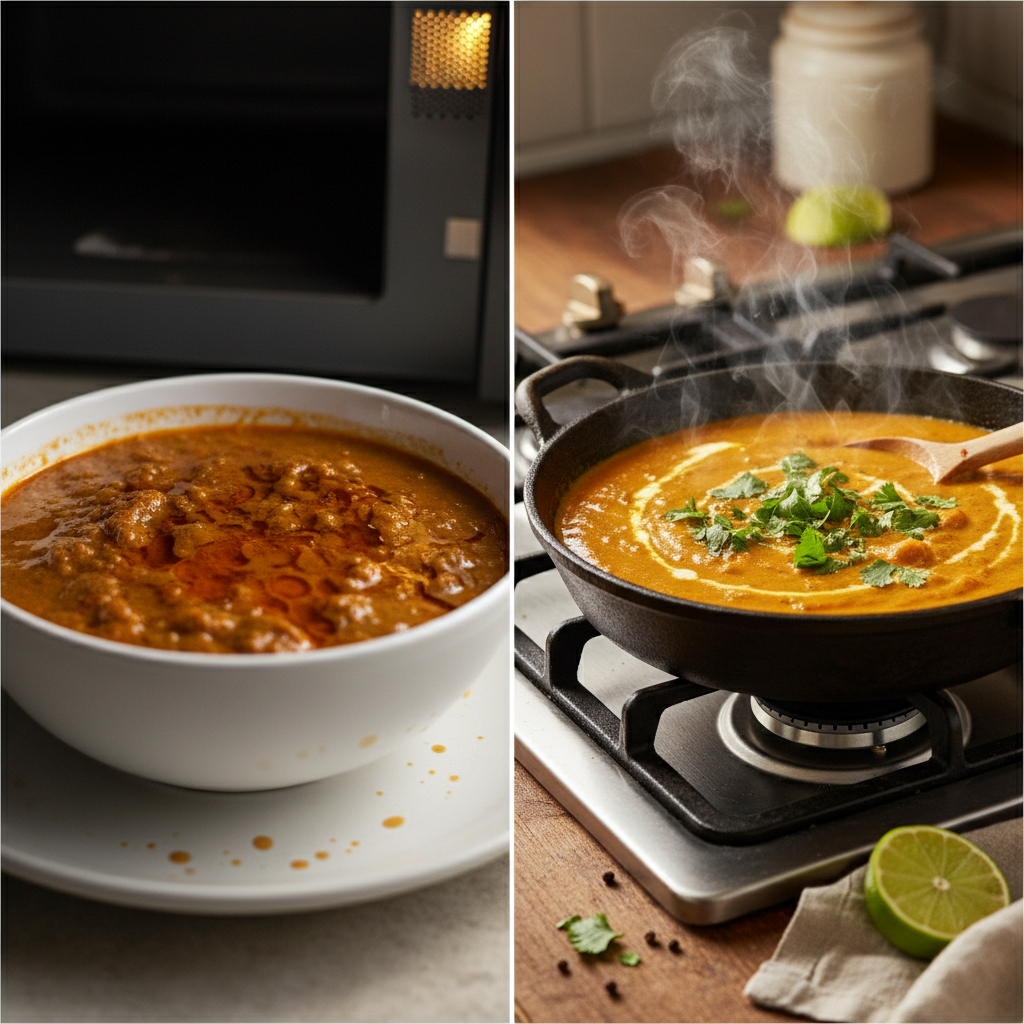
It’s a tale as old as time. You made a magnificent, fragrant curry last night. You were smart and made a big batch for leftovers, dreaming of that glorious lunch all morning. You pop it in the microwave, and… disaster. The sauce is a separated, oily mess, the chicken is tough as leather, and the vibrant flavor seems to have vanished. So, why does curry taste better the next day, yet so often get ruined in the reheating process? It all comes down to flavor chemistry and, most importantly, your heating technique. But don't worry, learning how to reheat curry properly is simple, and we've got the secrets.
Want to create your own custom recipes? Try our AI-powered recipe generator for personalized cooking solutions tailored to your ingredients and preferences.
The Science Behind Why Curry Tastes Better (and Reheats Poorly)
That leftover curry magic isn't just in your head! There's real science at play. When your curry rests overnight in the fridge, a process called 'flavor melding' occurs. The aromatic compounds in your spices, like turmeric, cumin, and coriander, are often fat-soluble. As the curry cools and sits, these compounds have more time to dissolve into the fats and liquids, infusing the entire dish with a deeper, more complex flavor. As explained by food science experts at Serious Eats, proteins also continue to break down, becoming more tender, and starches in ingredients like potatoes or lentils absorb more of the flavorful sauce, thickening it naturally.
So why the reheating trouble? The problem is harsh, uneven heat. Many curries are an emulsion—a delicate suspension of fat (like ghee or coconut milk) and water-based ingredients (like stock or tomatoes). When you blast it with high heat in a microwave, you shock the sauce. The fat and water separate, creating that greasy, broken look. The intense heat also rapidly overcooks the proteins, squeezing out their moisture and making them rubbery.
| Reheating Method | Ideal Temperature | Best For |
|---|---|---|
| Stovetop | Low-Medium Heat | Single servings, best quality |
| Microwave | 50% Power | Quickest option, requires care |
| Oven | 325°F / 165°C | Large batches, hands-off |
5 Foolproof Fixes: How to Reheat Curry Perfectly
Fix 1: The Stovetop Simmer (Best Method)
The Problem: You want to replicate that freshly-made texture and flavor, but every time you try, you're left with a disappointing meal.
The Fix: This is the gold standard for reheating curry. Place your leftover curry in a saucepan or small pot over low heat. Add a splash of liquid—water, broth, or a bit of coconut milk—to loosen the sauce, which will have thickened overnight. Stir gently and occasionally as it heats up. Let it come to a gentle simmer, but don't let it boil, and it'll be ready in about 5-10 minutes.
Pro Tip: Once heated, turn off the stove and stir in a squeeze of fresh lime juice and a handful of chopped cilantro. This wakes up all the flavors and makes it taste brand new.
Fix 2: The Microwave Method (Done Right)
The Problem: Your microwave turns curry into a splattery, unevenly heated mess with scorching hot spots and icy cold pockets.
The Fix: The secret to microwaving is controlling the power. Place the curry in a microwave-safe bowl and spread it out. Add a tablespoon of water, then cover the bowl with a damp paper towel. Crucially, set your microwave to 50% power and heat in 60-second intervals, stirring well between each one. This gentle, incremental heating prevents the sauce from splitting and the meat from turning rubbery.
Pro Tip: If you're reheating rice with your curry, place the curry in the middle of the plate and arrange the rice around it like a ring. This helps everything heat more evenly.
Fix 3: The Oven Reheat (For Big Batches)
The Problem: You have a whole pot of curry to reheat for your family, and the stovetop isn't practical.
The Fix: The oven provides gentle, all-around heat. Preheat your oven to 325°F (165°C). Place the curry in an oven-safe dish like a Dutch oven or casserole dish. Stir in a few tablespoons of water or broth, cover it tightly with a lid or aluminum foil, and bake for 20-25 minutes, or until heated through. The trapped steam ensures it stays moist and heats evenly.
Pro Tip: Give the curry a good stir about halfway through the baking time to ensure there are no cool spots in the center.
Fix 4: Fixing a Split, Oily Sauce
The Problem: Despite your best efforts, your reheated curry looks greasy and has separated. Don't throw it out!
The Fix: This happens when the emulsion breaks. To fix it, take the curry off the heat. Add a tablespoon of very hot (but not boiling) water and whisk vigorously. The hot water helps the fat and liquid recombine. If it's still stubborn, a tiny slurry of cornstarch (1/2 tsp cornstarch mixed with 1 tsp cold water) whisked in over low heat will bind it back together. This is a common issue when your curry is too oily to begin with.
Pro Tip: If you have an immersion blender, a few quick pulses on the lowest setting will fix a split curry sauce in seconds. Just be careful not to blend up your chunks of meat or veggies!
Fix 5: Reviving Dull Flavors
The Problem: The reheated curry is technically fine, but it tastes flat and lacks the punch it had on day one.
The Fix: Bright, fresh ingredients are the answer. After reheating, finish the curry with a fresh element. A big squeeze of lemon or lime juice adds acidity that cuts through the richness. A spoonful of plain yogurt or sour cream can add creaminess and tang. And never underestimate the power of fresh herbs—cilantro, parsley, or mint can instantly make the dish taste vibrant and fresh, solving the problem of a curry that tastes bland.
Pro Tip: Add a tiny pinch of garam masala at the very end of reheating. This spice blend is meant as a finishing touch, and its fragrant aromatics will have dissipated overnight. A fresh pinch brings them right back.
How to Prevent Reheating Disasters
- Cool Down Correctly: Allow your curry to cool on the counter for about an hour before refrigerating. Putting a piping hot pot in the fridge can create excess condensation, which can make your curry watery upon reheating.
- Store Intelligently: Always use an airtight container. This prevents the curry from drying out and stops it from absorbing other fridge smells. Crucially, store rice separately from the curry to prevent it from becoming mushy.
- Thaw Before Heating: If your curry is frozen, try to thaw it overnight in the refrigerator. Reheating from frozen is much harsher on the sauce and more likely to cause splitting.
- Reheat Only What You Need: Repeatedly cooling and reheating food is not only bad for the texture, but it also poses a food safety risk. Portion out only what you plan to eat and reheat that.
Frequently Asked Questions
Can you reheat curry more than once?
While you technically can, it's not recommended. From a quality standpoint, the texture will degrade with each reheating cycle. More importantly, from a food safety perspective, the USDA advises that repeatedly cooling and heating food increases the risk of bacterial growth. It's safest to only reheat the portion you intend to eat.
Why did my chicken get rubbery when I reheated my curry?
This is almost always caused by high, direct heat. When you microwave on full power or try to reheat too quickly on the stove, the proteins in the chicken cook for a second time, squeezing out all their moisture and tightening up, which results in that dreaded rubbery texture. The key is gentle, low-and-slow heating.
Is it better to reheat curry in the oven or on the stove?
It depends on the quantity. For a single serving or two, the stovetop offers the most control and is the quickest way to achieve the best texture. For a large, family-sized batch, the oven provides more even, hands-off heating and ensures the entire dish is warmed through without scorching the bottom.
Complete Curry Troubleshooting Guide
This is just one of many common curry cooking issues. For a comprehensive guide covering all curry problems and solutions, check out our complete Complete Curry Troubleshooting Guide.