
How to Fix Vegetables That Cook Unevenly: 6 Easy Pro Tips
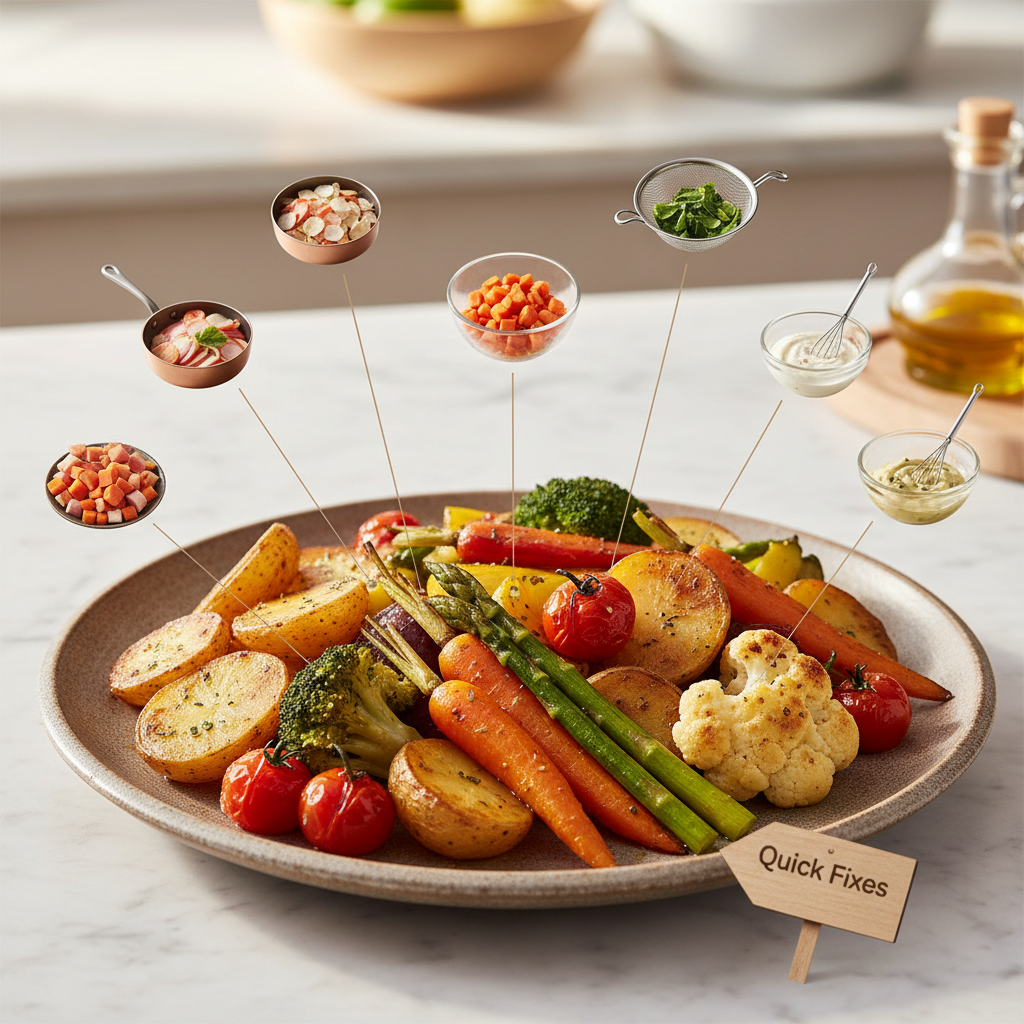
There’s nothing more frustrating than pulling a beautiful sheet pan of roasted vegetables from the oven, only to find a culinary civil war on your hands. The potatoes are still rock-hard, the zucchini has dissolved into mush, and the carrots are somehow both raw and burnt. If you’ve ever wondered, “Why do my vegetables cook unevenly?”, you’re not alone! It’s a super common kitchen conundrum. The short answer is that it usually boils down to two key factors: inconsistent piece sizes and mixing vegetables that have vastly different cooking times. But don't worry, these are easy problems to solve!
Let's dive into the simple science and the quick fixes that will transform your vegetable game from chaotic to consistently delicious. Get ready for perfectly cooked veggies, every single time.
Want to create your own custom recipes? Try our AI-powered recipe generator for personalized cooking solutions tailored to your ingredients and preferences.
The Science Behind Unevenly Cooked Vegetables
So, why does a slightly larger piece of carrot take so much longer to cook than a smaller one? It all comes down to the physics of heat transfer and the unique cellular structure of different vegetables.
Think of it this way: heat moves from the outside of a vegetable to the inside. A smaller piece has a much larger surface-area-to-volume ratio. This means more of its surface is exposed to the hot air in your oven or oil in your pan, allowing heat to penetrate to the center much faster. A large, chunky piece of potato has a lot more insulating mass for the heat to travel through to cook the center.
Furthermore, not all vegetables are created equal. Dense, starchy root vegetables like potatoes and carrots are packed with tough cellulose and pectin. It takes a significant amount of time and consistent heat to break down these structures and make them tender. On the other hand, high-water-content vegetables like zucchini or bell peppers have a much looser structure that softens and releases moisture very quickly. When you cook them all for the same amount of time, you get uneven results.
| Vegetable Type | Examples | Approx. Roasting Time (at 400°F/200°C) |
|---|---|---|
| Hard / Dense | Potatoes, Carrots, Sweet Potatoes, Beets | 30-45 minutes |
| Medium-Density | Broccoli, Cauliflower, Brussels Sprouts, Onions | 20-30 minutes |
| Soft / High-Water | Zucchini, Bell Peppers, Asparagus, Tomatoes | 10-20 minutes |
6 Quick Fixes for When Vegetables Cook Unevenly
Ready to put an end to uneven cooking for good? These simple adjustments to your prep routine will make all the difference.
1. The Uniform Cut
The Problem: You’re chopping away, and your vegetable pieces end up in all shapes and sizes—some big chunks, some small slivers.
The Fix: This is the golden rule! Strive to cut all your vegetables to a roughly uniform size and shape. If you're dicing carrots, make all the dice about the same size (e.g., 1/2-inch cubes). This ensures that every piece has a similar surface area and volume, promoting even cooking across the board.
Pro Tip: Pay closest attention to the thickness of your cuts. A piece that's 1-inch long but 1/4-inch thick will cook much faster than a piece that's 1-inch long and 1-inch thick.
2. Stagger Your Cooking Times
The Problem: You throw all your vegetables—potatoes, broccoli, and zucchini—onto the sheet pan at the same time and hope for the best.
The Fix: Give your dense vegetables a head start. Start by roasting the hard veggies (like potatoes, carrots, and sweet potatoes) first. After about 15-20 minutes, pull the pan out, give them a toss, and then add your medium-density veggies (like broccoli and cauliflower). For the final 10 minutes of cooking, add the soft, quick-cooking vegetables (like asparagus or bell peppers).
Pro Tip: Keep your prepped vegetables in separate bowls, grouped by cooking time, to make this process seamless.
3. Adjust Cut Size for Density
The Problem: You want to cook everything at once for a quick sheet pan dinner, but you know a 1-inch cube of potato cooks slower than a 1-inch cube of zucchini.
The Fix: Outsmart the science! Cut your dense, long-cooking vegetables into smaller pieces and your softer, quick-cooking vegetables into larger pieces. For example, you could cut potatoes into 1/2-inch dice, broccoli into 1-inch florets, and zucchini into 1.5-inch chunks. The smaller dense pieces will cook faster, helping them finish at the same time as the larger, softer pieces.
Pro Tip: This is my favorite method for sheet pan meals because it's a “one and done” approach. It takes a little practice to get the size ratios just right, but it's a game-changer.
4. Don't Crowd the Pan
The Problem: You pile a mountain of vegetables onto a single baking sheet to save on dishes.
The Fix: Your vegetables need space to breathe! When a pan is overcrowded, the vegetables steam in their own moisture instead of roasting in the dry, hot air of the oven. This leads to both uneven cooking and prevents that delicious browning. Spread your vegetables in a single, even layer. If you have too many, use two sheet pans. This simple step is key to avoiding soggy roasted veggies.
Pro Tip: Rotate the pans between the top and bottom racks of your oven halfway through cooking to ensure both pans get equal heat exposure.
5. Give 'Em a Head Start (Par-Cooking)
The Problem: You're short on time and can't be bothered with staggered cooking.
The Fix: Par-cook (partially cook) your densest vegetables. You can boil cubed potatoes or carrots for 5-7 minutes until they are just barely tender on the outside. Drain them well, let them steam dry for a minute, then toss with oil, seasonings, and your other raw veggies. Now everything can roast together for a shorter amount of time, and you'll get even results.
Pro Tip: You can also do this in the microwave! Place cubed potatoes in a bowl with a tablespoon of water, cover, and microwave for 3-4 minutes to soften them up before roasting.
6. Stir, Flip, and Toss!
The Problem: You put the pan in the oven and don't touch it again until the timer goes off.
The Fix: The surface of your pan is hotter than the air circulating above it. To ensure all sides of your vegetables get a chance to brown and cook, you need to stir or toss them at least once, about halfway through the cooking time. This also helps prevent your vegetables from sticking to the pan.
Pro Tip: For the best results, pull the pan completely out of the oven and use a wide spatula to flip and redistribute the vegetables before returning it to the oven.
How to Prevent Vegetables from Cooking Unevenly in the Future
Want to make sure unevenly cooked vegetables are a thing of the past? Adopt these habits into your kitchen routine:
- Master Basic Knife Skills: You don't need to be a professional chef, but learning to make consistent cuts is the number one way to ensure even cooking. Check out this great guide on basic knife skills from Serious Eats.
- Think in Groups: As you prep, mentally (or physically) group your vegetables by density: hard, medium, and soft. This helps you plan your cooking strategy.
- Always Preheat: Whether it's your oven or a pan on the stovetop, always preheat it fully. Placing vegetables on a cold surface will cause them to absorb oil and cook slowly and unevenly.
- Choose the Right Size Pan: Grab a bigger pan than you think you need. Giving your food space is one of the easiest ways to improve your cooking.
- Read the Recipe: Pay attention to instructions that specify different cut sizes or staggered cooking times. They are there for a reason!
Frequently Asked Questions
Why are my roasted vegetables hard in some spots and soft in others?
This is the classic sign that your vegetables are cooking unevenly. The most likely causes are that your vegetable pieces were cut into inconsistent sizes, or you mixed very dense vegetables (like potatoes) with very soft ones (like zucchini) and cooked them for the same amount of time. The smaller/softer pieces overcook into mush while the larger/denser pieces remain undercooked and hard.
Should I cut all my vegetables the same size for a stir-fry?
Not necessarily! A stir-fry is a perfect place to use the “adjust cut size for density” technique. Since stir-frying is so fast, you want everything to be done at the same time. Cut dense carrots into very thin coins or small dice, while quick-cooking bell peppers and snow peas can be left in larger pieces. This ensures the carrots become tender-crisp in the same short time it takes for the peppers to cook.
How do I cook root vegetables and softer vegetables together on one sheet pan?
You have two great options. The first is the staggered method: roast the root vegetables (cut to about 1-inch) for 15-20 minutes first, then add the softer vegetables to the same pan for the final 10-15 minutes of cooking. The second option is to adjust cut sizes: cut the root vegetables much smaller (e.g., 1/2-inch dice) and the softer vegetables larger (e.g., 1.5-inch chunks) and roast everything together at once.
Complete Vegetable Troubleshooting Guide
This is just one of many common vegetable cooking issues. For a comprehensive guide covering all vegetable problems and solutions, check out our complete Complete Vegetable Troubleshooting Guide.
Happy cooking!
```