
Why Does Garlic Burn So Fast? 7 Easy Ways to Prevent It
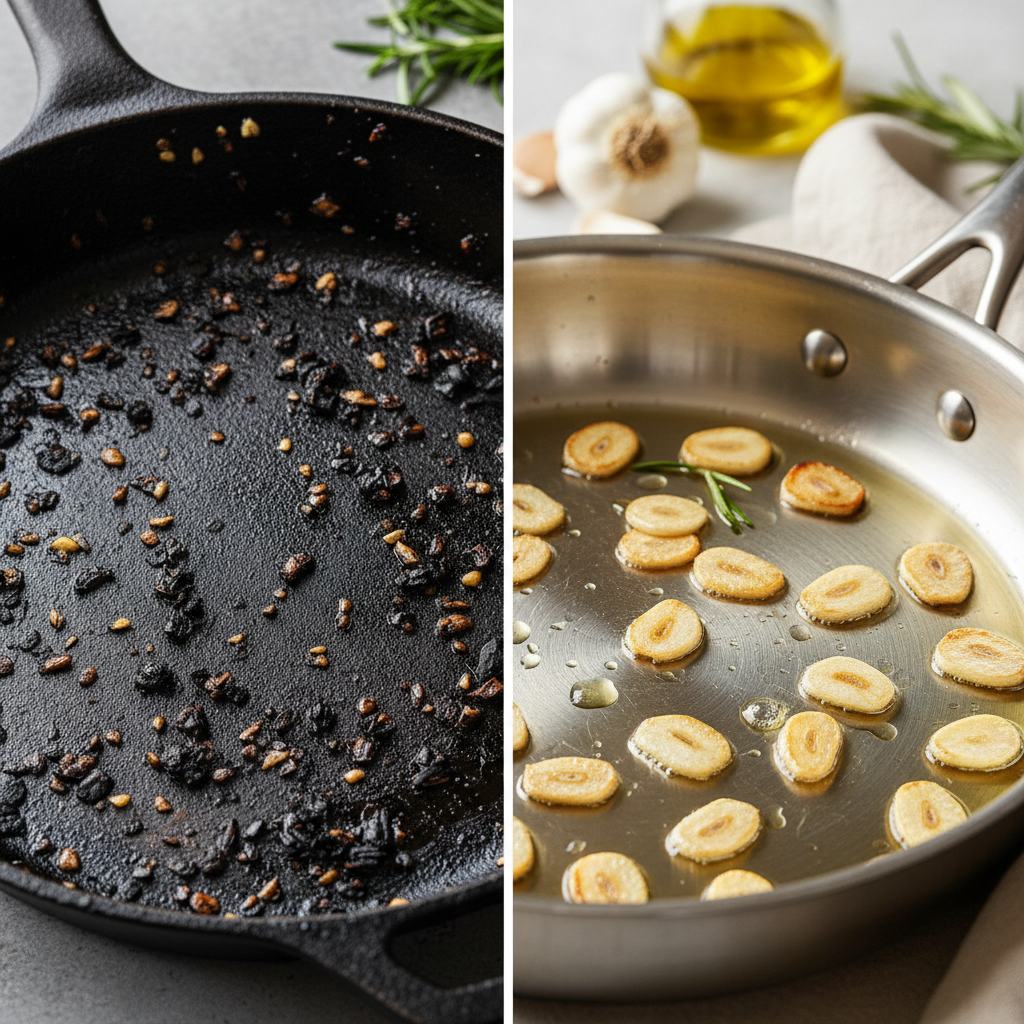
There’s nothing worse. You’re sautéing aromatics for a beautiful sauce, you turn away for just a second to grab the tomatoes, and when you turn back, it hits you: that acrid, bitter smell. You’ve burned the garlic. We’ve all been there! It’s one of the most common kitchen frustrations, but the good news is, it’s totally avoidable. The main reason why does garlic burn so fast is a combination of its low water content, high sugar content, and the small size we usually chop it into. But don't worry, once you understand the science, you can easily prevent this flavor-killer from ever wrecking a dish again.
Want to create your own custom recipes? Try our AI-powered recipe generator for personalized cooking solutions tailored to your ingredients and preferences.
The Science Behind Why Garlic Burns So Fast
So, what’s happening on a molecular level that makes garlic so temperamental? Unlike its cousin the onion, which is over 89% water, garlic has significantly less moisture. This means there’s less water to evaporate, so the garlic’s temperature rises much more quickly in a hot pan.
More importantly, garlic contains a higher concentration of natural sugars, particularly fructose. These sugars undergo the Maillard reaction—the chemical process responsible for browning and creating complex flavors—at a much lower temperature and faster rate than the sugars in other vegetables. When you mince garlic, you create a ton of surface area, exposing all those sugars to direct heat. This is a recipe for going from golden-brown to blackened-bitter in the blink of an eye.
When it burns, the delicate, pungent allicin compounds that give garlic its signature flavor are destroyed and replaced with harsh, bitter notes. Here’s a quick comparison:
| Vegetable | Water Content | Sugar Type | Ideal Sauté Time (Minced) |
|---|---|---|---|
| Garlic | ~65% | High in Fructose | 30-60 seconds |
| Onion | ~89% | High in Sucrose | 5-7 minutes |
7 Quick Fixes for Burnt Garlic
1. Add It Later in the Cooking Process
The Problem: Most recipes start with, "sauté onions, carrots, and celery..." and many people toss the garlic in right along with them. This is the #1 cause of burnt garlic, as the onions need a good 5-7 minutes to soften, while the garlic needs less than one.
The Fix: Let your other aromatics (like onions and carrots) cook first. Once they are softened and translucent, add your minced or sliced garlic to the pan. Sauté for just 30-60 seconds, until it's fragrant, then immediately add your next ingredient, like tomatoes, wine, or broth, to stop the cooking process.
Pro Tip: Use your nose! The moment you smell that beautiful, nutty garlic aroma, it's ready. Don't wait for it to turn a deep brown.
2. Use Larger Pieces of Garlic
The Problem: Finely minced garlic has an incredibly high surface area-to-volume ratio, meaning almost all of it is in direct contact with the hot pan. This is why it burns in a flash.
The Fix: Instead of mincing, try thinly slicing the garlic or even just smashing whole cloves with the side of your knife. These larger pieces have less surface area and will cook much more slowly and evenly, infusing the dish with a gentler, sweeter garlic flavor.
Pro Tip: For soups or braises, you can toss in whole, smashed cloves and fish them out before serving. You'll get all the flavor with zero risk of bitterness.
3. Turn Down the Heat
The Problem: You're cooking on high heat to get a good sear on your meat or veggies, but that same temperature will incinerate garlic instantly.
The Fix: When it's time to add the garlic, lower the heat to medium or medium-low. This gives you a much wider window of time to cook it perfectly. If the pan seems too hot, remove it from the burner for a moment before adding the garlic.
Pro Tip: Keep a small amount of water, broth, or wine nearby. If you see the garlic starting to brown too quickly, a tiny splash will instantly cool the pan and stop the burning.
4. Create a Liquid Buffer
The Problem: Garlic sitting alone in hot, shimmering oil is in the danger zone. There's nothing to protect it from the pan's direct, intense heat.
The Fix: Add your garlic and then immediately deglaze the pan with a liquid. This could be wine for a pasta sauce, soy sauce for a stir-fry, or broth for a soup. The liquid lowers the temperature below the burning point and allows the garlic to infuse its flavor into the sauce rather than frying.
Pro Tip: Another way to do this is to add the garlic on top of a bed of other vegetables, like mushrooms or spinach. As they release their moisture, it creates a steamy, protective buffer for the garlic. This is a great way to avoid the problem of watery sautéed veggies working to your advantage!
5. Bloom It in Oil (Garlic-Infused Oil)
The Problem: You want a strong garlic flavor throughout your dish, but you're worried about the little bits burning.
The Fix: Make garlic-infused oil. Gently heat sliced or smashed garlic cloves in a generous amount of oil over low heat for 5-10 minutes. The oil will become incredibly fragrant. Once the garlic is lightly golden, use a slotted spoon to remove it. Now you can use that potent, flavorful oil to cook the rest of your dish with no risk of burning.
Pro Tip: Take this a step further and make garlic confit by slowly cooking whole cloves submerged in oil until they are soft and sweet. The cloves and the oil are both kitchen gold.
6. Roast It Whole
The Problem: You're making a dish that requires a deep, sweet, non-pungent garlic flavor, like mashed potatoes or a dip.
The Fix: Roast a whole head of garlic. Slice off the top quarter of the head, drizzle with olive oil, wrap in foil, and roast at 400°F (200°C) for 30-40 minutes. The cloves will become soft, caramelized, and sweet. You can then squeeze the paste out of the cloves and mix it into your dish.
Pro Tip: Using the right roasting technique is key. If you've ever ended up with soggy roasted veggies, the same principles of not overcrowding the pan apply here, even when the garlic is wrapped in foil.
7. Use Garlic Powder or Granulated Garlic Strategically
The Problem: You're making a dry rub or a quick, high-heat dish where fresh garlic is guaranteed to burn.
The Fix: Use garlic powder or granulated garlic instead. Because all the water has been removed, they burn even faster than fresh garlic if added to hot oil. The trick is to mix them with other dry spices in a rub or add them at the very end of cooking along with any liquids.
Pro Tip: Granulated garlic has a sandier texture and is less likely to clump than fine garlic powder, making it a better choice for adding to sauces and liquids.
How to Prevent Garlic from Burning in the First Place
Tired of troubleshooting? Here’s your cheat sheet for perfect garlic every time. Keep these principles in mind, and you'll never have to scrape blackened bits out of your pan again.
- Timing is Everything: Add minced garlic in the last 30-60 seconds of sautéing, right before adding a liquid.
- Mind Your Prep: The smaller you chop it, the faster it cooks. Use slices or smashed cloves for slower, more gentle cooking.
- Control Your Heat: Always cook garlic over medium to medium-low heat. Never add it to a screaming hot pan.
- Use a Buffer: Cook garlic with a liquid (wine, broth) or on top of other watery vegetables to protect it from direct heat.
- Know Your Fats: Butter has milk solids that can burn alongside garlic. Clarified butter or oils with higher smoke points (like avocado or canola) give you more leeway.
Frequently Asked Questions
Can you fix a dish that tastes like burnt garlic?
Honestly, it's very difficult. The bitter flavor is pervasive. You can try to mask it by adding acidity (lemon juice, vinegar), sweetness (a pinch of sugar), or richness (cream, butter), but often the dish is a lost cause. The best fix is prevention, or starting over if you catch it early.
Does garlic powder burn as fast as fresh garlic?
Even faster! Garlic powder is completely dehydrated and has a massive surface area. If you add it directly to hot oil, it will burn in seconds. Always mix it into spice rubs or add it along with a liquid ingredient to prevent it from scorching.
What is the difference between burnt garlic and black garlic?
They are polar opposites! Burnt garlic is the result of cooking too fast at a high temperature, creating a bitter, acrid taste. Black garlic, as explained by Harvard T.H. Chan School of Public Health, is created through a very long, low-temperature aging process where the Maillard reaction happens in slow motion. This results in soft, jet-black cloves with a sweet, molasses-like, and umami-rich flavor.
Complete Vegetable Troubleshooting Guide
This is just one of many common vegetable cooking issues. For a comprehensive guide covering all vegetable problems and solutions, check out our complete Complete Vegetable Troubleshooting Guide.