
How to Fix Rice That Cooks Unevenly: 7 Simple Tips for Success
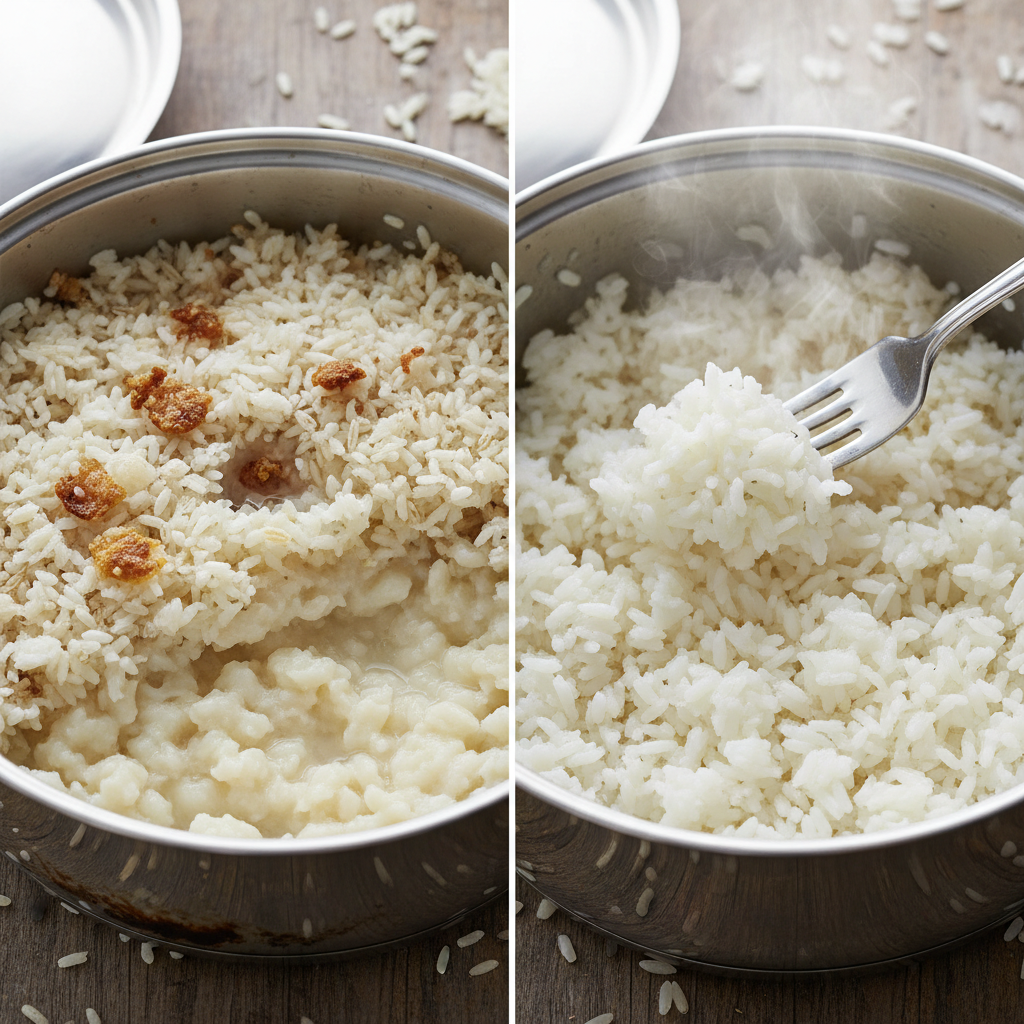
There’s nothing more frustrating than lifting the lid on your rice pot, expecting a steamy, fluffy cloud, only to find a culinary disaster. The top layer is still a bit crunchy, the bottom is a mushy, waterlogged mess, and somewhere in the middle is a small band of perfectly cooked grains. What went wrong? It’s a classic kitchen headache when your rice cooks unevenly, but don't worry, you're not alone! This problem almost always boils down to a few key culprits: incorrect water ratios, uneven heat distribution, or steam escaping from the pot. But the good news is that every single one of these issues is easily fixable. Let's dive in and get you back to cooking perfect rice every single time.
Want to create your own custom recipes? Try our AI-powered recipe generator for personalized cooking solutions tailored to your ingredients and preferences.
The Science Behind Unevenly Cooked Rice
To understand why rice cooks unevenly, we need to look at the transformation each grain undergoes. The magic happens through a process called starch gelatinization, where hot water penetrates the tough outer layer of the rice grain and is absorbed by the starch molecules inside. As these starches absorb water and heat, they swell and soften, turning the hard little grain into the tender, edible rice we love.
For this to happen perfectly, two things are essential: sufficient water and consistent, gentle heat. If heat is too high and concentrated at the bottom of the pot, the water there will boil off too quickly. This overcooks the bottom layer into mush while the top layer, starved of both steam and direct contact with water, remains hard and undercooked. Conversely, if steam is allowed to escape from the pot, the temperature drops, and there isn't enough moist heat to cook that top layer. It's a delicate balance of heat transfer and water absorption. As explained by the experts at Serious Eats, controlling the evaporation rate is key to success.
7 Quick Fixes for Rice That Cooks Unevenly
Ready to solve this problem for good? Let's walk through the most common reasons your rice cooks unevenly and exactly how to fix them.
1. The Water-to-Rice Ratio is Off
The Problem: You're either eyeballing the water level or using a generic 2:1 ratio for all types of rice. This is the number one cause of uneven cooking, leading to a swampy bottom and dry top.
The Fix: Measure, measure, measure! Use proper measuring cups. A great starting point for most long-grain white rice is a 1:1.5 ratio (1 cup of rice to 1.5 cups of water). For brown rice, you may need closer to a 1:2 ratio. Check the package instructions, as they are your best guide.
Pro Tip: Toast your rinsed, dry rice grains in a little butter or oil in the pot for a minute before adding the water. This helps the grains stay separate and adds a wonderful nutty flavor.
2. Your Pot Lid Doesn't Fit Properly
The Problem: A wobbly or ill-fitting lid allows precious steam to escape. Steam is responsible for gently cooking the top layer of rice. When it's gone, the top stays hard while the bottom continues to boil.
The Fix: Use a pot with a heavy, tight-fitting lid. If your lid is a bit loose, you can place a layer of aluminum foil over the pot and then press the lid on top to create a tighter seal.
Pro Tip: For a traditional method, place a clean kitchen towel between the pot and the lid. The towel will absorb excess condensation and ensure an ultra-tight seal, preventing any steam from escaping.
3. You're Using a Thin-Bottomed Pot
The Problem: Thin, cheap pots are notorious for creating hot spots. The heat from your burner isn't distributed evenly, so the center and bottom get scorched while the rest of the rice remains undercooked.
The Fix: Invest in a heavy-bottomed saucepan or a Dutch oven. The thick base provides excellent, even heat distribution, which is crucial for gentle cooking. This single change can be a total game-changer.
Pro Tip: If you're stuck with a thin pot, consider buying a heat diffuser. This is a flat metal disc that sits on your burner under the pot to help spread the heat more evenly.
4. You Keep Peeking and Stirring
The Problem: Curiosity cooked the rice... unevenly. Every time you lift the lid to check on it, you release a huge amount of steam and heat, disrupting the cooking environment. Stirring, especially with white rice, breaks the grains and releases starches, leading to a gummy texture.
The Fix: Resist the urge! Once your rice comes to a simmer and you've put the lid on, do not lift it again until the cooking time is complete. Trust the process.
Pro Tip: After the prescribed cooking time (usually 15-20 minutes for white rice), remove the pot from the heat and let it stand, covered, for 10 minutes. This resting period allows the residual steam to redistribute and finish cooking the grains perfectly.
5. You Didn't Rinse the Rice
The Problem: The outside of rice grains is coated in excess surface starch. If not rinsed away, this starch turns into a sticky paste in the hot water, causing the grains to clump together and cook into an uneven, gummy block.
The Fix: Place your measured rice in a fine-mesh sieve and rinse it under cool running water. Swish the grains around with your hand until the water running out is clear, not cloudy. This is a non-negotiable step for fluffy, separate grains.
Pro Tip: Rinsing is one of the best ways to ensure your rice doesn't stick together. For more tips on this, check out our guide on how to prevent sticky rice.
6. The Heat is Way Too High
The Problem: You're cooking the rice at a rolling boil instead of a gentle simmer. This causes the water to evaporate before the grains can fully absorb it, resulting in a burnt bottom and crunchy top.
The Fix: Bring the water and rice to a boil over medium-high heat, then immediately reduce the heat to the lowest possible setting on your stove. The water should be barely bubbling. A gentle simmer is all you need.
Pro Tip: If you've had trouble with your rice burning at the bottom, an electric stove might be the culprit as they retain heat. Try moving the pot to a smaller burner set to low after it comes to a boil.
7. You're Overcrowding the Pot
The Problem: Trying to cook a large amount of rice in a pot that's too small is a recipe for disaster. The bottom layer gets compressed and turns to mush from the weight and heat, while the top layer doesn't have enough room to steam properly.
The Fix: Choose a pot that allows for expansion. Rice will at least double, and sometimes triple, in volume as it cooks. As a general rule, the uncooked rice and water shouldn't fill the pot more than 1/3 to 1/2 of the way.
Pro Tip: If you need to cook a large batch of rice (more than 3 cups), the most foolproof method is to cook it in the oven. Serious Eats has a great guide for this technique, which provides incredibly even heat.
How to Prevent Your Rice From Cooking Unevenly
Tired of troubleshooting? Let's make perfect rice the first time. Follow these preventative steps, and you'll banish unevenly cooked rice from your kitchen for good.
- Always Measure: Use measuring cups for both rice and water. Start with a 1:1.5 ratio for white rice and adjust as needed.
- Rinse Thoroughly: Rinse your rice in a fine-mesh sieve under cool water until the water runs clear.
- Use the Right Tools: A heavy-bottomed pot with a tight-fitting lid is your best friend for even heat distribution.
- Master the Simmer: Bring to a boil, then immediately reduce heat to the absolute lowest setting.
- Don't Peek: Keep the lid on for the entire cooking time to trap steam.
- Let It Rest: Always let the cooked rice rest off the heat, covered, for 10 minutes. This step is crucial for moisture redistribution.
- Fluff, Don't Stir: After resting, use a fork or a rice paddle to gently fluff the rice and separate the grains.
Frequently Asked Questions
Why is my rice hard on top and mushy on the bottom?
This is the classic sign that your rice cooked unevenly. It usually happens for two reasons: 1) You cooked it on heat that was too high, causing the bottom to overcook before the top had a chance to steam. 2) Your lid wasn't tight enough, allowing steam to escape, which left the top layer dry and undercooked.
Can I fix rice that has cooked unevenly?
Yes, you can often salvage it! If the top is crunchy but the bottom is cooked, sprinkle 2-3 tablespoons of water over the top. Put the lid back on tightly and let it steam on the lowest possible heat for another 5-10 minutes. This can help soften the undercooked grains. If the bottom is hopelessly mushy, it's best to scoop out the properly cooked top layer and discard the rest.
Does the type of rice affect how evenly it cooks?
Absolutely. Different rice varieties have different starch contents and grain sizes, which affect their required water ratios and cooking times. Brown rice, with its outer bran layer, takes longer to cook and needs more water than white rice. Always check the package for specific instructions for the type of rice you're using to ensure the best results.
Complete Rice Troubleshooting Guide
This is just one of many common rice cooking issues. For a comprehensive guide covering all rice problems and solutions, check out our complete Complete Rice Troubleshooting Guide.