
Forget Mushy Frozen Veggies — This Method Gets Them Crispy
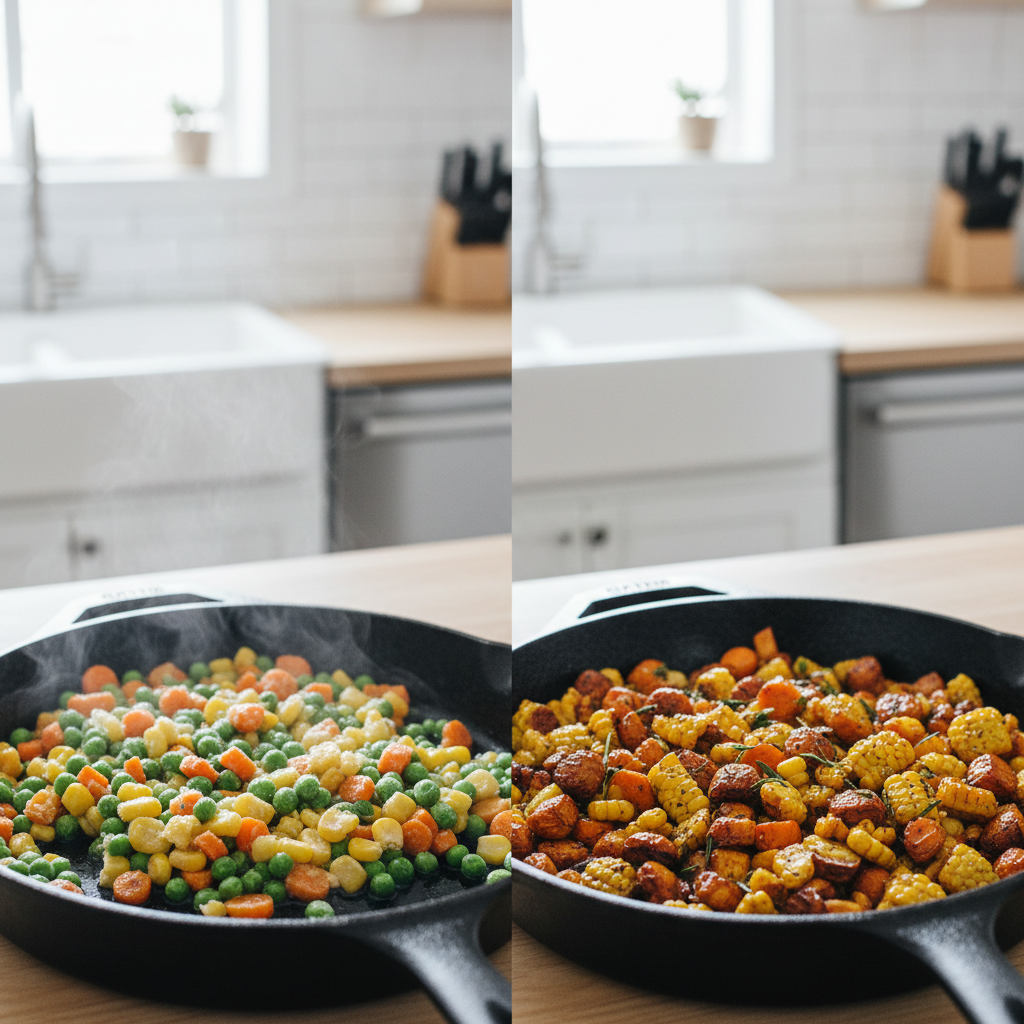
Picture this: you’re whipping up a quick weeknight dinner, and you reach for that convenient bag of frozen broccoli. You toss it in the pan, hoping for vibrant, crisp-tender florets, but instead, you end up with a sad, soupy puddle. Sound familiar? It’s a common kitchen frustration, but there’s good news! The reason frozen vegetables turn watery usually comes down to excess moisture from ice crystals and improper cooking techniques. Once you understand the why, the how-to-fix-it part is a piece of cake. Let’s dive in and transform those icy veggies into a dish you’ll actually crave.
Want to create your own custom recipes? Try our AI-powered recipe generator for personalized cooking solutions tailored to your ingredients and preferences.
The Science Behind Watery Frozen Vegetables
Ever wondered why your once-firm vegetables seem to melt in the pan? The culprit is science, specifically the water inside the vegetable cells. When vegetables are frozen, this water expands and forms ice crystals. In a home freezer or during slow commercial freezing, these crystals can grow quite large and sharp.
These jagged ice crystals act like tiny knives, puncturing and shredding the vegetable's rigid cell walls. When you later cook the vegetable, its cellular structure has been compromised. The cells can no longer hold onto their water, so it all leaks out into your pan, steaming the vegetable from the outside in and creating that dreaded watery, mushy texture.
Commercially frozen vegetables are also blanched (briefly cooked in boiling water) before freezing. As explained by the experts at Serious Eats, this process deactivates enzymes that would otherwise cause spoilage, but it also means the vegetables are partially cooked. This makes them even more susceptible to turning mushy if you're not careful with your cooking method.
5 Quick Fixes for When Frozen Vegetables Turn Watery
Fix #1: Cook from Frozen (Don't Thaw!)
The Problem: Your instinct might be to thaw frozen vegetables on the counter before cooking. This is usually a mistake. As they thaw, the ice melts, and the veggies sit in a puddle of their own water, becoming waterlogged before they even see heat.
The Fix: For most cooking methods like roasting, sautéing, or air frying, cook your vegetables directly from the freezer. Tossing them into a hot environment immediately helps that surface moisture evaporate quickly rather than pool in the pan.
Pro Tip: The main exception is frozen spinach or other leafy greens, which you'll want to thaw and squeeze thoroughly to remove as much water as possible before adding to dishes like dips or casseroles.
Fix #2: Turn Up the Heat
The Problem: A medium-heat pan or a moderately hot oven isn't powerful enough to combat the intense cold of frozen vegetables. The pan temperature drops, and the veggies release their water, creating steam. They end up boiling in their own liquid instead of searing or roasting.
The Fix: High heat is your best friend. For roasting, preheat your oven to at least 425°F (220°C) and, crucially, preheat the baking sheet in the oven. For sautéing, get your skillet and oil shimmering hot before the veggies go in. This instant, intense heat promotes evaporation and browning, not steaming.
Pro Tip: This technique is the number one solution for avoiding soggy roasted veggies of any kind, but it's absolutely essential for frozen ones.
Fix #3: Give Them Space
The Problem: Piling a whole bag of frozen corn into a small skillet is a recipe for soup. When vegetables are crowded together, they trap steam. There's no room for the moisture to escape, so they steam each other into a soggy pile.
The Fix: Whether you're roasting or sautéing, spread the vegetables in a single, even layer with plenty of space between each piece. Let them breathe! If your pan isn't big enough, use two pans or cook in batches. It's better to spend a few extra minutes cooking in batches than to end up with a watery mess.
Pro Tip: Overcrowding is also a primary cause of watery sautéed veggies when using fresh produce. Mastering this rule will improve all of your vegetable cooking!
Fix #4: Pat Away Surface Ice
The Problem: Frozen vegetables are often coated in a fine layer of ice crystals. This is pure water that will instantly cool down your pan and create steam upon contact.
The Fix: This works best for roasting. Spread the frozen vegetables on a clean kitchen towel or a few paper towels and give them a quick but gentle pat-down. This removes the excess surface ice before you toss them with oil and seasonings. You'll be amazed at how much better they brown.
Pro Tip: A drier surface not only prevents sogginess but also helps prevent veggies from sticking to your pan and promotes a much better sear.
Fix #5: Choose the Right Cooking Method
The Problem: Not all cooking methods are created equal, especially for frozen produce. Microwaving a bag of frozen broccoli will almost always result in a soft, watery outcome because it's essentially steaming the vegetable in its own moisture.
The Fix: Embrace dry-heat cooking. Roasting and air frying are the undisputed champions for cooking frozen vegetables. The hot, circulating air is incredibly efficient at driving off moisture, concentrating flavors, and creating delicious crispy edges. Sautéing in a very hot pan (following the rules above) is also a great option.
Pro Tip: According to Harvard T.H. Chan School of Public Health, high-heat roasting is a highly effective method for cooking frozen vegetables. If you're struggling with watery results, start here. For more tips on texture, check out our secrets to avoiding mushy vegetables.
How to Prevent Watery Frozen Vegetables in the Future
Tired of having to fix problems? A little prevention goes a long way. Keep these tips in mind when buying and cooking to stop your frozen vegetables from turning watery in the first place.
- Check the Bag: When buying, give the bag a shake. The vegetables should move around freely. If they're frozen into a solid brick, it means they have thawed and refrozen at some point, which guarantees more cell damage and a mushier result.
- Look for IQF: Many packages will state they are "Individually Quick Frozen" (IQF). This process freezes each piece of vegetable very quickly, creating smaller ice crystals and causing less damage to the cell walls.
- Default to Roasting: Make high-heat roasting your go-to method. A hot oven and a preheated pan are the most reliable way to get crisp, delicious results every time.
- Master the Single Layer: Remember the golden rule: don't crowd the pan! A single, spaced-out layer is non-negotiable for achieving a crisp texture.
Frequently Asked Questions
Should you rinse frozen vegetables before cooking?
Generally, no. Rinsing frozen vegetables just adds more water to the equation, which is the exact opposite of what you want. The only time you might rinse is if you need to quickly thaw something to chop it, but even then, it's crucial to pat it very dry afterward.
How do you cook frozen vegetables so they are not soggy?
The three keys are: 1) Cook them from frozen, 2) Use very high heat (like a 425°F oven or a screaming hot skillet), and 3) Don't overcrowd the pan. This combination allows the surface moisture to evaporate quickly, leading to browning instead of steaming.
Why do my frozen stir-fry vegetables get so watery?
This happens when the pan isn't hot enough or is too crowded. The cold vegetables drastically lower the temperature of the wok or skillet, causing them to release all their internal water. To fix this, use a very hot wok, get your oil shimmering, and cook the vegetables in small batches to maintain that high heat.
Complete Vegetable Troubleshooting Guide
This is just one of many common vegetable cooking issues. For a comprehensive guide covering all vegetable problems and solutions, check out our complete Complete Vegetable Troubleshooting Guide.